

Maddy summaryHRES 512 is a symbolic resolution expressing the House of Representatives' support for designating Sunday, June 15, 2025, as "Father's Day." It recognizes fathers' roles in families and society, citing statistics about fatherhood and the benefits of involved fathering. The resolution urges support for existing policy proposals like universal paid family leave, affordable childcare, and a child tax credit - though it does not create new laws or funding. As a commemorative measure, it has no legal effect beyond formally acknowledging Father's Day.
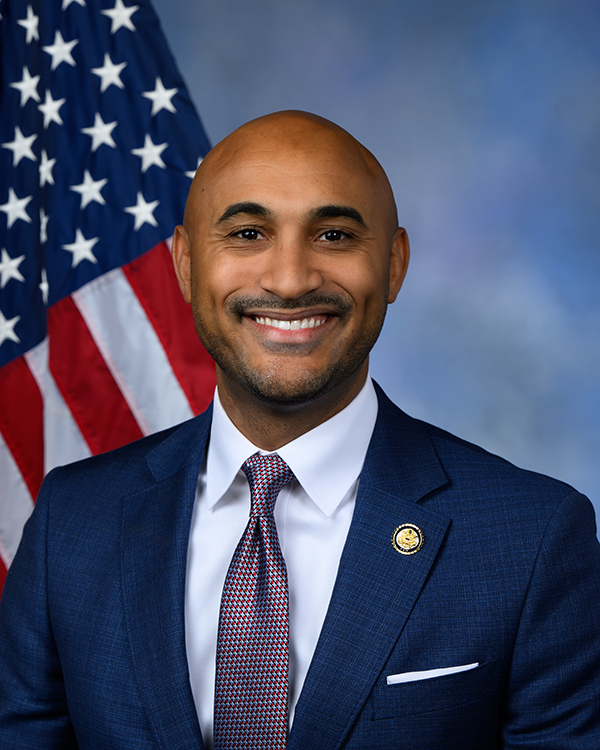
Rep. Shomari Figures
Sponsored bills
Maddy summaryHR 3977, the Campus Housing Affordability for Foster Youth Act, removes a ban preventing foster youth in college from receiving housing assistance. It allows the Secretary to waive income requirements for students who are in foster care (or were formerly in foster care), or are court-emancipated minors, while living in on-campus housing at eligible colleges. The bill ensures that housing assistance provided through this waiver does not count as income when determining eligibility for federal student aid, work-study programs, or other support like living allowances or child support calculations. This directly affects foster youth in higher education who face housing barriers, making campus housing more accessible without jeopardizing their other financial aid.
Maddy summaryThe PHARA Act of 2025 requires the National Institutes of Health (NIH) to immediately release all required funding for existing research grants and rapidly pay pending reimbursements. It prohibits NIH from terminating active research grants (entered after the bill's enactment) solely due to shifting agency priorities or program goals, and mandates new termination clauses requiring 90 days' written notice and attempts to amend terms before ending agreements. This directly affects researchers and institutions receiving NIH grants, ensuring funding continuity for ongoing projects. The bill aims to prevent abrupt halts in scientific research by restructuring grant termination processes.
Maddy summaryHR 3906, the Medical Research for Our Troops Act, restores funding levels for military medical research by increasing the Defense Health Agency's research budget from $40.395 billion to $41.576 billion in the 2025 appropriations act. It ensures Congressionally Directed Medical Research Programs funds are used consistently with the Consolidated Appropriations Act, 2024, requiring the Defense Secretary to support all previously identified research programs and maintain existing funding allocations. The bill directly affects military medical research initiatives and the Defense Health Agency's budget implementation. This is a procedural funding adjustment, not a new policy, maintaining continuity for ongoing research projects.
Maddy summaryThis bill requires private firearm transfers between individuals to go through a licensed dealer who must conduct a background check. It applies to most private sales but includes exceptions for transfers between family members (like parents and children), law enforcement, emergencies preventing harm, and temporary loans at shooting ranges or for hunting. Dealers must provide background check notices in both English and Spanish. The law aims to prevent prohibited individuals from obtaining firearms through private transactions while maintaining existing state authority on firearm laws.
Maddy summaryHR 3868, the Enhanced Background Checks Act of 2025, modifies federal firearm background check procedures to address delays. It requires federal firearms licensees to wait 10 business days after a background check query if the system doesn’t immediately flag a transfer, unless the buyer submits an electronic petition confirming they aren’t prohibited from owning firearms. The petition process includes a 10-day response deadline from the Attorney General, with licensees allowed to proceed if the system remains silent after 10 days. The bill also mandates detailed annual reports from the FBI on petition delays and GAO reports on implementation, focusing on how these changes affect firearm transfers to prohibited individuals.
Maddy summaryHRES 481 is a symbolic resolution condemning recent antisemitic attacks in the U.S., specifically referencing the June 1, 2025, Boulder, Colorado, assault on a Jewish community gathering and other incidents like the May 2025 Washington, D.C., embassy shooting. It formally recognizes a pattern of violence targeting Jewish individuals and institutions, including attacks during religious events. The resolution calls on law enforcement to thoroughly investigate and prosecute such incidents and urges elected officials to publicly oppose antisemitism and politically motivated violence. As a non-binding resolution, it does not create new laws or allocate funding but serves to affirm congressional stance against antisemitism.
Maddy summaryThe Reimagining Inclusive Arts Education Act establishes a federal grant program to improve arts education access for students with disabilities in K-12 schools. It provides competitive grants to eligible schools, school districts, or partnerships with colleges/nonprofits to develop inclusive curricula, adapt classroom materials, and integrate creative arts therapies (like art or music therapy) into arts education. Grants, capped at 3 years with potential renewal, prioritize schools serving students with disabilities and those receiving Title I funding, while requiring geographic and socioeconomic diversity in grant distribution. The program is funded with $15 million over five years (2026-2030) to support professional development for educators and therapeutic approaches that enhance inclusion.
Maddy summaryThis bill would allocate $200 million annually from 2026 through 2029 to expand access to diapers and incontinence supplies for low-income families. It specifically targets infants, toddlers, medically complex children, and low-income adults with disabilities who require diapers or incontinence products. The funding would be distributed through state social services programs to support free distribution of diapers, diapering supplies, and adult incontinence materials, while requiring states to track how funds are used through detailed reporting. The bill also makes medically necessary diapers and diapering supplies eligible for reimbursement through health savings accounts and flexible spending arrangements. This legislation aims to address what is termed "diaper need" by directly providing essential supplies to vulnerable populations.
Maddy summaryHR 3498, the Henrietta Lacks Congressional Gold Medal Act, authorizes a commemorative gold medal to honor Henrietta Lacks for her contribution to science through her immortal HeLa cells. The bill directs the Treasury Secretary to strike the medal, which will be presented posthumously by Congress and displayed at the Smithsonian Institution. It also permits the sale of bronze duplicates to cover costs, with proceeds going to the U.S. Mint fund. This is a ceremonial recognition of Lacks' legacy, not a policy change affecting any group or requiring new regulations.