

Maddy summaryHF 2591 establishes a new fifth tax bracket for Minnesota individual income tax, targeting high earners to replace revenue lost from federal Medicaid funding changes. The bill amends tax law to create a top income bracket (applying to income over $1.667 million for married couples filing jointly) with a rate set by the commissioner of revenue. This rate must be calculated to generate revenue equal to the amount of federal Medicaid funds Minnesota lost, as certified by the commissioner of management and budget. The new tax rate applies to taxable years 2026 and 2027, affecting only taxpayers in the highest income bracket.
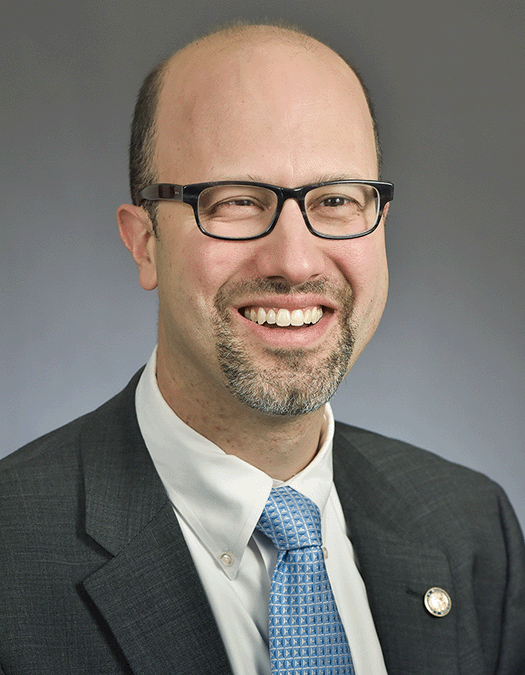
Rep. Dave Pinto
Sponsored bills
Maddy summaryHF 1361 appropriates $8 million from state bond proceeds to fund improvements at CHS Field in St. Paul. The city of St. Paul will receive the grant to cover predesign, construction, and equipment for upgrades meeting Major League Baseball standards, including a new locker room, enhanced visitor amenities, and environmental remediation of contaminated soil. The state will issue bonds up to $8 million to fund this appropriation, following Minnesota's bond sale procedures. This bill directly affects CHS Field's operations and the city's ability to modernize the stadium.
Maddy summaryHF 2429 authorizes Minnesota government entities to share data about suspected or confirmed fraud in public programs (like state or federal benefit programs involving public funds) with other government agencies, federal entities, or law enforcement. It specifically allows this sharing when it protects public resources, maintains program integrity, or aids law enforcement investigations. The bill overrides existing legal restrictions on data sharing for these specific fraud-related purposes. It directly affects state and local agencies managing public programs by enabling new data-sharing protocols to combat fraud. The key provision is Section 1.20, which creates this exception to data-sharing prohibitions for fraud investigations.
Maddy summaryHF 805 establishes a property tax refund program for nonprofit child care facilities that rent their facilities. Eligible providers - nonprofits with 501(c)(3) status operating licensed child care centers or family day care that accept state child care assistance - receive a 10% refund on cash rent paid for their facility space. To claim the refund, providers must apply annually to the commissioner by the following year, with payments made according to state schedules. The bill appropriates funds for these refunds and requires reporting, effective for rent paid in 2024 and later.
Maddy summaryHF 2251 modifies membership requirements for Minnesota's Job Skills Partnership Board, requiring four appointed members to represent the governor's Workforce Development Board (with two from labor and two from business) and adding a nonprofit workforce development representative. It also updates reporting rules for state economic development programs, mandating detailed annual reports that include program costs, participant demographics (race, age, gender, income), subgrantee funding, and program success metrics. These changes apply to state agencies managing workforce development and economic programs, aiming to improve transparency and accountability in how state funds are used.
Maddy summaryHF 2254 adds a $400 "baby bonus" to Minnesota's existing child credit for each qualifying child born during the tax year. This directly affects Minnesota taxpayers with newborn children, increasing their state income tax credit. The bill modifies the child credit calculation by adding the $400 per newborn (without reducing the minimum credit amount) and allows for potential advance payments. It takes effect for tax years beginning after December 31, 2024.
Maddy summaryHF 2135 requires Minnesota's child welfare system to undergo a detailed fiscal analysis and comprehensive program evaluation. It mandates a third-party consultant to examine federal funding sources (like Title IV-E and IV-B reimbursements), budgeting processes, and system integration, while also engaging tribal nations, community advocates, and those with lived experience. The analysis must identify ways to maximize federal funding, address inequities, and recommend state investment or legislative changes by June 2027. The resulting report will guide improvements to child welfare services for children and families in Minnesota’s system.
Maddy summaryHF 2035 modifies tax increment financing (TIF) rules specifically for St. Paul's Ford Site Redevelopment TIF District. It allows the city's housing authority to waive receiving tax increments for the first four years or until taxes from 2023 are received, whichever comes first. The bill also adjusts the district's certification date for TIF limits and extends the required use period for tax increments from five to ten years. These changes directly affect St. Paul's ability to manage funding for the Ford Site redevelopment project under state TIF rules. The bill takes effect after St. Paul complies with specific administrative requirements.
Maddy summaryHF 685 requires Minnesota's medical assistance programs (like Medicaid) to cover specific violence prevention services starting January 1, 2026. It directly affects Minnesotans who have experienced community violence or its health impacts, as well as certified providers meeting standards set by the Health Alliance for Violence Intervention. The bill defines covered services - including trauma counseling, conflict mediation, peer support, and care coordination - and mandates a minimum payment rate of $25 per 15-minute service unit. Providers must be certified, and recipients must be referred by a healthcare professional after meeting eligibility criteria related to violence exposure. The bill also requires initial and final reports on service delivery and outcomes.
Maddy summaryHF 35 requires all health insurance plans in Minnesota to create a maternal mental health program by January 1, 2026. The program must ensure comprehensive care for pregnant and postpartum individuals by mandating screenings during the perinatal period, requiring fair reimbursement for providers who conduct screenings or provide treatment, and ensuring timely referrals to mental health specialists when needed. This directly affects health insurance plans covering these services and aims to improve access to mental health care for this population. The bill prohibits unreasonable delays in referrals for clinically indicated cases, such as positive mental health screenings or reports of suicidal thoughts.