

Maddy summaryHF 1657 modifies Minnesota's controlled substances laws to clarify that the weight of fluid used in water pipes is excluded when calculating possession thresholds, except when the mixture contains four or more fluid ounces of fluid. This change directly affects individuals who possess controlled substances (like cocaine, methamphetamine, or opioids) in water pipe fluids, as it prevents the fluid weight from counting toward criminal offense levels based on total weight. Key provisions amend sections 152.021, 152.022, and 152.023 of Minnesota Statutes to exclude water pipe fluid from weight calculations in possession crimes. The bill aims to align legal standards with practical realities of how substances are consumed, avoiding disproportionate penalties for fluid weight. It does not alter penalties for the substances themselves, only the method for measuring possession quantities.
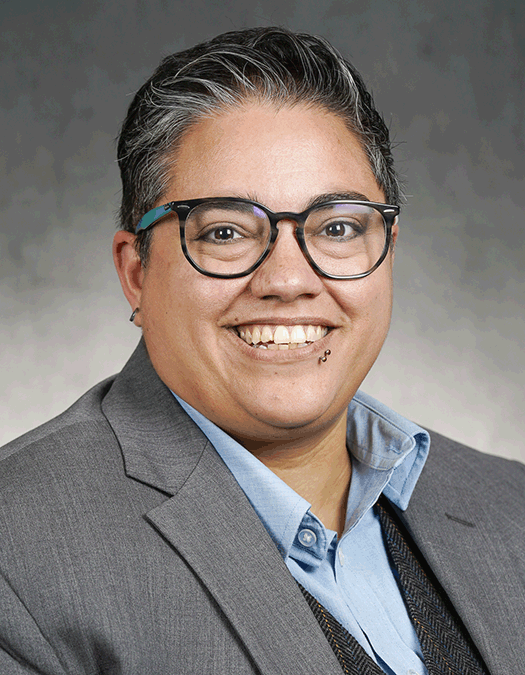
Rep. Brion Curran
Sponsored bills
Maddy summaryHF 1812 establishes a state-run Minnesota Health Plan to guarantee comprehensive, affordable health care for every Minnesota resident. The plan covers all necessary medical, dental, vision, mental health, and long-term care services without co-pays, with premiums based on income. It creates new state entities including the Minnesota Health Board, Health Fund, Office of Health Quality and Planning, a patient advocacy ombudsman, and an auditor for the plan. The bill also requests a federal waiver under the Affordable Care Act to modify certain health insurance requirements and appropriates funding for implementation.
Maddy summaryThis bill requires Minnesota's Commissioner of Human Services to create a formal proposal to incorporate existing federal standards for integrated community supports into state law. It specifically directs the development of draft legislation based on federal waiver plans for brain injury, disability inclusion, community care, and developmental disabilities services. The commissioner must consult with provider organizations, county social service administrators, and people with disabilities before submitting the proposal to legislative committees by January 1, 2026. This affects state human services planning and directly involves providers and recipients of community-based disability supports.
Maddy summaryHF 1095 requires Minnesota's human services commissioner to amend state waiver plans by December 2025 to allow providers of individualized home supports to bill for specific indirect services. These services include coordinating transportation, health care appointments, legal support, employment maintenance, basic needs access, independent living arrangements, and crisis management - without requiring direct recipient contact. The bill directly affects home support providers serving individuals who need assistance with daily living. It takes effect July 1, 2025, pending federal approval of the waiver plan changes.
Maddy summaryHF 1628 prohibits solitary confinement in Minnesota jails and prisons, defined as cell confinement depriving inmates of meaningful visual or auditory contact for more than 20 hours in a day or 45 hours in any three-day period. It directly affects all inmates in state and local adult correctional facilities, with special protections for vulnerable populations like minors, pregnant individuals, people with mental illness, or those with serious medical conditions. The bill requires facilities to document segregation placements, submit quarterly reports to the Corrections Commissioner, and adopt rules identifying vulnerable individuals. It also bans "unassigned idle" confinement exceeding 10 hours daily and mandates that segregated housing conditions approximate those in general population.
Maddy summaryHF 1674 increases funding for dementia care programs by appropriating $750,000 for fiscal year 2026 and another $750,000 for fiscal year 2027 from the general fund. The money will be administered by the Minnesota Board on Aging through existing regional and local dementia grant programs under Minnesota Statutes section 256.975, subdivision 11. This funding directly supports community-based services for individuals living with dementia and their caregivers across Minnesota. The bill makes no changes to eligibility or program requirements, only increasing the available financial support for these established services.
Maddy summaryHF 504 requires Minnesota's commissioner of health to establish a school-based telehealth program providing mental and physical health care to students through remote visits. The program will be run by a single telehealth provider selected via competitive bidding, with participating school districts (public and charter schools) required to offer services free of charge to all enrolled students, including waiving costs for uninsured students. Funding includes up to $22 per student annually, one-time setup costs, and program evaluation, with school districts prohibited from using the service to replace existing school health staff like nurses or counselors. The program mandates annual reports on student access to health care, starting in 2027.
Maddy summaryHF 98 modifies supervision and training rules for mental health professionals in Minnesota. It requires case managers with less experience to complete 40 hours of approved training and receive 38 hours of annual supervision (including monthly clinical sessions), while case management associates must meet specific education or experience criteria and complete 40 hours of preservice training. The bill also exempts intensive residential mental health treatment providers from certain client rights requirements and updates critical incident reporting timelines for residential programs. These changes directly affect mental health service providers, case managers, behavioral aides, and residential treatment facilities.
Maddy summaryHF 1348 modifies Minnesota's Community First Services and Supports (CFSS) program to change how support workers qualify for an enhanced pay rate. It requires support workers providing services to participants needing 10+ hours daily to meet specific training standards: either complete Medicare-certified home health aide/nursing assistant training, use state-approved alternatives, or receive individualized training from a participant's healthcare provider or responsible party. This change affects CFSS support workers directly, as their eligibility for higher pay rates depends on meeting these updated training requirements. The bill takes effect July 1, 2025, or after federal approval, whichever is later.
Maddy summaryHF 1427 requires ride-hailing companies operating in Minnesota to make at least 15% of their vehicles wheelchair accessible by 2026 and adopt clear nondiscrimination policies. Companies must pay a 15-cent surcharge per non-accessible ride (funded into a dedicated account), submit annual reports on accessibility metrics (like wheelchair vehicle availability and denial rates), and display fare information transparently before rides. This directly affects ride-hailing services and improves access for people with disabilities who rely on wheelchair-accessible transportation. Violations could result in civil penalties up to $15,000.