

Maddy summaryThis bill modifies Minnesota's renewable energy requirements for state-funded construction projects by removing the mandate that renewable energy sources must be located on the building site. It directs the Department of Administration and Department of Commerce to develop sustainable building guidelines for new state buildings and major renovations, requiring these structures to exceed the state energy code by at least 30 percent. The changes apply to any new building project where predesign work is completed after the bill's enactment.
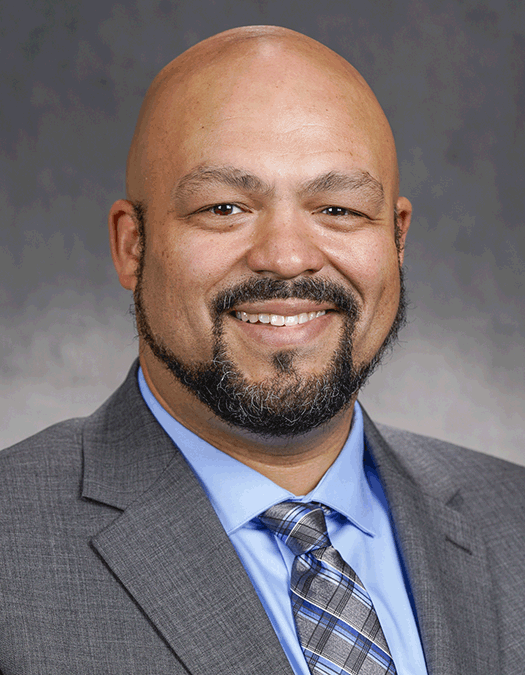
Rep. Walter Hudson
Sponsored bills
Maddy summaryThis bill expands Minnesota's doxxing laws by increasing criminal penalties and broadening the scope of protected individuals. It directly affects anyone who publicly shares personal information about law enforcement officials or their family members, as well as the officials and families themselves who are now protected under the law. The key change allows the crime to apply to any person, not just law enforcement, and raises penalties from misdemeanors to felonies when victims suffer great bodily harm or death, or when someone commits a second or subsequent violation. The law also defines personal information to include home addresses, cell numbers, email addresses, and photographs of individuals or their homes, with the changes taking effect on August 1, 2026.
Maddy summaryThis bill prohibits individuals receiving Minnesota public assistance programs from using licensed money transmitters to send money to foreign countries. It directly affects recipients of programs such as SNAP, medical assistance, child care assistance, and housing support. The law requires money transmitters to report every six months to state agencies any individuals who send money abroad, and state officials must then check if those individuals are enrolled in public assistance programs. If a recipient is found to have sent money to a foreign country while receiving aid, they will lose eligibility for all public assistance programs they were participating in.
Maddy summaryThis bill prohibits Minnesota state funds from being used to pay for, reimburse, or facilitate any protests or demonstrations related to political causes or issues. It directly affects state agencies and departments by restricting their ability to allocate money for protest-related expenses, including logistical support or financial assistance to protesters. The legislation would require state officials to ensure no public money supports activities aimed at advocating for or against specific political positions. This change would apply to all state-funded programs and grants, preventing the use of taxpayer money for protest facilitation regardless of the protest's topic or perspective.
Maddy summaryThis bill establishes a new special license plate in Minnesota for grandparents, allowing vehicle owners to purchase plates that feature baby footprints and the text "Minnesota proud grandparents." To qualify, applicants must pay the standard plate fee plus an additional $35 contribution each year that goes to a food shelf support account for community food programs. The plates can be transferred to another eligible vehicle owned by the same person for a $5 transfer fee, and the program becomes available starting January 1, 2027.
Maddy summaryThis bill requires Minnesota's social studies standards to include information about the dangers and perils of communism and socialism, specifically during the 2030-2031 review and revision of state academic standards. The legislation mandates that the state commissioner incorporate details about estimated lives lost and negative outcomes associated with these ideologies into the updated curriculum. It directly affects Minnesota public school systems by setting a specific requirement for future social studies education content. The bill takes effect on July 1, 2026, and does not change current curriculum requirements but establishes a mandate for future revisions.
Maddy summaryHF 16 prohibits Minnesota cities, counties, or local governments from passing laws that block law enforcement from sharing immigration status information with federal authorities. It requires county attorneys to notify federal immigration agencies when someone without legal status is arrested for a violent crime. The bill overrides any local "noncooperation" policies that would restrict this information sharing or federal immigration enforcement. It applies to all local law enforcement and government entities in Minnesota, ensuring consistent cooperation with federal immigration enforcement on specific matters.
Maddy summaryHF 13 would amend Minnesota Statutes section 609.06 to eliminate the requirement that individuals must attempt to retreat before using reasonable force in self-defense or defense of others. The bill specifically removes the "duty to retreat" provision, allowing people to use force without first trying to avoid confrontation if they reasonably believe it is necessary. This change would directly affect Minnesotans using force to defend themselves or others in situations where they perceive an immediate threat. The bill was introduced but not passed, as it was laid on the table during the 2025 legislative session.
Maddy summaryThis bill requires providers, vendors, and individuals applying for public funds to submit proof of recent operational history and financial records as part of their eligibility process. Applicants must demonstrate they have performed similar services over the past three years, provide audited financial statements or nonprofit tax forms from that period, and show good standing with the secretary of state if they are business or nonprofit entities. The law adds new requirements to Minnesota statutes governing financial screening for programs administered by state commissioners. These measures aim to establish clearer standards for verifying the legitimacy and financial stability of entities seeking government money.
Maddy summaryThis bill proposes amending the Minnesota Constitution to limit the governor and lieutenant governor to two consecutive terms, preventing them from seeking a third term. The amendment would also maintain existing requirements that candidates be at least 25 years old, U.S. citizens, and residents of Minnesota for one year before election. If passed by the legislature, the amendment would be submitted to voters for approval at the 2026 general election. The change directly affects current and future candidates for these executive offices by restricting their ability to run for re-election beyond two terms.