

Maddy summaryHF 2378 expands the list of people ineligible for earned incentive release credit under Minnesota's Rehabilitation and Reinvestment Act. The bill adds specific offenses to the existing ineligibility criteria, including crimes resulting in death, first/second-degree criminal sexual conduct, sexual conduct with minors under 16, child pornography/exploitation, violent crimes involving weapons, and crimes with mandatory minimum sentences. These changes directly affect incarcerated individuals convicted of these specific offenses who would otherwise qualify for the credit. The law amends Minnesota Statutes sections 244.45 (ineligibility) and 244.46 (applicability) to include these additional categories.
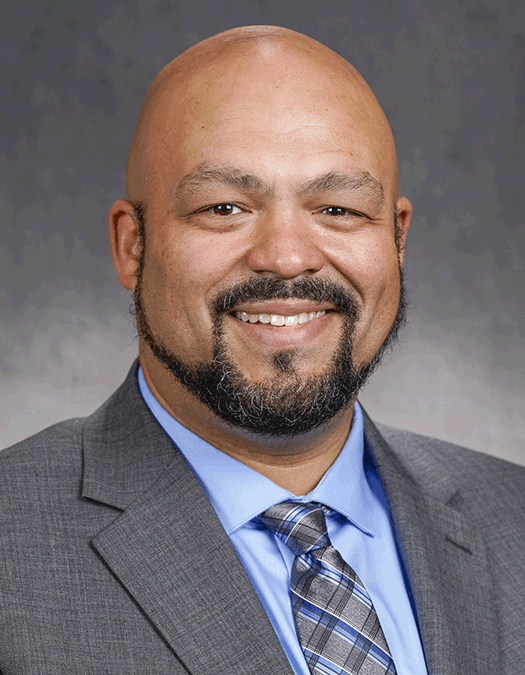
Rep. Walter Hudson
Sponsored bills
Maddy summaryHF 492 appropriates $250,000 for fiscal year 2026 and $250,000 for fiscal year 2027 from the general fund to fund mental health services and outdoor recreational activities for currently serving military personnel and veterans in Minnesota. The funds are directed to Hometown Hero Outdoors, a Stillwater-based nonprofit, to support programs promoting mental wellness, community interaction with professionals, and quality of life through outdoor engagement. This bill specifically provides dedicated funding for an existing nonprofit's established services rather than creating new state programs. It directly affects military members and veterans by expanding access to mental health support and outdoor activities through this designated organization. The appropriation is limited to these specific fiscal years and services as outlined in the bill.
Maddy summaryHF 1989 increases funding for Minnesota school districts by raising the "local optional revenue" allowances used to calculate state aid. It sets the first-tier allowance at $550 for fiscal year 2027 (up from $300) and maintains the second-tier allowance at $424 through 2027, with future increases tied to the general education funding formula. School districts receive more state aid when they levy less than the maximum allowed under these new formulas, which include specific "equalizing factors" for different fiscal years (e.g., $626,450 for second-tier in 2025). The bill appropriates funds to cover this increased aid, effective for fiscal year 2027 and later.
Maddy summaryHF 2448 prohibits counties, cities, and towns in Minnesota from banning the sale of flavored tobacco products, such as those with fruit, chocolate, mint, or candy flavors. It amends Minnesota Statutes to state that local governments may not enact ordinances that ban these products or create regulations making their sale impossible within their boundaries. The bill specifically defines "flavored products" as tobacco or nicotine products with non-tobacco tastes distinguishable before or during consumption. This law overrides any existing or future local ordinances attempting to restrict or ban such sales, while allowing local governments to maintain other tobacco sales regulations. The bill takes effect the day after final enactment.
Maddy summaryHF 4 proposes a constitutional amendment requiring Minnesota to return budget surplus funds to taxpayers. If approved, it would create a "Minnesota tax relief account" funded by revenue exceeding 105% of projected spending, using those funds to refund or reduce property and income taxes. Taxpayers would receive direct refunds or tax reductions, but only up to the amount they owe in taxes, with the account funded annually from the state's general fund surplus. The amendment must be voted on by voters in the 2026 general election.
Maddy summaryHF 28 amends Minnesota energy law to add a specific exemption for data centers. It defines "emergency backup generator" and creates a new exemption (section 216B.243, subdivision 8(12)) allowing data centers to install combinations of backup generators totaling 50,000 kilowatts or more without undergoing certain regulatory reviews. This directly affects large data center operators by streamlining approval for their critical backup power systems. The bill modifies existing exemption rules to explicitly cover these high-capacity generator setups, reducing regulatory hurdles for data center infrastructure projects.
Maddy summaryHF 2168 increases penalties for motor vehicle theft under Minnesota Statutes § 609.52. The bill amends the statute to explicitly include "motor vehicle" as a circumstance triggering a higher penalty tier (up to 10 years in prison or $20,000 fine), previously not specifically listed under this level. This directly affects individuals convicted of stealing vehicles, moving such offenses to a more severe sentencing category. The change applies to crimes committed on or after August 1, 2025, and modifies the existing penalty structure without changing other theft categories.
Maddy summaryHF 2154 prohibits Minnesota law enforcement agencies from using traffic safety cameras (including speed and red-light cameras) for traffic enforcement. The bill cancels a $3.5 million appropriation for camera systems and repeals related statutes (Minnesota Statutes 2024, sections 169.011, 169.06, 169.14, and 169.147) that previously allowed such camera use. This directly affects local police departments and municipalities that operated or planned to use traffic cameras for issuing citations. The bill takes effect after August 1, 2025, ending the use of these systems for enforcement purposes.
Maddy summaryMinnesota's legislature has passed a resolution requesting Congress to call a constitutional convention under Article V of the U.S. Constitution. The resolution asks for proposed amendments to impose budget rules on federal spending, reduce federal government authority over states, and limit terms for federal officials and members of Congress. This is a procedural step - Minnesota is formally petitioning Congress, not creating new laws. The resolution serves as Minnesota's ongoing application for such a convention, pending similar actions by two-thirds of states.
Maddy summaryHF 2173 makes it a crime to approach or remain within 25 feet of police officers, firefighters, or ambulance personnel while they are performing emergency duties after receiving a verbal warning and with intent to interfere. The bill directly affects first responders by adding specific legal protection against obstruction during active emergencies. Key provisions require the person to know the individual's status as a first responder, have been warned verbally to stay back, and intend to hinder their work. This amendment to Minnesota Statutes section 609.50, effective August 1, 2025, criminalizes such behavior with penalties outlined in the statute.