

Maddy summarySB 612 eliminates the requirement for victims to pay costs when courts deliver personal protection orders. It directly affects individuals seeking court-issued protection from domestic violence or abuse. The bill removes a financial barrier by changing court procedures so victims no longer cover the expenses for serving these protective orders. This is a procedural change to Michigan's civil court rules, shifting the cost responsibility from victims to the court system.
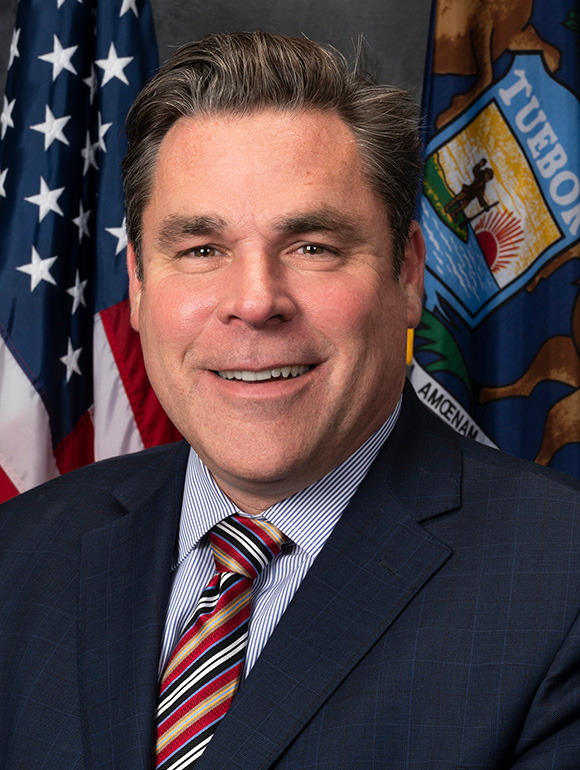
Sen. John Damoose
Sponsored bills
Maddy summarySB 611 eliminates court costs for serving personal protection orders in Michigan. It directly affects individuals seeking protection from domestic violence, harassment, or abuse who must legally serve court orders on others. The bill amends Michigan’s civil procedure laws (MCL 600.2559 & 600.2950) to remove the requirement that these individuals pay fees for process servers. This change simplifies access to legal protection by removing a financial barrier for vulnerable residents.
Maddy summarySB 615 amends Michigan's Public Health Code to clarify when individuals residing at campgrounds are considered "temporary" for regulatory purposes. It establishes specific conditions under which a campground resident qualifies as temporary, including if the local area has declared a housing shortage (via master plan, worker shortage in key industries like healthcare or construction, or data showing low rental vacancy rates or high rent costs). This affects campground operators and residents by defining residency status based on community-level housing or workforce data, rather than individual circumstances. The bill does not change general campground rules but provides clear criteria for determining temporary residency status.
Maddy summarySB 714 amends Michigan's sports betting law to regulate advertising and promotions for internet gaming. It requires all sports betting ads to be pre-approved by the state board and prohibits advertising to anyone under 21, limiting ads to audiences where under 21s make up no more than 30% of viewers/readers. The bill also bans deceptive claims, mandates disclaimers about gambling addiction helplines, and prohibits sponsorships targeting minors (with limited exceptions for venues or channels). Violations carry fines up to $5,000 for repeat offenses or license revocation for third violations. These rules apply directly to sports betting operators and their marketing efforts.
Maddy summarySB 713 regulates advertisements for internet gaming in Michigan by requiring all ads to be approved by the state board and comply with state law. It bans deceptive marketing, prohibits advertising to anyone under 21 (with strict proof that under 30% of an ad's audience is under 21), and mandates addiction disclaimers with a helpline number. Internet gaming operators face fines up to $5,000 for first violations and license revocation for repeat offenses. The bill directly affects online gaming companies and advertisers, while allowing municipalities to set reasonable sign restrictions that don’t conflict with the law.
Maddy summarySCR 8 is a memorial resolution honoring Irma Clark-Coleman, a former Michigan state legislator who served in the House (1999-2002) and Senate (2003-2010). The resolution recognizes her decades of public service at both local (Wayne County) and state levels, including her advocacy for education reform and legislative work on children’s issues. Unanimously adopted by the Michigan Legislature in December 2025, it serves as a formal tribute to her legacy and does not enact any policy changes.
Maddy summarySB 715 amends Michigan’s Strategic Fund Act to require the Michigan Strategic Fund to comply with the federal Uyghur Forced Labor Prevention Act (UFLPA) when making investments. This means the fund cannot use state money to support economic development projects involving goods produced using forced labor from Xinjiang, China. The bill directly affects the Michigan Strategic Fund (which manages state economic development grants) and businesses receiving those funds. It adds a new requirement (Section 7c) to prevent state resources from indirectly supporting forced labor, aligning with federal law. The bill is currently pending review in the Senate Finance Committee.
Maddy summarySB 251 proposes a new law requiring water utilities to provide clearer billing information and establish affordability programs for low-income households. It directly affects public water systems by mandating transparent rate structures and creating a process for discounted service rates. The bill aims to make water costs more predictable and accessible through concrete requirements for utility reporting and customer assistance. Specific implementation details are still under review by the committee.
Maddy summarySB 250 creates a new program to provide financial assistance for water bills to low-income households. It adds specific provisions to the state’s human services law (MCL 400.1-400.119b) to establish eligibility criteria and program administration. The policy directly affects residents struggling to afford basic water services, aiming to reduce financial strain through state-funded support. This change modifies existing law to integrate water affordability into human services programs.
Maddy summarySB 255 would decriminalize restoring water service to a lawfully occupied home after a shutoff due to non-payment, provided no metering or backflow devices are damaged. It changes penalties from potential felony charges to civil violations, with first offenses requiring up to 25 hours of community service, and repeat offenses limited to fines under $500 or up to 100 hours of service. The bill applies specifically to residents who restore service themselves, not utility workers or others. It also mandates referrals to water assistance programs for those cited under this provision.