

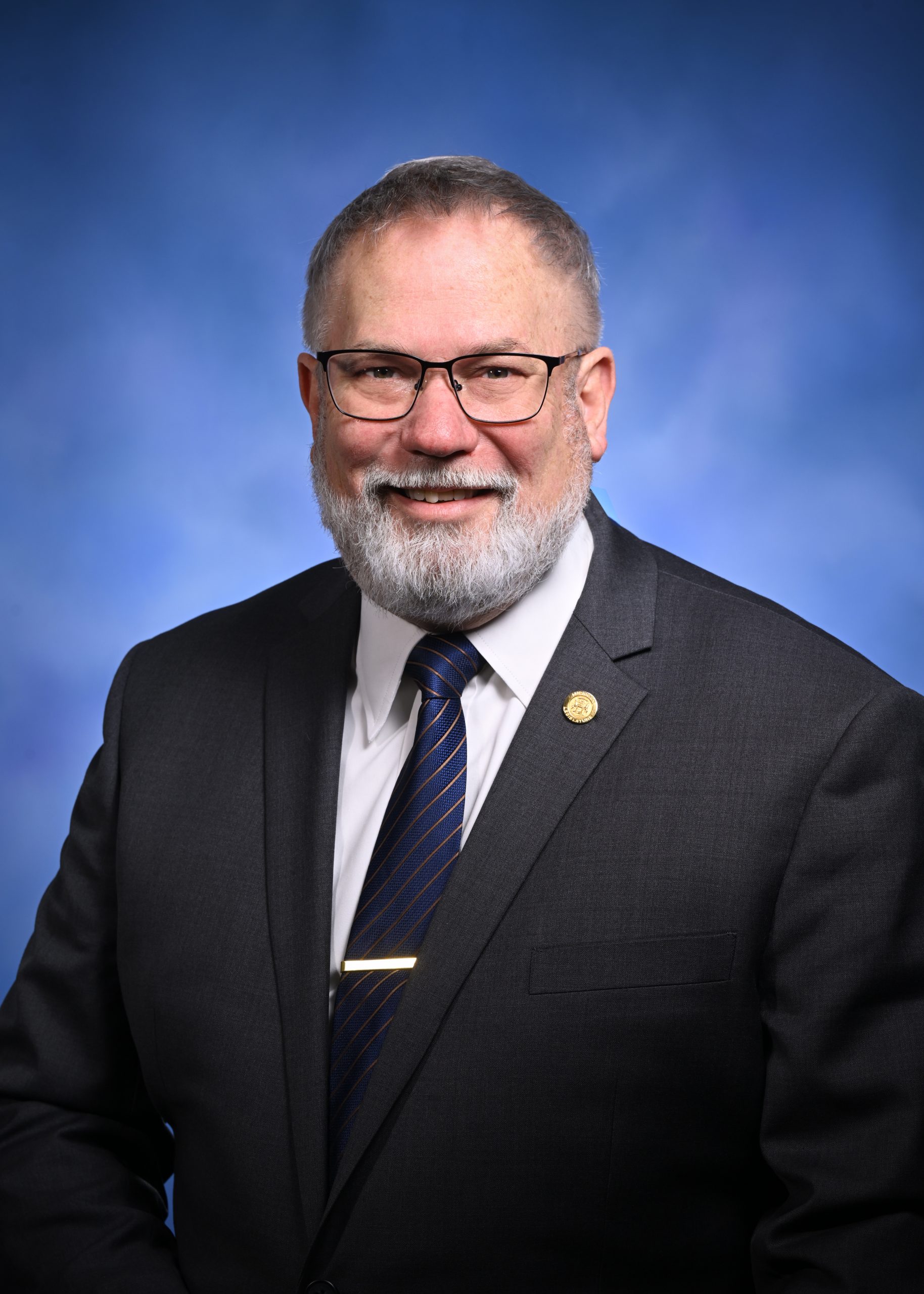
Photo of David Martin
R Michigan House · District 68 On the 2026 ballot

Rep. David Martin

Compare
Total votes
2,883
all sessions
Attendance
100%
9 missed
Near the chamber average
With party
95%
of cast votes
Higher than 86% of chamber peers
Bipartisan score
2%
crosses aisle rarely
Lower than 88% of chamber peers
Sponsored
670
bills & resolutions
Near the chamber average
Committees
4
assignments
670 bills and resolutions

Sponsored bills

Total
670
Primary
63
Co-sponsor
607
This page
670
matching current filters
Co-sponsor HB 5711
Passed · Michigan House · Co-sponsor
Energy: alternative sources; clean and renewable energy standards; eliminate. Amends title & secs. 1, 3, 7, 9, 11, 75, 77, 83, 87, 101, 173 & 191 of 2008 PA 295 (MCL 460.1001 et seq.) & repeals subpt. A of pt. 2 & sec. 179 of 2008 PA 295 (MCL 460.1022 - 460.1054 & 460.1179). TIE BAR WITH: HB 5710'26

Maddy summaryThis bill amends Michigan's Clean and Renewable Energy and Energy Waste Reduction Act to update definitions and requirements for renewable energy programs. It directly affects electric and natural gas providers, state agencies, and energy consumers by modifying how clean energy standards are calculated and how costs are recovered from customers. Key changes include redefining clean energy systems to include natural gas plants with carbon capture technology, establishing a wind energy resource zone board, and adjusting rules for customer generation and net metering. The legislation also updates provisions related to energy waste reduction programs and authorizes new residential energy improvement initiatives.

Passed May 14, 2026 1 co-sponsor
Co-sponsor HB 5710
Passed · Michigan House · Co-sponsor
Energy: electricity; integrated resource planning process; require consideration of all energy sources. Amends secs. 6a, 6l, 6m & 6t of 1939 PA 3 (MCL 460.6a et seq.) & repeals sec. 6aa of 1939 PA 3 (MCL 460.6aa). TIE BAR WITH: HB 5711'26

Maddy summaryThis bill requires electric, gas, and steam utilities in Michigan to consider all available energy sources when planning their integrated resource portfolios. It amends existing state laws governing utility rate-setting and planning processes to ensure comprehensive evaluation of different energy options. The legislation also establishes specific timelines for utility rate applications and includes provisions for partial rate relief motions for smaller gas utilities. Additionally, the bill repeals a specific section of the Public Service Commission Act related to stranded costs.

Passed May 14, 2026 1 co-sponsor
Co-sponsor HB 5956
In committee · Michigan House · Co-sponsor
Natural resources: wildlife; requirement to register and report deer pelts; eliminate. Amends secs. 42504 & 42505 of 1994 PA 451 (MCL 324.42504 & 324.42505).

Maddy summaryThis bill removes the legal requirement for hunters and dealers in Michigan to report the number of deer pelts they possess or trade. While the law currently mandates that individuals holding licenses must submit notarized reports on all other fur-bearing animals and game birds, this legislation specifically exempts deer pelts from those reporting obligations. The change affects both hunters who keep pelts after the season and businesses that buy or sell them, allowing them to exclude deer pelts from their monthly and seasonal filings to the state department.

In committee May 13, 2026 1 co-sponsor
Co-sponsor HR 313
Passed · Michigan House · Co-sponsor
A resolution to urge Jocelyn Benson to release all information in her possession related to the Southern Poverty Law Center’s operations, including any details concerning the organization’s alleged payments to individuals associated with extremist groups, and to publicly address her role in the organization.

Maddy summaryThis House resolution urges Michigan Secretary of State Jocelyn Benson to voluntarily release documents and information regarding her past work with the Southern Poverty Law Center (SPLC), specifically concerning the organization's alleged payments to extremist groups. The bill is based on a federal indictment that accuses the SPLC of fraudulently diverting donor money to fund individuals associated with hate groups while claiming to fight them. It highlights Benson's previous roles as an undercover investigator and board member at the SPLC during the period of the alleged misconduct, suggesting she may possess unique knowledge of these operations. The resolution calls for her to publicly address her involvement to ensure transparency and avoid any appearance of impropriety, citing her prior refusal to comply with a separate subpoena as a reason for this request.

Passed May 13, 2026 1 co-sponsor
Co-sponsor HB 5320
Passed · Michigan House · Co-sponsor
Criminal procedure: sentencing guidelines; sentencing guidelines for flying over or trespassing on a key facility or critical infrastructure with an unmanned aircraft or vehicle; provide for. Amends 16b, ch. XVII of 1927 PA 175 (MCL 777.16b). TIE BAR WITH: HB 5319'25

Maddy summaryHB 5320 amends Michigan's criminal sentencing guidelines to specifically address unauthorized drone flights over or trespassing on critical infrastructure, such as power plants or bridges. It would establish new sentencing standards for individuals operating unmanned aircraft or vehicles near these facilities, directly affecting drone operators who violate these restrictions. The bill modifies Section 16b of the Michigan Code of Criminal Procedure (MCL 777.16b) to create clear penalties for such offenses, moving beyond general trespass laws. This change aims to strengthen legal consequences for drone-related threats to public safety infrastructure.

Passed May 12, 2026 1 co-sponsor
Co-sponsor HB 5319
Passed · Michigan House · Co-sponsor
Aeronautics: unmanned aircraft systems; flying over or trespassing on a key facility or critical infrastructure with an unmanned aircraft or vehicle; prohibit. Amends sec. 45a of 1931 PA 328 (MCL 750.45a).

Maddy summaryHB 5319 prohibits using unmanned aircraft (drones) to fly over or trespass on key facilities, correctional facilities, law enforcement facilities, or critical infrastructure. It directly affects drone operators who might fly near these locations without authorization. The bill creates criminal penalties (up to 4 years in prison or $2,500 fine) for violations, while exempting public safety agencies and commercial operators complying with federal FAA rules. Key provisions include a 90-day delay before restrictions apply and definitions of "key facility" (per §552c) and "critical infrastructure" (aligned with federal designations).

Passed May 12, 2026 1 co-sponsor
Co-sponsor HB 5321
Passed · Michigan House · Co-sponsor
Aeronautics: unmanned aircraft systems; database of restricted zones and flight paths for unmanned vehicles; create and provide penalties for using unmanned vehicles in a restricted zone or flight path. Creates new act. TIE BAR WITH: HB 5321'25

Maddy summaryHB 5321 creates a state geofencing database managed by Michigan's transportation department to list restricted zones where unmanned vehicles (including drones, ground vehicles, and watercraft) cannot operate. The bill requires the department to develop a public website and a mobile app that warns operators when approaching restricted areas like critical infrastructure, airports, or key facilities. Operating an unmanned vehicle in a restricted zone is a felony punishable by up to 4 years in prison or a $2,500 fine. This law directly affects anyone using unmanned vehicles in Michigan, establishing a new enforcement system to prevent unauthorized flights or operations in sensitive areas.

Passed May 12, 2026 1 co-sponsor
Co-sponsor HB 5322
In committee · Michigan House · Co-sponsor
Criminal procedure: sentencing guidelines; sentencing guidelines for using an unmanned vehicles in a restricted zone or flight path; provide for. Amends sec. 12k, ch. XVII of 1927 PA 175 (MCL 777.12k). TIE BAR WITH: HB 5330'25

Maddy summaryHB 5322 proposes to update Michigan's sentencing guidelines for crimes involving the unauthorized use of unmanned vehicles (like drones) in restricted zones or flight paths, such as near airports or government facilities. If passed, it would create specific sentencing rules for these offenses, directly affecting drone operators who violate such restrictions. The bill amends existing criminal procedure code section 777.12k to establish these new sentencing parameters for this specific violation. This is a policy change focused on clarifying penalties for drone misuse in sensitive areas, not a procedural or commemorative measure.

In committee May 12, 2026 1 co-sponsor
Co-sponsor HB 5324
In committee · Michigan House · Co-sponsor
Aeronautics: unmanned aircraft systems; adoption of an official no drone zone sign for use in this state; provide for. Amends 2016 PA 436 (MCL 259.301 - 259.331) by adding sec. 29.

Maddy summaryHB 5324 standardizes "No Drone Zone" signage across Michigan by requiring the state Department of Transportation to adopt a sign based on the FAA's existing design. The sign must display "No Drone Zone" at the top, include a drone image with a red circle slash, state that drone takeoffs/landings are prohibited, and leave space for the specific local ordinance or law enforcing the restriction. This bill directly affects property owners, businesses, and local governments that currently post drone restrictions, providing a uniform format to clarify existing local drone prohibitions without creating new restrictions. The Department of Transportation will publish guidance for using the sign, which must align with current local rules governing drone operations.

In committee May 12, 2026 1 co-sponsor
Co-sponsor HB 5327
Passed · Michigan House · Co-sponsor
Crimes: trespassing; downing of a trespassing drone; allow. Amends sec. 22 of 2016 PA 436 (MCL 259.322).

Maddy summaryHB 5327 amends Michigan's drone law to prohibit specific drone uses that violate privacy or safety. It bans operating drones to harass people (as defined by existing harassment laws), capture private images in violation of privacy expectations, follow or photograph individuals (especially for sex offenders under registration requirements), or disturb quiet enjoyment of private homes. The bill directly affects all drone operators, with additional restrictions for sex offenders. Key mechanisms include expanding existing drone restrictions to cover harassment, privacy invasions, and proximity to restraining orders. The law takes effect 90 days after enactment.

Passed May 12, 2026 1 co-sponsor
Showing 61 to 70 of 670 bills
Previous 1 6 7 8 67 Next