

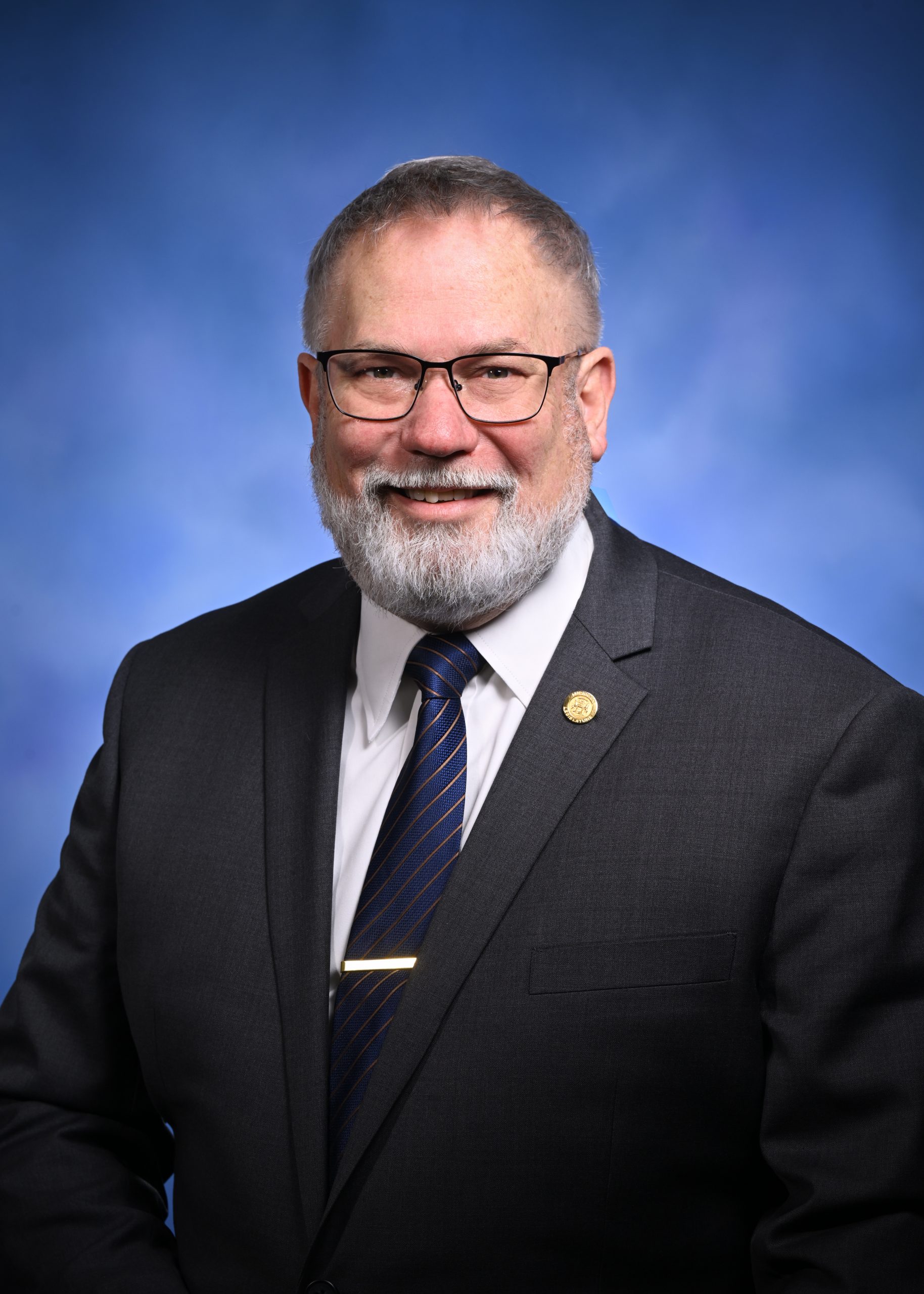
Photo of David Martin
R Michigan House · District 68 On the 2026 ballot

Rep. David Martin

Compare
Total votes
2,883
all sessions
Attendance
100%
9 missed
Near the chamber average
With party
95%
of cast votes
Higher than 86% of chamber peers
Bipartisan score
2%
crosses aisle rarely
Lower than 88% of chamber peers
Sponsored
670
bills & resolutions
Near the chamber average
Committees
4
assignments
670 bills and resolutions

Sponsored bills

Total
670
Primary
63
Co-sponsor
607
This page
670
matching current filters
Co-sponsor HB 5325
Passed · Michigan House · Co-sponsor
Aeronautics: unmanned aircraft systems; destruction of drones flying in violation of critical infrastructure guidelines; allow. Amends 2016 PA 436 (MCL 259.301 - 259.331) by adding sec. 8a.

Maddy summaryHB 5325 allows police officers and private security personnel at critical infrastructure sites (like power plants or bridges) to disable or destroy drones flying in violation of existing laws protecting those sites. It directly affects drone operators who fly near protected infrastructure without authorization. The key provision grants immunity from liability for property damage to the drone when officers act under this law, but only if federal law does not preempt it. This bill creates a specific legal mechanism for responding to unauthorized drone activity at critical infrastructure locations.

Passed May 12, 2026 1 co-sponsor
Co-sponsor HB 5323
Passed · Michigan House · Co-sponsor
Aeronautics: unmanned aircraft systems; installation of geofencing around critical infrastructure or buildings; allow. Amends 1984 PA 431 (MCL 18.1101 - 18.1594) by adding sec. 219a.

Maddy summaryHB 5323 authorizes Michigan state agencies to install technology that detects or blocks unauthorized drones near state-owned buildings and critical infrastructure like power plants or water facilities. The bill allows for two key mechanisms: (1) devices to detect drones flying overhead, and (2) systems to prevent drones from entering restricted airspace. It also requires coordination with the state transportation department to include these locations in a statewide geofencing database. The law explicitly states it does not override federal drone regulations.

Passed May 12, 2026 1 co-sponsor
Co-sponsor HB 5326
Passed · Michigan House · Co-sponsor
Aeronautics: unmanned aircraft systems; destruction of drones flying in violation of Federal Aviation Administration guidelines; allow. Amends 2016 PA 436 (MCL 259.301 - 259.331) by adding sec. 8.

Maddy summaryHB 5326 would allow Michigan police officers to intercept, disable, or destroy drones flying in violation of federal aviation rules or posing public safety risks. It directly affects drone operators whose flights breach FAA guidelines and provides officers immunity from liability for damage to the drones. The bill’s key provision requires that federal law first be amended to permit such actions before the state law takes effect. This bill is currently in committee review and does not change existing federal drone regulations.

Passed May 12, 2026 1 co-sponsor
Co-sponsor HB 5515
Passed · Michigan House · Co-sponsor
Weapons: other; definition of dangerous weapon; provide for. Amends sec. 227 of 1931 PA 328 (MCL 750.227).

Maddy summaryHB 5515 amends Michigan's penal code to clarify the definition of a "dangerous weapon" under Section 227. It specifically includes double-edged nonfolding stabbing instruments longer than 5 inches, such as daggers, dirks, and stilettos, in the list of prohibited weapons. This change directly affects individuals carrying these weapons outside their home, business, or personal property without a valid license. The bill does not create new restrictions but refines the legal definition governing when such items are considered illegal to carry.

Passed May 7, 2026 1 co-sponsor
Co-sponsor HB 5308
Passed · Michigan House · Co-sponsor
Watercraft: registration; invasive species prevention and remediation watercraft decals; provide for. Amends sec. 80124a of 1994 PA 451 (MCL 324.80124a).

Maddy summaryHB 5308 requires Michigan watercraft owners to purchase an annual $35 "Great Lakes protection" decal. Revenue from these decals funds invasive species prevention and remediation efforts under Section 80124b. The bill mandates that the state agency discontinue sales if fewer than 2,000 decals are sold by September 2006, then fewer than 500 annually after that. It directly affects recreational boat owners in Michigan who must buy the decal to legally operate watercraft. The decal design is specified but placement rules allow flexibility for law enforcement.

Passed May 7, 2026 1 co-sponsor
Co-sponsor HB 5558
Passed · Michigan House · Co-sponsor
Businesses: other; regulation and licensing of earned wage access service providers; provide for. Creates new act.

Maddy summaryHB 5558 creates a new licensing system for businesses providing "earned wage access services" (EWAS), which allow workers to access part of their earned but unpaid wages before payday. It requires all EWAS providers (excluding banks, payroll services, and employers offering early pay) to obtain a state license, pay annual fees based on business volume, and submit detailed application information. The law defines key terms like "earned but unpaid income" (wages earned but not yet paid by an employer) and outlines penalties for unlicensed operation. This directly affects EWAS providers operating in Michigan, imposing regulatory requirements while exempting certain financial institutions and employer-provided early wage options.

Passed Apr 30, 2026 1 co-sponsor
Co-sponsor HB 5560
In committee · Michigan House · Co-sponsor
Labor: hours and wages; regulation of wages and fringe benefits; provide for exemption for certain earned wage access services. Amends 1978 PA 390 (MCL 408.471 - 408.490) by adding sec. 18a. TIE BAR WITH: HB 5558'26

Maddy summaryHB 5560 exempts "earned wage access services" (like apps allowing workers to access earned wages before payday) from Michigan's standard wage and fringe benefit laws, as defined in the separate "earned wage access services act." This exemption applies only to services complying with that specific act, removing them from the scope of the existing 1978 wage law (MCL 408.471-408.490). The bill is conditional, requiring the enactment of HB 5558 first before taking effect. It directly affects providers of these early-wage access services, allowing them to operate under different rules than traditional wage payment systems.

In committee Apr 30, 2026 1 co-sponsor
Primary HB 5565
In committee · Michigan House · Lead sponsor
Financial institutions: other; deferred presentment service transactions act; provide for exemption for certain earned wage access services. Amends sec. 11 of 2005 PA 244 (MCL 487.2131). TIE BAR WITH: HB 5558'26

Maddy summaryHB 5565 amends Michigan's Deferred Presentment Service Transactions Act to exempt licensed earned wage access services from requiring a separate license under that law. This directly affects companies offering early paycheck access services (like instant cash advances on upcoming wages), allowing them to operate under their existing earned wage access licenses instead of obtaining additional permits. The key provision adds a specific exemption in Section 11, clarifying that these services are not subject to the standard licensing requirements for check-cashing or short-term loan businesses. The change removes a regulatory barrier for these financial products, streamlining their legal operation in Michigan. (Note: The bill's effective date depends on another related bill, HB 5558, passing.)

In committee Apr 30, 2026 0 co-sponsors
Co-sponsor HB 5559
In committee · Michigan House · Co-sponsor
Financial institutions: money transmitters; money transmission services act; provide for exemption for certain earned wage access services. Amends sec. 4 of 2006 PA 250 (MCL 487.1004). TIE BAR WITH: HB 5558'26

Maddy summaryHB 5559 exempts licensed earned wage access services from Michigan's money transmission licensing requirements. It directly affects companies offering "earned wage access" services (like early paycheck access for workers), which are already regulated under a separate state law. The bill adds a specific exemption in the Money Transmission Services Act, stating that these providers are not subject to licensing if they operate under the existing earned wage access services act. This change simplifies regulatory compliance for these businesses without altering other money transmission rules.

In committee Apr 30, 2026 1 co-sponsor
Primary HB 5564
In committee · Michigan House · Lead sponsor
Civil procedure: other; regulation and licensing of earned wage access service providers; provide for. Amends sec. 4012 of 1961 PA 236 (MCL 600.4012). TIE BAR WITH: HB 5558'26

Maddy summaryHB 5564 amends Michigan's garnishment law to clarify rules for withholding wages or salary (referred to as "periodic payments"). It requires plaintiffs to send regular payment statements to defendants and garnishees (like employers), sets strict deadlines for default judgments, and establishes a 28-day cure period for employers who miss garnishment requirements. The bill specifically excludes earned wage access services (like paycheck advance apps) from these garnishment rules, as noted in section 13(d). This update aims to streamline the process for all parties involved in wage garnishments while ensuring transparency and reducing errors.

In committee Apr 30, 2026 0 co-sponsors
Showing 71 to 80 of 670 bills
Previous 1 7 8 9 67 Next