

Maddy summaryHB 4872 requires Michigan public schools to receive at least $210 per student annually starting in fiscal year 2026 for mental health and safety programs. It directly affects all public schools in the state by mandating this minimum per-pupil funding level, defined using the standard "membership" calculation from Michigan's school aid law. The bill creates a new funding mechanism within the School Code to address school safety and student mental health needs. This is a concrete policy change that would allocate state funds specifically for these purposes, not a procedural or commemorative measure.
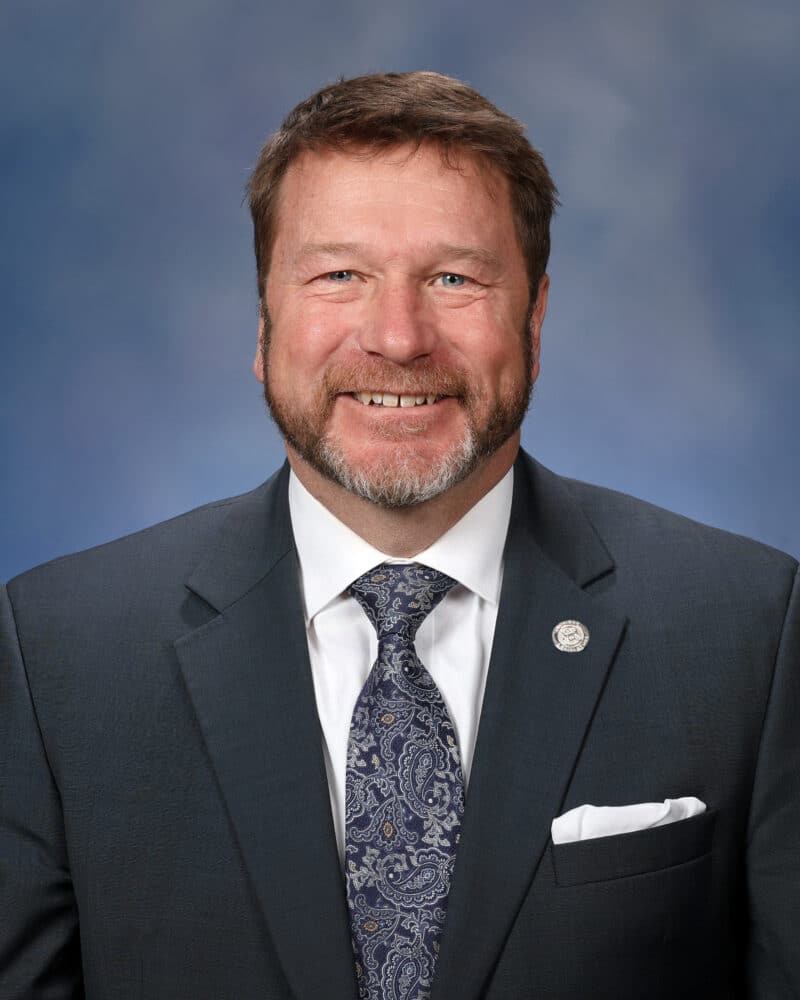
Rep. Matt Longjohn
Sponsored bills
Maddy summaryHB 4876 requires Michigan's legislature to appropriate annual funding starting in fiscal year 2026 to support career and technical education (CTE) and vocational-technical programs in public schools. It mandates that this funding must equal or exceed the total amount allocated for these programs in fiscal year 2025 under existing law (sections 61a, 61b, 61d, and 62 of the State School Aid Act of 1979). The bill directly affects school districts offering CTE programs by guaranteeing stable, inflation-matched funding levels. This provision aims to maintain current program resources without specifying new educational requirements or eligibility changes.
Maddy summaryHB 4867 requires local health departments or physicians to refer children under 3 years old with blood lead levels above 10 micrograms per deciliter to Michigan’s Early On program (which supports children with developmental needs). This amendment to the Public Health Code specifically adds this referral mandate to existing lead poisoning prevention requirements. The bill does not create new programs but directs existing resources toward early intervention for affected children. It maintains annual reporting requirements for the department on lead screening data and program expenditures. The bill directly affects young children with elevated lead levels and the health providers who manage their care.
Maddy summaryHB 4869 mandates that Michigan's legislature appropriate at least $2.6 billion annually starting in the 2025-2026 fiscal year to fund special education services for public school students. This funding directly supports school districts providing services under specific sections of Michigan's State School Aid Act (MCL 388.1651a, 388.1651c, 388.1651d, 388.1651e, 388.1653a, 388.1654, and 388.1656). The bill requires the state to set aside this specific amount each year for special education programs, rather than relying on existing funding formulas. It applies to all public school districts serving students with disabilities under the referenced statutes. The bill was introduced on September 11, 2025, and referred to the Appropriations Committee.
Maddy summaryThis joint resolution proposes a constitutional amendment to clarify when Michigan's Supreme Court must determine if rebellion or invasion justifies suspending habeas corpus. It requires the court to rule within 48 hours if the governor, attorney general, or both legislative chambers (via roll call vote) request such a determination. The amendment directly affects the Supreme Court's role in emergency civil liberties decisions, ensuring a timely judicial check on potential government actions during crises. It does not change existing habeas corpus protections but adds procedural clarity to emergency suspensions.
Maddy summaryHB 4873 mandates annual state funding of $610 million for Michigan's Great Start Readiness Program (GSRP), beginning in fiscal year 2026. This program provides early childhood education and care for preschool-aged children, primarily affecting low-income families and communities with limited access to early learning services. The bill requires the legislature to appropriate this specific amount each year, guaranteeing stable funding for GSRP as defined under existing law (MCL 388.1632d). It does not create new eligibility rules but ensures consistent financial support for the existing program.
Maddy summaryHB 4877 requires Michigan's legislature to appropriate annual funds starting in fiscal year 2026 for public schools to support at-risk pupils, as defined under existing law. Each school would receive 35% of its base foundation allowance (the standard funding amount under the State School Aid Act) specifically for these students. The bill directly affects all public schools in Michigan by mandating dedicated supplemental funding for at-risk pupils, tied to their existing state funding allocation. This policy change creates a new, recurring funding mechanism for targeted student support beginning in 2026.
Maddy summaryHB 4871 increases Michigan's funding for free school meals, allocating up to $200 million for the 2024-2025 school year to cover costs not reimbursed by federal programs. It requires participating public schools (serving pre-K-12) to provide free breakfast and lunch to all students, maximize federal reimbursement through the Community Eligibility Provision (CEP), and collect family income data to determine eligibility. Schools must also offer accommodations for dietary needs like gluten-free, vegetarian, and allergy-specific meals upon request. This bill directly affects Michigan public school districts by changing how they receive state funding to support universal free meal programs.
Maddy summaryHB 4868 creates supplemental funding for Michigan school districts to support English language learners (ELLs) starting in the 2026 fiscal year. To qualify, districts must administer the WIDA ACCESS or WIDA Alternate ACCESS proficiency test to ELLs. Funding is distributed based on test scores: 75% of the target foundation allowance for scores 1.0-1.9, 50% for 2.0-2.9, and 35% for 3.0-3.9. This directly affects school districts serving ELLs who meet the assessment requirements under Michigan’s School Code.
Maddy summaryHB 4944 requires police to clearly inform individuals arrested for criminal offenses about their rights. Specifically, it mandates that officers advise arrestees of their right to remain silent, their right to have an attorney present during questioning, and that anything they say may be used against them in court. This directly affects people arrested for crimes in Michigan, ensuring they receive these standard due process warnings upon arrest. The bill amends Michigan's criminal procedure code to add this requirement as a new Section 1a in Chapter III.