

Maddy summaryHB 4943 prohibits Michigan state and local governments from using public funds for legal actions that violate Section 12 of the state constitution (which protects equal protection and due process). It directly affects state agencies, cities, counties, and other local entities that manage public funds. The bill's key provision requires all government officials to ensure no state or local money is spent on lawsuits or proceedings conflicting with constitutional rights. This creates a clear legal barrier against government spending on cases deemed unconstitutional under Michigan's foundational law.
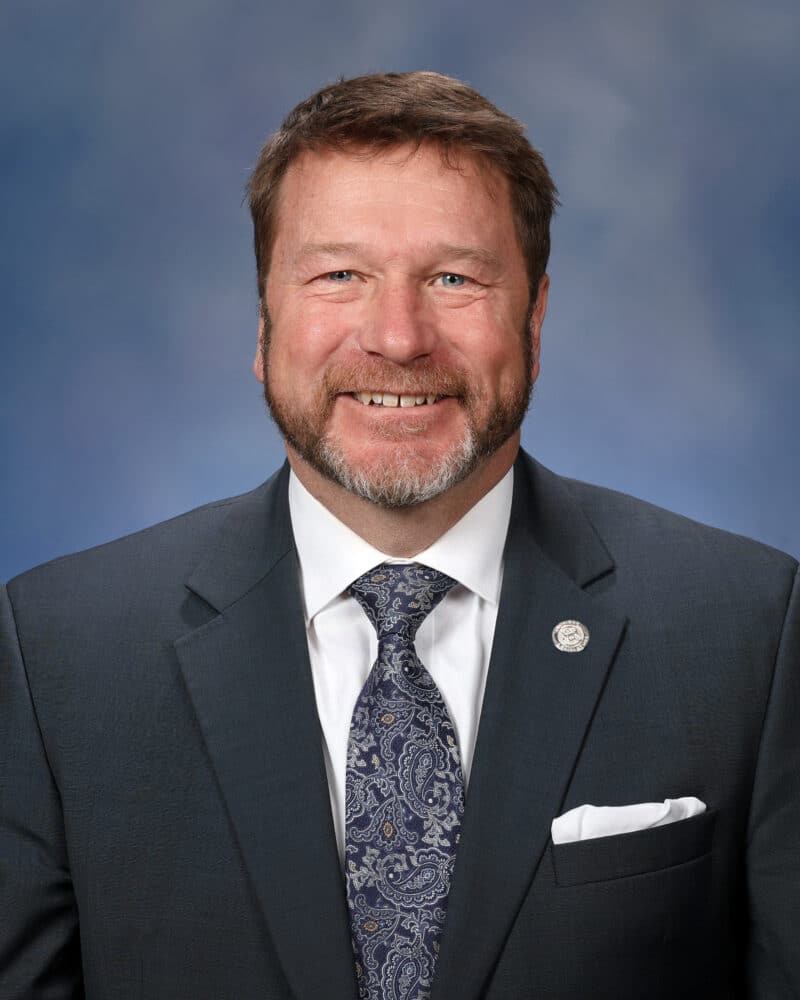
Rep. Matt Longjohn
Sponsored bills
Maddy summaryHB 4942 prohibits Michigan state and local governments from using public funds to support legal actions that would violate Michigan’s constitution if the federal government suspends habeas corpus (a legal challenge to unlawful detention). It specifically blocks state/local spending on lawsuits or proceedings that conflict with Article I, Section 12 of Michigan’s 1963 Constitution, which protects individual liberty. The bill applies directly to state agencies, local governments, and officials who manage public funds. It takes effect immediately upon federal suspension of habeas corpus rights, creating a clear financial restriction for government entities.
Maddy summaryHB 4858 would prohibit Michigan state and local government entities from sharing personal information (like names, addresses, Social Security numbers, or criminal history) with anyone seeking it for enforcing federal immigration law, unless a court-issued warrant is presented. Government agencies must verify if a request is for immigration enforcement and deny disclosure without a warrant. The bill requires agencies to report annual requests related to immigration enforcement to the attorney general and legislature. It directly affects local law enforcement, courts, and other government offices that handle public records, as well as federal immigration authorities seeking such data.
Maddy summaryHB 4859 prohibits law enforcement officers from conducting immigration enforcement actions (like arrests, interviews, or searches) in specific sensitive locations, including schools, places of worship, hospitals, courthouses, and facilities serving vulnerable populations. The bill allows exceptions only if a court orders entry or if an immediate threat to public safety requires action. It directly affects law enforcement officers operating in Michigan and individuals present at these locations, such as students, patients, and worshippers. The law creates clear boundaries for immigration enforcement to protect access to essential services and community spaces.
Maddy summaryThis non-binding resolution (HR 168) urges the Trump-Vance Administration to stop what it describes as "partial nationalization of Intel Corporation" and to avoid further government takeover of private businesses. It calls for preserving "free market capitalism" by preventing federal intervention in private enterprises, specifically citing Intel as an example of threatened private-sector independence. The resolution has no legal effect - it is a symbolic statement expressing opposition to government ownership of companies, not a policy change. It was introduced on September 10, 2025, and referred to the Committee on Government Operations.
Maddy summaryThis resolution (HR 170) symbolically declares September 10, 2025, as "World Suicide Prevention Day" in Michigan. It recognizes suicide as a critical public health issue in the state, noting it is the second leading cause of death for Michiganders aged 10-24. The resolution aims to raise awareness, honor those lost to suicide, support survivors, and encourage community efforts in suicide prevention. It does not create new laws or funding but serves as a formal acknowledgment of ongoing mental health advocacy.
Maddy summaryThis resolution (HR 167) symbolically declares September 13, 2025, as "Recovery Day" in Michigan. It honors recovery community organizations and individuals managing substance use disorders, recognizing their long-term support efforts. The resolution does not create new laws or funding; it is a ceremonial acknowledgment. It specifically references Michigan's context, noting that only about 127,600 of 638,000 residents with substance use disorders receive treatment, while recovery organizations provide ongoing, cost-effective support. The resolution was adopted on September 10, 2025.
Maddy summaryThis resolution (HR 165) symbolically declares September 2025 as Fetal Alcohol Spectrum Disorders (FASD) Awareness Month and September 9, 2025, as FASD Awareness Day in Michigan. It does not create new laws or allocate funding but asks state agencies - including the Department of Health and Human Services, Education, and the FASD Task Force - to recognize these observances. The resolution highlights FASD as a preventable condition caused by prenatal alcohol exposure, affecting development and requiring coordinated support. It aims to raise public awareness about FASD, emphasizing that no amount of alcohol during pregnancy is safe. The resolution was introduced and adopted by the Michigan House on September 9, 2025.
Maddy summaryThis resolution (HR 164) addresses the July 2025 detentions of 16 Hmong and Laotian refugees in Michigan by U.S. Immigration and Customs Enforcement (ICE), who were unexpectedly taken into custody during routine check-ins and later deported to Laos without adequate notice or due process. It demands federal transparency regarding the legal basis for these detentions, urges ICE to provide timely legal counsel and family notification for detainees, and calls for case-by-case reviews of individuals with strong Michigan ties. The resolution specifically highlights concerns about rapid transfers across facilities and the lack of a U.S.-Laos repatriation agreement requiring travel documents. It is directed to the U.S. Department of Homeland Security and Michigan’s congressional delegation, seeking improved oversight and humane treatment.
Maddy summaryThis resolution declares September 2025 as Deaf Awareness Month in Michigan. It directly recognizes Michigan's deaf, deafblind, and hard of hearing community (approximately 7.4% of the state's population) and aims to raise public awareness about their experiences and contributions. The resolution is symbolic, highlighting the historical significance of September (commemorating the 1951 World Congress of the World Federation of the Deaf) and promoting inclusivity without creating new laws or funding. It does not impose any requirements or change existing policies.