

Maddy summaryHB 4977 requires Michigan electric utilities to include standardized outage information on customer bills, directly affecting residential and business electricity users. The bill mandates disclosure of three specific metrics per billing cycle: the number of service interruptions lasting over 5 minutes, total interruption duration, and the number of momentary interruptions (under 5 minutes). Utilities must also annually report outage causes affecting over 1,000 customers, tree trimming efforts, grid reliability projects, and worst-performing circuits to the public service commission. Violations can result in fines up to $1,000 per incident, with customer reports or meter data used as evidence.
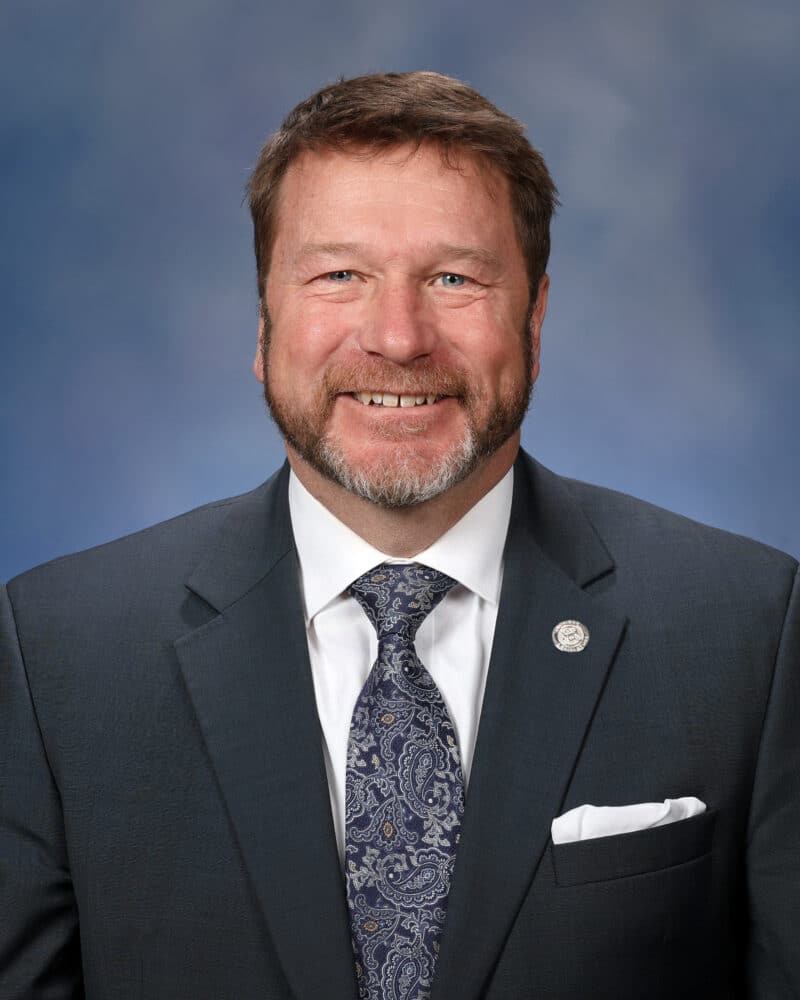
Rep. Matt Longjohn
Sponsored bills
Maddy summaryHB 4976 prohibits electric utilities in Michigan from seeking to recover revenue they were required to pay as service outage credits to customers. This directly affects electric utilities serving Michigan residents and businesses, as it prevents them from later reclaiming refunds paid for power outages. The key provision states that once an electric utility issues outage credits (refunds for service interruptions), it cannot attempt to get that money back through future rate adjustments. This ensures customers who received outage credits retain the full benefit without utilities offsetting those payments against future bills.
Maddy summaryHB 4975 requires Michigan electric utilities to automatically provide residential customers with $100 credits on their bills if they experienced 4 or more power outages lasting over an hour in the past year, or $200 credits for more than 4 outages. The bill mandates these credits be applied without customer action, directly benefiting households with frequent service disruptions. Credits will adjust every five years based on inflation using the Detroit-area Consumer Price Index, with changes announced by June 1 each adjustment year. This policy change aims to compensate for unreliable service through automatic billing adjustments under Michigan's utility regulations.
Maddy summaryHB 4972 adds baby diapers to Michigan's list of sales tax-exempt items under the General Sales Tax Act (MCL 205.54a). The bill specifically exempts the sale of tangible personal property (like diapers) from sales tax when sold to consumers. This change directly affects retailers selling diapers and consumers purchasing them, as they will no longer pay state sales tax on these items. The exemption aligns with existing tax rules for certain essential goods but specifically targets diapers as a new category. The bill amends Section 4a(1)(a) of the General Sales Tax Act to include this provision.
Maddy summaryHR 173 is a resolution passed by the Michigan House of Representatives to condemn all forms of political violence and reaffirm the body's commitment to civility, safety, and peaceful democratic engagement. It does not create new laws or policies but serves as a formal statement expressing the House's stance against violence targeting public officials and citizens. The resolution cites recent incidents of political violence across the U.S., including attacks on elected leaders and events like the 2025 assassination of activist Charlie Kirk. It will be transmitted to the President, Michigan Governor, and congressional leaders as a non-binding expression of the House's values.
Maddy summaryThis resolution (HR 172) declares September 17, 2025, as "Patient Safety Day" in Michigan. It symbolically recognizes the importance of patient safety in healthcare, honoring healthcare workers and raising awareness about preventing medical harm. As a non-binding resolution, it does not create new laws or policies but serves as a formal acknowledgment by the Michigan House of Representatives. The resolution was introduced and adopted on September 17, 2025, aligning with the World Health Organization's designated World Patient Safety Day.
Maddy summaryHB 4874 requires the Michigan legislature to appropriate at least $12.3 million annually starting fiscal year 2026 for supplemental payments to rural school districts meeting specific criteria defined in existing law (MCL 388.1622d). This bill directly affects eligible rural and isolated school districts by guaranteeing additional state funding beyond their regular school aid. The key provision mandates a fixed annual appropriation for these districts, ensuring consistent supplemental support beginning in 2026. The bill does not change how districts operate or define "rural districts," but rather establishes a dedicated funding stream for them. It is currently in the introduction phase, referred to the Appropriations Committee.
Maddy summaryHB 4875 mandates annual state funding of at least $125 million starting in fiscal year 2026 to cover school transportation costs for students. It directly affects Michigan public school districts by requiring dedicated state appropriations for pupil transportation, as defined under existing state school aid law. The bill creates a permanent funding mechanism ensuring consistent support for school bus services and related operational costs. This provision applies specifically to transportation services for students, not general school funding. The bill is currently under review in the Appropriations Committee after its introduction on September 11, 2025.
Maddy summaryHB 4866 updates Michigan's lead-based paint regulations for renovations, repairs, and painting in older buildings. It adopts federal EPA standards with key modifications, setting specific lead dust limits (e.g., 5 micrograms per square foot on floors) and requiring post-renovation testing to ensure safety. The bill directly affects renovation contractors, property owners, and child-occupied facilities (like schools) in pre-1978 buildings where lead paint may be present. It clarifies enforcement by Michigan’s Department of Health, updates certification rules for firms, and establishes fines up to $13,000 per violation for noncompliance. The changes aim to protect public health by reducing lead exposure during renovation work.
Maddy summaryHB 4870 creates a state program to provide free breakfast and lunch to all public school students in grades pre-K through 12, as well as students up to age 26 in special education programs. Participating schools must already be in the federal National School Lunch Program and offer meals at no cost to every student, while maximizing federal funding through the Community Eligibility Provision (CEP). The bill requires schools to accommodate documented medical dietary needs on a case-by-case basis and encourages offering religiously appropriate meals that meet federal nutrition standards. It also mandates schools to simplify income forms for families to help determine eligibility for other federal benefits.