

Maddy summaryHB 5377 would allow property owners without children attending Michigan public schools to qualify for a property tax exemption on certain school millages under the Revised School Code. It directly affects homeowners who do not have children enrolled in public schools within the state. The bill amends specific sections of the school code (380.1211, 380.1212, and 380.1364) to establish this new exemption category. This change modifies existing tax eligibility rules but does not alter current tax rates or funding formulas.
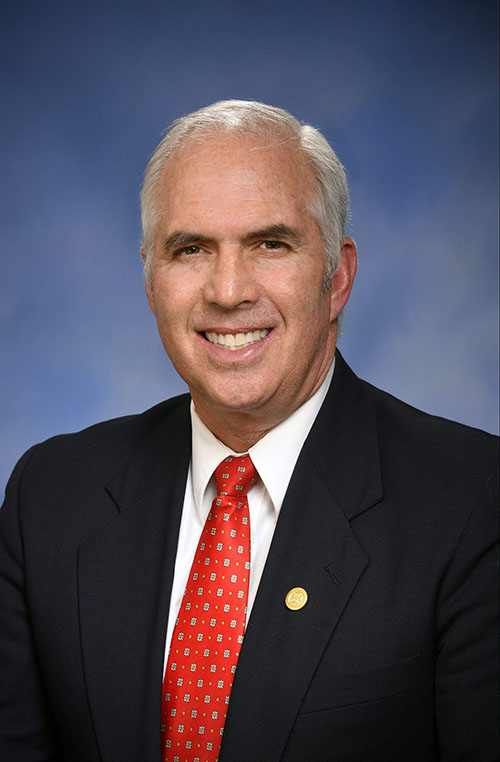
Rep. Jim DeSana
Sponsored bills
Maddy summaryHB 5363 requires Michigan public schools to notify parents in advance if their child’s class covers topics like gender identity, sexual orientation, or relationships, and allows parents to opt their child out without penalty. It mandates that schools form parent-led advisory boards (with at least half non-school-employed parents) to review curriculum and report on program goals. The bill also requires public hearings before changing sex education materials and emphasizes abstinence as a primary method for preventing pregnancy and STDs. This directly affects public school students, parents/guardians, and school districts in Michigan.
Maddy summaryHB 5379 creates a property tax exemption for homeowners without children attending Michigan public schools or receiving publicly funded educational services. Starting December 31, 2026, these property owners will be exempt from the portion of library millages (tax rates) levied by districts that include school districts, specifically the part exceeding 2 mills. This change applies to taxes under the District Library Establishment Act and aligns with existing exemptions in the General Property Tax Act. The bill affects residential property owners who do not have school-age children enrolled in Michigan public education.
Maddy summaryHB 5376 would create a property tax exemption for Michigan homeowners without children enrolled in public schools or publicly funded educational services (K-12) in the state. Starting in 2027, eligible property owners would receive a phased reduction in school-related property taxes: 40% in 2027, increasing to 100% by 2031. To qualify, owners must provide proof (like a withdrawal letter or affidavit) that no dependents used public education, and the exemption excludes properties owned through private entities where the actual owner has school-aged children. The bill specifically targets school millages (taxes funding schools), not general property taxes, and requires local assessors to verify eligibility using state education data.
Maddy summaryHB 5378 would create a new property tax exemption from the state education tax for homeowners who have no children attending public schools in Michigan. Specifically, starting December 31, 2026, property owners without dependents enrolled in Michigan public schools (full- or part-time) would qualify for this exemption. The bill amends Michigan's State Education Tax Act to add this provision, which is contingent on three related bills (HB 5376, HB 5377, and HB 5379) also becoming law. The exemption applies to property tax levied under the State Education Tax Act, directly affecting homeowners without school-aged children in public schools.
Maddy summaryHB 5362 is a supplemental budget bill that allocates additional state funds to the University of Michigan for its operations during the 2024-2025 fiscal year. It modifies existing state appropriations by designating specific supplemental funding for the University of Michigan, without creating new programs or altering the university's structure. This bill directly affects the University of Michigan's budget, providing it with additional resources from the state's general fund for the upcoming fiscal year. The bill is procedural in nature, focusing solely on the allocation of existing state funds rather than establishing new policies.
Maddy summaryHB 5201 requires healthcare professionals performing abortions in Michigan to submit detailed, anonymized reports to the state health department within 7 days. The reports must include specific data points like patient age, gestation period, reason for the abortion (e.g., health risks, rape, economic factors), facility details, and medical method, but exclude all personal identifiers. Strict confidentiality rules prohibit disclosing any information that could identify individuals or facilities, with reports destroyed after 5 years and only aggregated statistical data published annually. This policy applies directly to abortion providers and the state health department, focusing solely on data collection for public health monitoring, not individual records or enforcement.
Maddy summaryHB 5203 amends Michigan's sentencing guidelines (MCL 777.13k) to establish specific penalties for disclosing private medical information related to abortions. It directly affects healthcare providers, clinics, or others who share confidential abortion-related details without authorization. The bill creates new sentencing parameters for such disclosures within the criminal code, requiring judges to consider these guidelines when determining penalties. The legislation is currently under review by the Health Policy Committee after its November 2025 introduction.
Maddy summaryHB 5202 requires healthcare professionals to submit written reports to Michigan's Department of Health for any patient experiencing a physical complication or death directly linked to an abortion. The reports must be anonymized (removing patient identifiers), aggregated into the state's annual abortion statistics, and destroyed after five years. The bill mandates the department to create a standardized reporting form for urgent care facilities and emergency departments, which must be distributed and posted online. This bill, tied to companion legislation HB 5201, focuses solely on data collection requirements without changing abortion access or medical standards.
Maddy summaryHB 4937 creates a new "backup shooter" license for bear hunting in Michigan, allowing a secondary hunter to participate if the primary hunter is unable to hunt. This directly affects bear hunters who hunt in groups or partnerships, providing flexibility when the main hunter cannot participate. The bill amends existing law to establish this license type, specifying eligibility and usage rules for backup shooters during bear hunting seasons. The change updates hunting regulations to accommodate group hunting scenarios without requiring a separate license for each participant.