

Maddy summaryHB 4483 requires Michigan concealed pistol license holders to have a QR code printed on their license. This QR code links directly to a reciprocity website maintained by the Michigan Attorney General, which shows which states recognize Michigan licenses. The bill amends existing law to add this QR code as a standard feature on all concealed pistol licenses issued under Michigan's licensing system. It affects all current and future concealed carry license holders by providing a quick digital reference for out-of-state reciprocity.
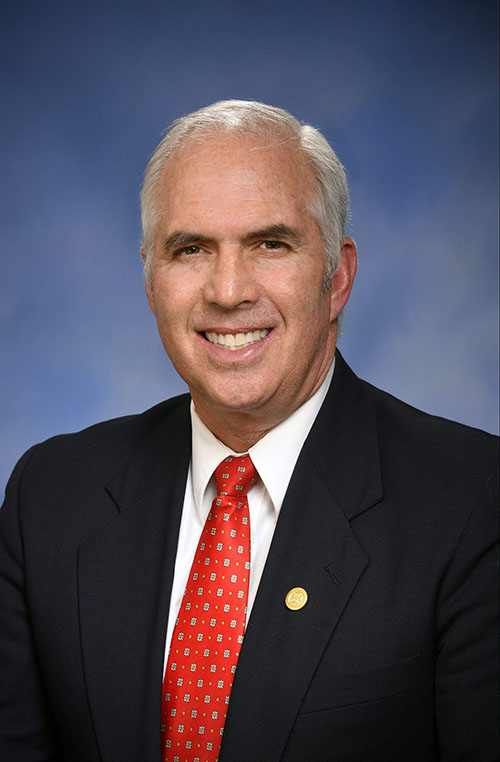
Rep. Jim DeSana
Sponsored bills
Maddy summaryHB 4482 requires Michigan's Department of Attorney General to update a website every 60 days showing which states recognize Michigan concealed pistol license holders' permits. This directly affects Michigan residents who hold concealed carry licenses and wish to carry firearms in other states. The bill adds a new provision (Section 5q) to existing law, mandating regular website updates to display current reciprocity agreements. It does not change licensing requirements or permit holders' rights, only ensuring accurate, up-to-date information is publicly available. The bill is procedural, focusing solely on information transparency for license holders.
Maddy summaryHB 4481 requires Michigan's Attorney General to create and maintain a website listing states that recognize Michigan concealed pistol licenses and detailing each state's specific rules for out-of-state license holders. This website will help Michigan license holders understand where they can legally carry concealed firearms and what restrictions apply when traveling. The bill directly affects Michigan residents with concealed carry permits who travel to other states. It is a procedural measure focused on providing clear, accessible information to license holders, not changing gun laws or restrictions.
Maddy summaryHB 5300 creates Michigan's "federal elected officials accountability act," requiring U.S. Congress members representing Michigan to annually disclose how they voted on federal spending bills. The bill establishes an accountability office within the state treasury to track all federal spending bills, record voting patterns, and compile reports on whether the federal government spent more than it received. If deficit spending occurs, the office identifies officials who voted for relevant bills and triggers a 75% surcharge on their taxable income for two years. This directly affects Michigan's federal lawmakers, mandating public disclosure of their voting records on spending bills and imposing financial penalties for supporting deficit spending.
Maddy summaryHB 5282 creates a new program to provide financial bonuses to Michigan veterans who served during the Vietnam-era period from September 1, 1973, to May 7, 1975, and met specific residency and service requirements. Combat veterans (those missing in action or eligible for the Vietnam Service Medal) receive a one-time $600 payment, while non-combat veterans receive $15 per month (capped at $450 total). Surviving spouses, children, or dependent parents of deceased or missing veterans can apply for these benefits through the Department of Military and Veterans Affairs. The program is funded by a newly created "Vietnam veteran era bonus extension fund" administered by the state, with application requirements including proof of honorable service and Michigan residency.
Maddy summaryThis bill is a ceremonial resolution (not a law) declaring November 23, 2025, as "Christ the King Sunday" in Michigan. It does not create new policies or affect any individuals, organizations, or government programs. The resolution encourages Michiganders to reflect on moral and spiritual values associated with the observance, as noted in the House's adopted text. It follows a longstanding tradition recognized by Christian communities and references historical context from the 1925 papal decree. As a symbolic gesture, it has no binding effect on state actions or residents.
Maddy summaryHB 5244 amends Michigan's Urban Cooperation Act to prohibit certain economic development agencies from jointly exercising powers with other public entities. Specifically, it blocks the Michigan Strategic Fund and other state agencies created for economic development (like regional development authorities) from entering into interlocal agreements for shared economic development activities. The bill targets Section 4(2) of the act, preventing these agencies from partnering with local governments, other states, or federal entities on projects like tax incentives, infrastructure, or business attraction. This change directly affects state economic development agencies and their ability to collaborate on initiatives under existing interlocal agreement rules.
Maddy summaryHB 5243 would abolish the Michigan Economic Development Corporation (MEDC), ending its role as the state agency managing economic development programs. The bill amends sections 4, 5, and 7 of the Michigan Strategic Fund Act, adds a new section 15, and repeals section 29e to effect this change. This directly affects MEDC and its current programs, which provide grants and loans to support businesses and communities across Michigan. The bill is currently in committee and has not been enacted.
Maddy summaryThis resolution designates November 7, 2025, as "Victims of Communism Day" in Michigan. It encourages Michiganders to observe the day with educational activities and ceremonies honoring those who suffered under communist regimes globally, citing historical death tolls from sources like *The Black Book of Communism*. The resolution specifically references Michigan's connection to communities of immigrants who fled communist oppression. As a ceremonial resolution (not a binding law), it has no direct legal effect on individuals or policies. It was introduced and adopted by the Michigan House of Representatives on November 6, 2025.
Maddy summaryThis resolution (HR 213) commemorates the 50th anniversary of the 1975 sinking of the SS Edmund Fitzgerald on Lake Superior, which resulted in the loss of all 29 crew members. It honors the crew's sacrifice and legacy through a formal recognition by the House of Representatives. The resolution encourages citizens, organizations, and Great Lakes communities to observe the anniversary with remembrance, education, and reflection. It does not create new laws or policies but serves as a symbolic tribute to the maritime tragedy.