

Maddy summaryThis Michigan House resolution urges the U.S. Senate to immediately pass an unconditional government funding bill (a "clean continuing resolution") to end the ongoing federal shutdown. It criticizes Senate Democrats for blocking votes on such a bill, which would restore critical services like Medicare, VA benefits, and food assistance for Michiganders affected by the 35-day shutdown. The resolution rejects the Senate's alternative proposal, calling it fiscally irresponsible due to projected $1.5 trillion in added debt. The Michigan House adopted the resolution with 54-46 support on November 6, 2025.
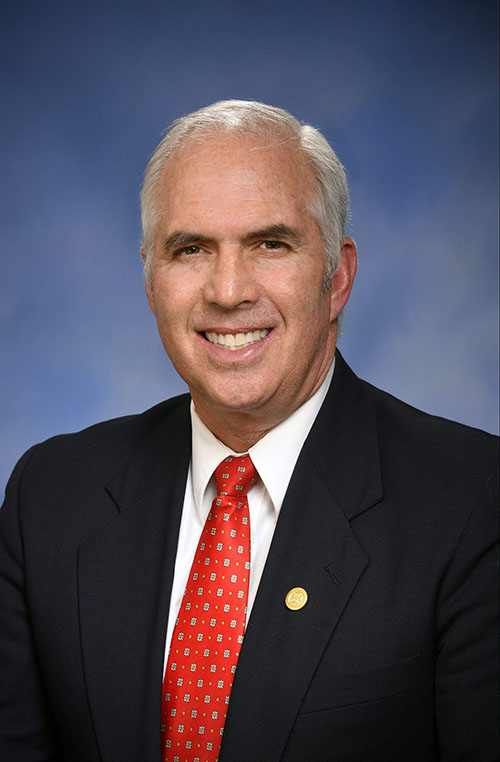
Rep. Jim DeSana
Sponsored bills
Maddy summaryHB 4427 requires counties to issue a "brown alert" when sewage or E. coli levels in waterways reach dangerous public health levels. This directly affects county officials responsible for environmental monitoring and residents who use or live near affected waterways. The bill amends existing law by adding a new section mandating this alert system, replacing previous voluntary protocols. It creates a specific, actionable requirement for counties to notify the public during hazardous conditions. The law passed the House with strong support (94-10) and is now under review by the Local Government Committee.
Maddy summaryHR 196 is a resolution demanding Michigan's Secretary of State comply with a federal request for an unredacted copy of the state's voter registration list, as required by the Civil Rights Act of 1960 and the National Voter Registration Act of 1993. It directly affects the Michigan Secretary of State's office by mandating disclosure of voter data within legal limits. The bill does not create new law but compels adherence to existing federal requirements for voter list transparency. This procedural resolution focuses solely on directing state compliance with federal mandates, not altering election policies.
Maddy summaryHB 5175 requires that for new highway construction or full bridge reconstruction starting January 2026, contractors must provide a 10-year maintenance contract covering design, building, operation, and upkeep of the project. This applies to state and local road agencies, making contractors responsible for repairs (like potholes or snow removal) for a decade or until the first major preventative maintenance, whichever comes later. The bill specifies that contractors aren’t liable for disaster damage (e.g., floods or storms), and annual payments must remain at least 10% of peak annual payments. It directly affects road construction projects, contractors, and taxpayers by shifting long-term maintenance responsibility to private entities.
Maddy summaryHB 5176 requires contractors to provide a 10-year warranty for all state road construction and repair projects. This means contractors must fix any defects in the work for a full decade after completion, shifting long-term maintenance responsibility from the state to the contractors. The bill amends Michigan’s 1951 Highway Act (MCL 247.661 et seq.) to add this warranty requirement to Section 11. It directly affects state contractors who build or repair public roads, potentially reducing future taxpayer costs for road repairs.
Maddy summaryHB 4254 prohibits public bodies (like state agencies, universities, or local governments) from using dogs in research or training activities that cause pain or distress. It specifically bans methods that would cause death, injury, fear, trauma, or invasive procedures (such as surgery), with exceptions for veterinary training with owner consent and routine procedures like spaying/neutering. The bill establishes civil fines of $1,000-$5,000 per dog per violation for noncompliance, enforced by county prosecutors or the attorney general. Named "Queenie's Law," it amends Michigan's Public Health Code to add these protections for dogs used in experimental purposes.
Maddy summaryHB 4642 amends Michigan's campaign finance law to require the secretary of state to refer violations involving themselves, their immediate family, or a connected campaign to the attorney general for resolution. This change ensures that cases where the secretary of state is a party are handled by an independent office, avoiding potential conflicts of interest. The bill does not alter the secretary of state's authority over other campaign finance matters. It specifically clarifies the process for referring such cases to the attorney general under the existing law.
Maddy summaryHB 5148 prohibits local governments and towing companies from exchanging payments or fees to secure contracts for towing services. It bans local units from requiring tow companies to pay fees for responding to incidents (like accidents or disabled vehicles) and prevents tow companies from offering payments to governments to gain business. This directly affects local governments entering contracts with towing services and the towing companies themselves. The bill focuses on preventing conflicts of interest in towing contracts, not on altering traffic fine amounts (which are addressed in other sections of the vehicle code).
Maddy summaryHB 5149 prohibits motor vehicle repair facilities in Michigan from charging storage fees while a vehicle is under repair or during billing disputes. It requires facilities to provide customers with a written, itemized estimate before work begins, including all fees and charges, and bans exceeding that estimate without the customer’s written or oral consent. The bill specifically targets hidden storage fees (Section 7e(f)) and strengthens existing estimate requirements (Section 32), applying directly to repair shops and their customers. This policy change aims to prevent surprise charges and increase transparency in vehicle repair billing.
Maddy summaryHB 5147 establishes new rules for towing damaged or disabled vehicles in Michigan. It requires towing agencies to provide written disclosures before towing, including costs, storage location, and owner rights (Section 271), and to issue itemized final invoices detailing all charges and vehicle condition (Section 272). Towing companies must maintain records for five years and post disclosure information visibly (Sections 273-274). These rules directly affect towing businesses and vehicle owners, ensuring transparency before towing and during storage. Violations prevent agencies from charging fees or enforcing contracts (Section 271(6)).