

Maddy summaryHB 5466 amends Michigan's Public Health Code to limit emergency orders restricting patient visitation in healthcare facilities to a maximum of 30 days after an epidemic declaration. It specifically requires that after this 30-day period, healthcare facilities must allow "LINDA" (loved individuals need dedicated attention) visitation for patients with cognitive impairments, including family members, patient advocates, or designated attorneys-in-fact. The bill establishes safety measures like prescreening or visit duration limits for these visitors while ensuring facilities maintain safe operations. This directly affects hospitals, assisted living facilities, and physician offices during public health emergencies.
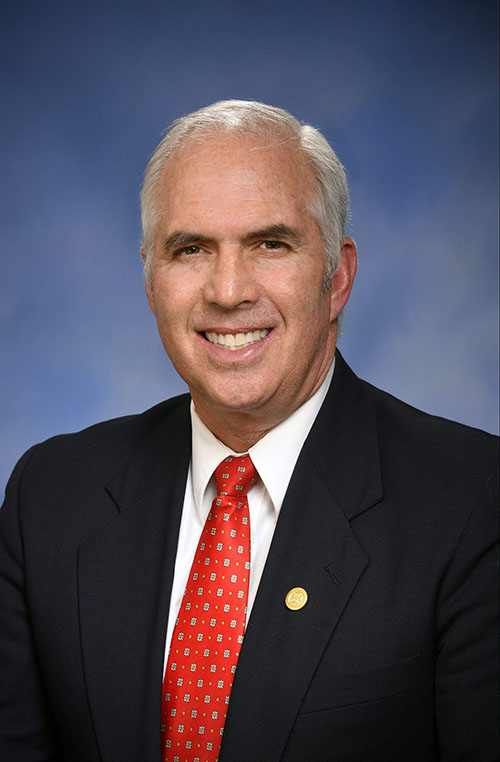
Rep. Jim DeSana
Sponsored bills
Maddy summaryThis bill amends Michigan's 2001 Manufacturing Milk Law to explicitly permit the sale of raw milk and raw milk products under the existing regulatory framework. It directly affects dairy producers and sellers who currently cannot legally sell these items under the law's current restrictions. The key change adds new Section 70a and revises Sections 111 and 136 to allow such sales while maintaining the law's overall structure. The bill updates the legal language to align with current market practices without creating new safety standards or requirements.
Maddy summaryHB 5207 updates licensing requirements for barber and cosmetology instructors in Michigan. It increases the required instructor training hours from 500 to 600 for cosmetology instructors (effective July 1, 2024) and from 600 to 900 hours for barber instructors. The bill also clarifies that prior experience cannot waive requirements like high school diplomas or exams. These changes directly affect individuals seeking to become licensed instructors in these fields.
Maddy summaryHB 4401 removes the expiration date for Michigan's annual pheasant hunting license requirement, which was set to end on January 1, 2026. The bill maintains the current $25 fee for the license and keeps existing exemptions, such as for hunters on private land (outside hunting access programs), at licensed preserves, in the Upper Peninsula, or holding lifetime licenses. It also preserves the existing funding mechanism, directing license fees into a dedicated pheasant subaccount for purchasing and releasing pheasants on state land. The change ensures the licensing rule remains in effect indefinitely without altering other provisions of the law.
Maddy summaryHB 4122 amends Michigan's food code to clarify requirements for cottage food operations, which are small-scale home-based businesses making non-potentially hazardous foods like baked goods and jams. The bill specifically updates definitions in Section 1105 to clarify rules about nonnutritive substances in confectionery products (e.g., candy), ensuring such substances must serve a functional purpose and not deceive consumers. It modifies existing safety standards to specify that nonnutritive objects embedded in candy must not make the product unsafe or misleading. These changes directly affect Michigan cottage food businesses and their compliance with labeling and safety regulations.
Maddy summaryHB 4285 requires Michigan schools to offer firearm safety instruction for students in grades 6-12 by September 2025. The state must create a model program (based on existing hunter safety standards) covering safe handling, cleaning, firearm types, and hunting practices, taught by certified instructors - **without bringing firearms into school buildings**. Schools may offer this as an optional extracurricular class or integrate it into existing courses, and students or parents may opt out without penalty. Completing the program counts toward the hunter safety certification needed for a hunting license. The bill directly affects all Michigan public schools and students in grades 6-12.
Maddy summaryHB 5397 eliminates a tax exemption for data center equipment under Michigan's Use Tax Act. It repeals Section 4cc, which previously allowed data center businesses to claim an exemption from use tax on equipment purchases. This change means data center operators will now pay the standard use tax on qualifying equipment instead of claiming the exemption. The bill directly affects data center businesses that previously utilized this tax exemption.
Maddy summaryHB 5396 eliminates a sales tax exemption for data center equipment in Michigan. The bill repeals Section 4ee of the General Sales Tax Act (MCL 205.54ee), which previously allowed data centers to avoid paying the standard 4% sales tax on equipment purchases. This change directly affects data center businesses operating in Michigan, requiring them to pay sales tax on qualifying equipment starting when the bill takes effect. The policy change removes a specific tax break, aligning data center equipment purchases with standard sales tax rules.
Maddy summaryHB 5398 amends Michigan's General Property Tax Act to remove a tax exemption for data centers located in Renaissance Zones. Specifically, it eliminates the exemption previously available for "eligible data center property" in zones approved by the Michigan Strategic Fund in 2016 with at least $100 million in investment. This change directly affects data center operators in designated Renaissance Zones who previously qualified for reduced property taxes. The bill updates Section 7ff of the tax act to reflect this repeal, ensuring data centers no longer receive the tax break.
Maddy summaryHB 5206 creates a new "limited cosmetologist license" under Michigan's cosmetology law, allowing individuals to perform specific services like natural hair cultivation, manicuring, or skin care without needing a full cosmetologist license. This change streamlines licensing for professionals who specialize in these areas, eliminating the need for separate licenses (e.g., for manicuring or esthetics) while requiring them to limit their practice to the licensed services. The bill updates definitions to clarify terms like "natural hair cultivation" (techniques such as braiding or twisting without chemicals) and ensures license holders cannot perform unlicensed services like electrology. It directly affects cosmetology practitioners seeking to offer these focused services more efficiently.