

Maddy summaryHB 5071 provides supplemental state funding for programs addressing violence against women, specifically allocating money to support existing grant programs under Michigan's Violence Against Women Act (VAWA) initiatives. This bill directly affects state agencies and local organizations administering these grants, such as domestic violence shelters and legal aid services. The key mechanism is creating a new appropriation within the state budget for fiscal year 2026 to cover costs not previously funded. It does not change eligibility or program rules but ensures continued funding for these services through a dedicated budget line. The bill is currently under review by the Appropriations Committee after its introduction on September 26, 2025.
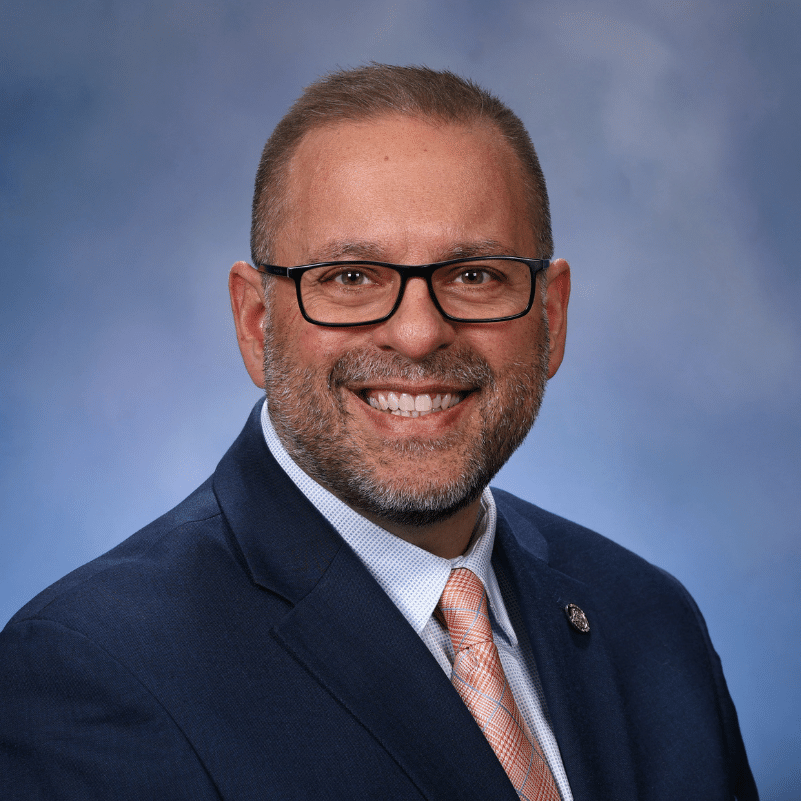
Rep. Mike McFall
Sponsored bills
Maddy summaryHB 5063 creates a state income tax credit for Michigan taxpayers who foster animals in their homes. Eligible taxpayers can claim a $50 credit per animal fostered for at least 7 days during the tax year, with an additional $50 for each extra 30 days per animal (capped at 5 animals yearly). To qualify, taxpayers must provide verification from a qualified nonprofit animal rescue, shelter, or registered animal control facility. The credit amount will adjust annually based on the U.S. Consumer Price Index starting in 2027, but any unused portion cannot be refunded if it exceeds the taxpayer’s total tax bill.
Maddy summaryHB 5072 allocates supplemental state funds specifically for testing sexual assault kits in Michigan for the fiscal year ending September 30, 2026. It directly affects state law enforcement agencies and crime laboratories responsible for processing these kits by providing dedicated budget resources. The bill creates a new appropriation within the state budget to cover testing costs, ensuring these kits can be processed without relying on existing funding streams. This is a funding measure, not a policy change to how kits are collected or handled.
Maddy summaryHB 5070 is a supplemental appropriations bill that allocates additional state funds for Michigan's prenatal and infant support program. It directly affects the program by providing dedicated funding for services supporting pregnant individuals and infants. The bill creates a formal funding mechanism (an appropriation act) to ensure these funds are available for the 2026 fiscal year. As a procedural budget measure, it does not change program eligibility or service rules but secures financial resources for existing support services.
Maddy summaryThis resolution declares September 15-October 15, 2025, as Hispanic Heritage Month in Michigan. It is a symbolic state recognition, not a policy change, affirming the observance of Hispanic and Latino American contributions to Michigan and the nation. The resolution does not create new laws, allocate funding, or affect specific groups; it simply aligns Michigan with the existing national observance established by federal law in 1988. The declaration enables state agencies and communities to organize events celebrating Hispanic heritage during that period.
Maddy summaryHB 4974 requires electric utilities in Michigan to reimburse certain individuals and local governments for costs incurred during power outages. It directly affects renters (whose landlords pay utilities) and local governments, providing $50 for outages lasting 4-24 hours (or actual food/lodging costs, whichever is higher) and $200 for outages over 24 hours. Local governments can also claim reimbursement for emergency services, warming/cooling centers, backup power, or other outage-related costs. Utilities must pay approved amounts within 30 days after the Michigan Public Service Commission reviews cost claims submitted within 90 days of the outage. This is an additional remedy beyond existing legal options.
Maddy summaryHB 4973 requires electric utilities in Michigan to automatically provide bill credits to customers experiencing power outages during a billing cycle. Residential customers receive credits ranging from $5 per hour for short outages up to $25 per hour for outages lasting 72+ hours, while nonresidential credits use a formula based on the customer's average hourly energy use. Credits apply to the next bill and carry forward if they exceed the current bill amount. The credits adjust every five years using the Consumer Price Index to account for inflation, as specified in the bill's Section 9g.
Maddy summaryHB 4978 amends Michigan's Public Utilities Act to change the process for utilities seeking rate increases. It requires electric utilities serving over 1 million customers to coordinate with the Public Service Commission (PSC) before filing rate cases to avoid overlapping filings, and the PSC may order a 21-day spacing between such filings. Gas utilities serving fewer than 1 million customers can now request partial, immediate rate relief, with the PSC required to decide within 180 days. If the PSC doesn't issue a final order within 180 days for a rate case, the utility may implement the proposed rate increase but must refund overpayments if the final order is lower.
Maddy summaryHB 4977 requires Michigan electric utilities to include standardized outage information on customer bills, directly affecting residential and business electricity users. The bill mandates disclosure of three specific metrics per billing cycle: the number of service interruptions lasting over 5 minutes, total interruption duration, and the number of momentary interruptions (under 5 minutes). Utilities must also annually report outage causes affecting over 1,000 customers, tree trimming efforts, grid reliability projects, and worst-performing circuits to the public service commission. Violations can result in fines up to $1,000 per incident, with customer reports or meter data used as evidence.
Maddy summaryHB 4976 prohibits electric utilities in Michigan from seeking to recover revenue they were required to pay as service outage credits to customers. This directly affects electric utilities serving Michigan residents and businesses, as it prevents them from later reclaiming refunds paid for power outages. The key provision states that once an electric utility issues outage credits (refunds for service interruptions), it cannot attempt to get that money back through future rate adjustments. This ensures customers who received outage credits retain the full benefit without utilities offsetting those payments against future bills.