

Maddy summaryHB 5148 prohibits local governments and towing companies from exchanging payments or fees to secure contracts for towing services. It bans local units from requiring tow companies to pay fees for responding to incidents (like accidents or disabled vehicles) and prevents tow companies from offering payments to governments to gain business. This directly affects local governments entering contracts with towing services and the towing companies themselves. The bill focuses on preventing conflicts of interest in towing contracts, not on altering traffic fine amounts (which are addressed in other sections of the vehicle code).
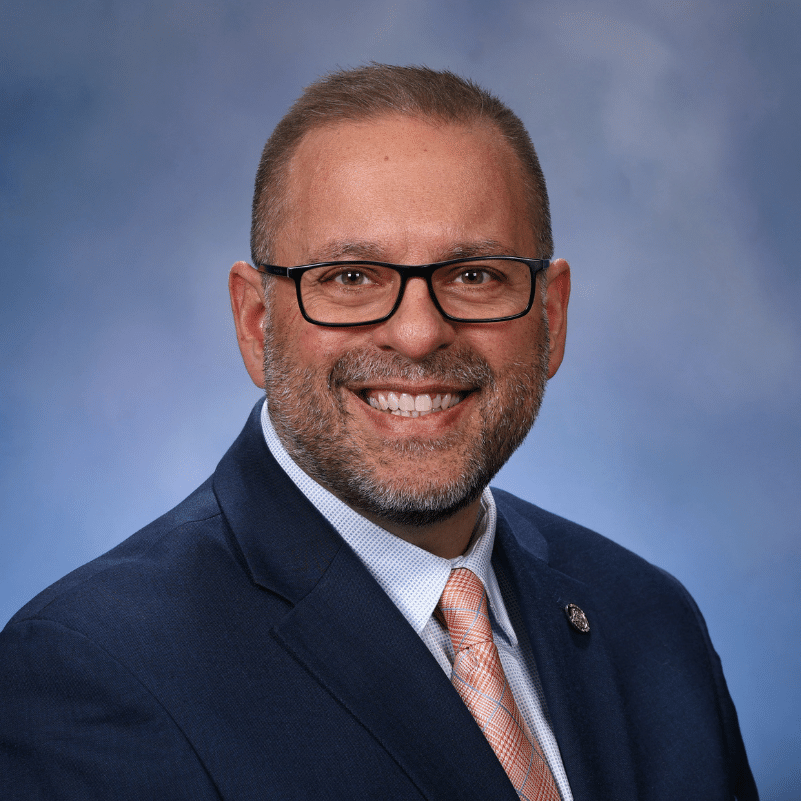
Rep. Mike McFall
Sponsored bills
Maddy summaryHB 5149 prohibits motor vehicle repair facilities in Michigan from charging storage fees while a vehicle is under repair or during billing disputes. It requires facilities to provide customers with a written, itemized estimate before work begins, including all fees and charges, and bans exceeding that estimate without the customer’s written or oral consent. The bill specifically targets hidden storage fees (Section 7e(f)) and strengthens existing estimate requirements (Section 32), applying directly to repair shops and their customers. This policy change aims to prevent surprise charges and increase transparency in vehicle repair billing.
Maddy summaryHB 5147 establishes new rules for towing damaged or disabled vehicles in Michigan. It requires towing agencies to provide written disclosures before towing, including costs, storage location, and owner rights (Section 271), and to issue itemized final invoices detailing all charges and vehicle condition (Section 272). Towing companies must maintain records for five years and post disclosure information visibly (Sections 273-274). These rules directly affect towing businesses and vehicle owners, ensuring transparency before towing and during storage. Violations prevent agencies from charging fees or enforcing contracts (Section 271(6)).
Maddy summaryHB 5141 amends Section 2 of Michigan's 1939 Labor Relations Act (MCL 423.2) by removing specific exclusions from the definition of "employee." This change would extend labor protections to workers previously excluded, including domestic workers, agricultural laborers, and certain supervisors. The bill directly affects these workers by ensuring they fall under the act's coverage for organizing, collective bargaining, and dispute resolution. It makes a concrete policy change to the legal definition without altering other provisions of the law.
Maddy summaryHB 5146 clarifies procedures for handling abandoned vehicles and towing services in Michigan. It defines "abandoned vehicle" more precisely (e.g., vehicles left on public property for 18+ hours with valid plates) and requires police to verify if a vehicle is stolen before towing. The bill mandates that owners receive written notice with details about the vehicle and their right to contest abandonment or towing fees within 20 days, including a $40 bond requirement for hearings. It also creates a public website listing abandoned vehicles for 1 year, affecting vehicle owners, towing agencies, and law enforcement.
Maddy summaryHB 4665 allows Michigan public school students to miss class without penalty for attending events sponsored by the National FFA Organization, Michigan FFA, 4-H clubs, or livestock-related activities. It amends Michigan’s education law (MCL 380.1-380.1852) by adding a new section (1138a) that explicitly lists these activities as excused absences. The bill directly affects students participating in these programs and school staff responsible for tracking attendance. It passed the Michigan House overwhelmingly (101-4) on October 23, 2025, with immediate effect.
Maddy summaryHB 4823 updates Michigan's liquor distribution rules by amending sections covering licensing, delivery, and sales (1998 PA 58). It directly affects liquor distributors, retailers, and manufacturers by modifying existing regulations and adding a new Section 412. The bill updates specific provisions related to how alcohol is distributed and sold, though the exact changes to each section aren't detailed in the provided context. It passed overwhelmingly in the House (100-3) and was referred to the Regulatory Affairs committee.
Maddy summaryHB 4825 would create a tax credit for businesses that sell beverages in returnable containers (like soda cans or bottles), allowing them to deduct $0.005 per container sold from their Michigan corporate income tax starting in 2026. The credit amount would automatically increase each year based on inflation (using the U.S. Consumer Price Index) beginning in 2027. To claim the credit, businesses must attach a specific report (required under existing law) with their annual tax return. This policy directly affects beverage distributors who manage deposit systems for returnable containers, reducing their tax liability or generating refunds if the credit exceeds their tax bill.
Maddy summaryThis resolution declares October 2025 as Italian-American Appreciation Month in Michigan. It directly recognizes the cultural contributions, historical impact, and community involvement of Italian-Americans in Michigan's development. The resolution does not create new laws or policies but formally designates a month for celebrating Italian-American heritage, including their roles in Michigan's neighborhoods, economy, and civic life. The declaration is symbolic and applies statewide.
Maddy summaryHB 5090 amends Michigan's LiHEAP (Low Income Home Energy Assistance Program) funding rules to require a higher percentage of funds to be used for weatherization assistance. Specifically, it increases the mandatory allocation for weatherization services - such as home insulation and heating system upgrades - from existing levels. This change directly affects low-income households receiving weatherization support through state programs. The bill modifies Section 527a of the Income Tax Act (MCL 206.527a) to implement this funding shift. (Note: The bill is currently in committee referral stage and has not yet passed.)