

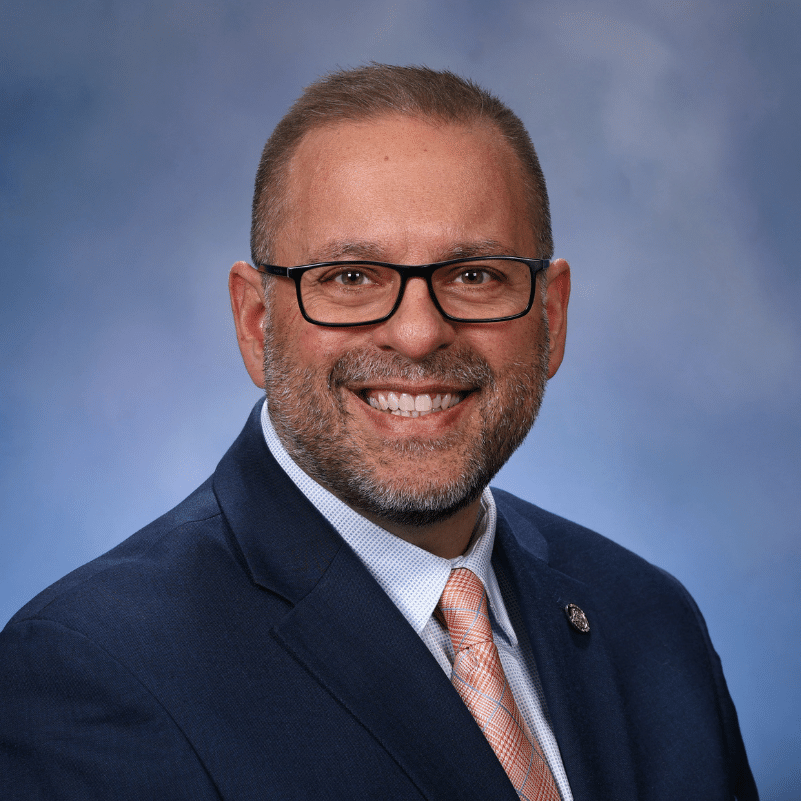
Photo of Mike McFall
D Michigan House · District 14 On the 2026 ballot

Rep. Mike McFall

Compare
Total votes
1,765
all sessions
Attendance
97%
54 missed
Lower than 81% of chamber peers
With party
97%
of cast votes
Near the chamber average
Bipartisan score
1%
crosses aisle rarely
Near the chamber average
Sponsored
1,078
bills & resolutions
Higher than 91% of chamber peers
Committees
2
assignments
1,078 bills and resolutions

Sponsored bills

Total
1,078
Primary
59
Co-sponsor
1,019
This page
1,078
matching current filters
Co-sponsor HB 4254
Passed · Michigan House · Co-sponsor
Animals: care and treatment; conducting of research or training activities on dogs in a manner that causes pain or distress; prohibit. Amends secs. 2674, 2675 & 2678 of 1978 PA 368 (MCL 333.2674 et seq.); adds secs. 2670 & 2675a & repeals secs. 2672 & 2673 of 1978 PA 368 (MCL 333.2672 & 333.2673).

Maddy summaryHB 4254 prohibits public bodies (like state agencies, universities, or local governments) from using dogs in research or training activities that cause pain or distress. It specifically bans methods that would cause death, injury, fear, trauma, or invasive procedures (such as surgery), with exceptions for veterinary training with owner consent and routine procedures like spaying/neutering. The bill establishes civil fines of $1,000-$5,000 per dog per violation for noncompliance, enforced by county prosecutors or the attorney general. Named "Queenie's Law," it amends Michigan's Public Health Code to add these protections for dogs used in experimental purposes.

Passed Oct 30, 2025 1 co-sponsor
Co-sponsor HB 4129
Passed · Michigan House · Co-sponsor
Labor: employment incentives; employment incentives nuclear and hydrogen graduate attraction and retention program act; create. Creates new act. TIE BAR WITH: HB 4127'25, HB 4125'25, HB 4126'25, HB 4128'25, HB 4124'25

Maddy summaryHB 4129 creates a program to award annual grants to graduates working in Michigan's nuclear or hydrogen energy sector. It provides up to $3,000 per year for three years to individuals who: (1) graduate from a qualifying STEM program (like engineering or skilled trades supporting nuclear/hydrogen facilities), and (2) work at a qualified facility in Michigan within one year of graduation. The program requires annual employment verification, with repayment required if employment ends or false information is provided (penalties include fines up to $1,000). Funds are managed through a dedicated state account administered by the Department of Labor and Economic Opportunity.

Passed Oct 30, 2025 1 co-sponsor
Co-sponsor HB 4124
Passed · Michigan House · Co-sponsor
Corporate income tax: credits; credit for advanced small modular reactors research and development expenses; provide for. Amends 1967 PA 281 (MCL 206.1 - 206.847) by adding secs. 677a & 717a. TIE BAR WITH: HB 4127'25, HB 4129'25, HB 4125'25, HB 4126'25, HB 4128'25

Maddy summaryHB 4124 creates a tax credit for Michigan corporations that spend money on research and development for advanced small modular nuclear reactors (SMRs). It directly affects companies developing this specific type of nuclear technology within the state. The bill adds new sections to Michigan's tax code, allowing businesses to claim a credit against their corporate income tax for qualifying R&D expenses related to SMRs. This policy change aims to incentivize investment in emerging nuclear energy technology within Michigan. The bill passed the House on October 28, 2025, with 78 yeas and 26 nays.

Passed Oct 30, 2025 1 co-sponsor
Co-sponsor HB 4128
Passed · Michigan House · Co-sponsor
Corporate income tax: credits; credit for advanced small modular reactor generated power; provide for. Amends 1967 PA 281 (MCL 206.1 - 206.847) by adding sec. 678. TIE BAR WITH: HB 4127'25, HB 4129'25, HB 4125'25, HB 4126'25, HB 4124'25

Maddy summaryHB 4128 creates a new corporate income tax credit for businesses generating power from advanced small modular reactors (SMRs) in Michigan. It directly affects utility companies and energy developers investing in SMR technology by providing a financial incentive to offset project costs. The key provision adds Section 678 to Michigan's tax code, allowing qualifying entities to claim a credit against their state corporate income tax liability for SMR-generated electricity. This policy change aims to support clean energy development without specifying expected outcomes or endorsing particular technologies. The bill passed the House on October 28, 2025, and is now pending final approval in the Senate.

Passed Oct 30, 2025 1 co-sponsor
Co-sponsor HB 4127
Passed · Michigan House · Co-sponsor
Energy: nuclear; definition of advanced nuclear reactors; provide for. Amends sec. 10h of 1939 PA 3 (MCL 460.10h). TIE BAR WITH: HB 4129'25, HB 4125'25, HB 4126'25, HB 4128'25, HB 4124'25

Maddy summaryHB 4127 adds a specific definition for "advanced nuclear reactor technologies" to Michigan's energy law. The bill defines these as nuclear reactors with significant safety improvements over pre-2016 U.S. models, including federally defined advanced reactors and existing Michigan nuclear facilities that completed life cycle management. This definition will directly affect the Michigan Public Service Commission and electric utilities when evaluating nuclear energy projects and regulatory approvals. It creates a clear standard for identifying qualifying nuclear technologies under state law, ensuring consistent application of energy regulations.

Passed Oct 30, 2025 1 co-sponsor
Co-sponsor HB 4126
Passed · Michigan House · Co-sponsor
Higher education: education programs; fund for nuclear and hydrogen education grant program; create. Creates new act. TIE BAR WITH: HB 4127'25, HB 4129'25, HB 4125'25, HB 4128'25, HB 4124'25

Maddy summaryHB 4126 creates a dedicated fund in the Michigan state treasury to provide grants to colleges and universities that establish or expand educational programs leading to degrees or credentials in the nuclear and hydrogen energy sectors. The fund, administered by the state Department of Education, will support institutions developing training programs aligned with these industries' workforce needs. Money in the fund does not expire annually and must be used solely for awarding these grants through state appropriations. This bill directly affects Michigan higher education institutions seeking to build or expand programs in nuclear and hydrogen energy fields.

Passed Oct 30, 2025 1 co-sponsor
Primary HB 4125
Passed · Michigan House · Lead sponsor
Higher education: education programs; nuclear and hydrogen education grant program; create. Creates new act. TIE BAR WITH: HB 4127'25, HB 4129'25, HB 4126'25, HB 4128'25, HB 4124'25

Maddy summaryHB 4125 creates the "nuclear and hydrogen education grant program" to fund colleges and universities in Michigan that establish or expand educational programs leading to degrees or credentials in nuclear or hydrogen energy fields. The program requires participating schools to offer scholarships or tax credits to students who commit to working for at least three years at a nuclear or hydrogen energy facility in the state after graduation. Grants are awarded competitively by the Department of Labor and Economic Opportunity, targeting programs that directly support workforce development for these industries. This bill directly affects postsecondary institutions, students in qualifying programs, and the nuclear/hydrogen energy sector by creating a pipeline for trained workers.

Passed Oct 30, 2025 0 co-sponsors
Co-sponsor HB 4693
Passed · Michigan House · Co-sponsor
Occupations: cosmetologists; cosmetology licensing fees; modify. Amends secs. 9 & 25 of 1979 PA 152 (MCL 338.2209 & 338.2225). TIE BAR WITH: HB 4692'25

Maddy summaryHB 4693 modifies the licensing fee structure for cosmetologists in Michigan by amending sections 9 and 25 of the State License Fee Act (MCL 338.2209 and 338.2225). The bill directly affects cosmetologists, estheticians, and other licensed beauty professionals who pay state licensing fees to practice in Michigan. It changes the specific fee amounts or calculation methods outlined in the existing law, though the exact fee adjustments are not detailed in the provided text. This is a procedural change to administrative licensing requirements, not a substantive policy shift.

Passed Oct 30, 2025 1 co-sponsor
Co-sponsor HR 202
In committee · Michigan House · Co-sponsor
A resolution calling on the Michigan Natural Resources Commission to temporarily extend the 2025 open firearm hunting season and set the dates to be November 1, 2025, to November 30, 2025.

Maddy summaryThis resolution calls on the Michigan Natural Resources Commission to extend the 2025 firearm hunting season to November 1-30, 2025. It aims to give hunters and processors more time to donate venison through the Hunters Feeding Michigan program before SNAP benefits pause on November 1, 2025. The resolution does not change hunting laws but requests the Commission adopt these dates to support food bank donations during the SNAP interruption. It directly affects the Commission and the Hunters Feeding Michigan program, which distributes donated venison to food banks statewide.

In committee Oct 30, 2025 1 co-sponsor
Co-sponsor HR 201
Passed · Michigan House · Co-sponsor
A resolution to declare October 2025 as Breast Cancer Awareness Month in the state of Michigan.

Maddy summaryThis resolution declares October 2025 as Breast Cancer Awareness Month in Michigan. It symbolically recognizes the importance of early detection and breast cancer prevention, referencing statistics on diagnoses and mortality rates in the state and nation. The resolution does not create new policies, funding, or requirements - it solely serves to highlight awareness efforts during October 2025 for all Michiganders.

Passed Oct 30, 2025 1 co-sponsor
Showing 301 to 310 of 1,078 bills
Previous 1 … 30 31 32 … 108 Next