

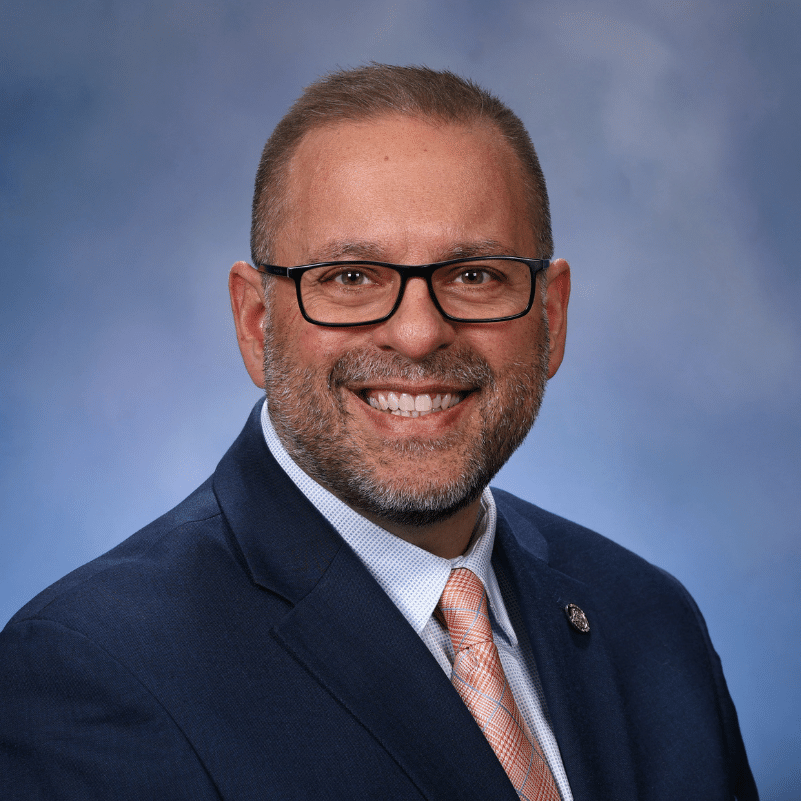
Photo of Mike McFall
D Michigan House · District 14 On the 2026 ballot

Rep. Mike McFall

Compare
Total votes
1,765
all sessions
Attendance
96%
71 missed
Lower than 82% of chamber peers
With party
97%
of cast votes
Near the chamber average
Bipartisan score
2%
crosses aisle rarely
Near the chamber average
Sponsored
1,078
bills & resolutions
Higher than 91% of chamber peers
Committees
2
assignments
1,078 bills and resolutions

Sponsored bills

Total
1,078
Primary
59
Co-sponsor
1,019
This page
1,078
matching current filters
Primary HR 307
Passed · Michigan House · Lead sponsor
A resolution to declare May 2026 as Brain Tumor Awareness Month in the state of Michigan.

Maddy summaryThis resolution declares May 2026 as Brain Tumor Awareness Month in Michigan to highlight the severity of brain tumors and the state's role in research and treatment. The bill does not change laws or allocate funding but serves as a symbolic gesture to raise public awareness about the disease's impact on patients and families. It recognizes Michigan's medical centers and the urgent need for better treatments given the limited number of approved therapies available.

Passed May 12, 2026 0 co-sponsors
Co-sponsor HB 5928
In committee · Michigan House · Co-sponsor
Property: land sales; purchase of residential property by certain businesses; prohibit. Creates new act. TIE BAR WITH: HB 5929'26

Maddy summaryThis bill, titled the "Homes Are for People Act," prohibits hedge funds from purchasing or owning single-family homes in Michigan. It defines a hedge fund as an organization managing at least $50 million in assets and a single-family home as a property with one to four units that is not a vacant foreclosure or a government-funded project. While new purchases by these funds are banned, the law allows hedge funds to keep any single-family homes they already own when the act takes effect. Any property acquired in violation of this rule would be subject to legal forfeiture.

In committee May 12, 2026 1 co-sponsor
Co-sponsor HB 5925
In committee · Michigan House · Co-sponsor
Corporate income tax: deductions; federal deduction for certain outsourcing expenses; add back. Amends sec. 623 of 1967 PA 281 (MCL 206.623).

Maddy summaryHB 5925 amends Michigan's corporate income tax law to require companies to add back certain expenses related to outsourcing and relocating business operations out of the state. Specifically, the bill mandates that businesses must include specified outsourcing expenses in their taxable income if those costs were incurred to eliminate a trade or business located in Michigan or to relocate a business that was previously in the state to a new location outside of it. The legislation defines these eligible expenses as costs associated with ending or moving a business, such as permit fees, lease brokerage fees, and equipment installation costs. This change directly affects corporations with business activity in Michigan that have undertaken outsourcing or relocation activities, requiring them to pay additional state taxes on these specific expenditures.

In committee May 12, 2026 1 co-sponsor
Co-sponsor HB 5930
In committee · Michigan House · Co-sponsor
Property: land sales; property eligible for forfeiture; modify. Amends sec. 4702 of 1961 PA 236 (MCL 600.4702). TIE BAR WITH: HB 5928'26, HB 5929'26

Maddy summaryThis bill modifies Michigan's laws regarding the seizure and forfeiture of property connected to criminal activities. It directly affects property owners, creditors, and law enforcement agencies by clarifying which assets can be taken by the government. The legislation updates rules on what constitutes forfeitable property, specifically protecting primary residences of spouses and children unless they knew about and agreed to the crime, while also detailing protections for homeowners with unpaid land contracts and security interests. Additionally, it sets limits on how much money can be recovered from substituted proceeds, ensuring the government only takes the value of the original crime proceeds plus specific legal costs. The bill will only become effective if two related companion bills are also passed by the legislature.

In committee May 12, 2026 1 co-sponsor
Co-sponsor HB 5929
In committee · Michigan House · Co-sponsor
Property: land sales; definition of a crime as related to property eligible for forfeiture; modify. Amends sec. 4701 of 1961 PA 236 (MCL 600.4701). TIE BAR WITH: HB 5928'26, HB 5930'26

Maddy summaryThis bill updates Michigan's legal definitions regarding property forfeiture by specifying which crimes allow the government to seize assets. It directly affects individuals and businesses involved in offenses related to environmental protection, healthcare fraud, antitrust violations, securities law, and various criminal acts. The key mechanism is expanding the list of qualifying crimes to include specific violations of environmental and financial regulations, while also clarifying terms like "instrumentality," "proceeds," and "willful blindness" to ensure consistent application in court. By tying this legislation to companion bills, the measure ensures that these new definitions only take effect if the related procedural bills are also passed.

In committee May 12, 2026 1 co-sponsor
Co-sponsor HB 5927
In committee · Michigan House · Co-sponsor
Public utilities: electric utilities; net metering program for rooftop solar; provide for. Amends sec. 173 of 2008 PA 295 (MCL 460.1173) & adds sec. 173a.

Maddy summaryThis bill amends Michigan's clean energy laws to create a dedicated net metering program specifically for rooftop solar systems, ensuring these generators are excluded from the general distributed generation program. It mandates that the Public Service Commission establish uniform statewide rules for rooftop solar net metering within 180 days, guaranteeing consistent consumer protections across all electric utilities and alternative suppliers. The legislation also sets specific grid reliability limits, such as capping distributed generation at 10% of a utility's peak load, while protecting solar participants from service disconnection or rate discrimination. By defining eligible rooftop solar equipment and requiring standardized interconnection procedures, the bill aims to streamline how homeowners connect solar panels to the grid while maintaining safety standards.

In committee May 12, 2026 1 co-sponsor
Co-sponsor HB 5320
Passed · Michigan House · Co-sponsor
Criminal procedure: sentencing guidelines; sentencing guidelines for flying over or trespassing on a key facility or critical infrastructure with an unmanned aircraft or vehicle; provide for. Amends 16b, ch. XVII of 1927 PA 175 (MCL 777.16b). TIE BAR WITH: HB 5319'25

Maddy summaryHB 5320 amends Michigan's criminal sentencing guidelines to specifically address unauthorized drone flights over or trespassing on critical infrastructure, such as power plants or bridges. It would establish new sentencing standards for individuals operating unmanned aircraft or vehicles near these facilities, directly affecting drone operators who violate these restrictions. The bill modifies Section 16b of the Michigan Code of Criminal Procedure (MCL 777.16b) to create clear penalties for such offenses, moving beyond general trespass laws. This change aims to strengthen legal consequences for drone-related threats to public safety infrastructure.

Passed May 12, 2026 1 co-sponsor
Co-sponsor HB 5319
Passed · Michigan House · Co-sponsor
Aeronautics: unmanned aircraft systems; flying over or trespassing on a key facility or critical infrastructure with an unmanned aircraft or vehicle; prohibit. Amends sec. 45a of 1931 PA 328 (MCL 750.45a).

Maddy summaryHB 5319 prohibits using unmanned aircraft (drones) to fly over or trespass on key facilities, correctional facilities, law enforcement facilities, or critical infrastructure. It directly affects drone operators who might fly near these locations without authorization. The bill creates criminal penalties (up to 4 years in prison or $2,500 fine) for violations, while exempting public safety agencies and commercial operators complying with federal FAA rules. Key provisions include a 90-day delay before restrictions apply and definitions of "key facility" (per §552c) and "critical infrastructure" (aligned with federal designations).

Passed May 12, 2026 1 co-sponsor
Co-sponsor HB 5321
Passed · Michigan House · Co-sponsor
Aeronautics: unmanned aircraft systems; database of restricted zones and flight paths for unmanned vehicles; create and provide penalties for using unmanned vehicles in a restricted zone or flight path. Creates new act. TIE BAR WITH: HB 5321'25

Maddy summaryHB 5321 creates a state geofencing database managed by Michigan's transportation department to list restricted zones where unmanned vehicles (including drones, ground vehicles, and watercraft) cannot operate. The bill requires the department to develop a public website and a mobile app that warns operators when approaching restricted areas like critical infrastructure, airports, or key facilities. Operating an unmanned vehicle in a restricted zone is a felony punishable by up to 4 years in prison or a $2,500 fine. This law directly affects anyone using unmanned vehicles in Michigan, establishing a new enforcement system to prevent unauthorized flights or operations in sensitive areas.

Passed May 12, 2026 1 co-sponsor
Co-sponsor HB 5322
In committee · Michigan House · Co-sponsor
Criminal procedure: sentencing guidelines; sentencing guidelines for using an unmanned vehicles in a restricted zone or flight path; provide for. Amends sec. 12k, ch. XVII of 1927 PA 175 (MCL 777.12k). TIE BAR WITH: HB 5330'25

Maddy summaryHB 5322 proposes to update Michigan's sentencing guidelines for crimes involving the unauthorized use of unmanned vehicles (like drones) in restricted zones or flight paths, such as near airports or government facilities. If passed, it would create specific sentencing rules for these offenses, directly affecting drone operators who violate such restrictions. The bill amends existing criminal procedure code section 777.12k to establish these new sentencing parameters for this specific violation. This is a policy change focused on clarifying penalties for drone misuse in sensitive areas, not a procedural or commemorative measure.

In committee May 12, 2026 1 co-sponsor
Showing 121 to 130 of 1,078 bills
Previous 1 12 13 14 108 Next