

Maddy summaryHB 4783 amends Michigan's Natural Resources and Environmental Protection Act to grant the Upper Peninsula Natural Resources Commission authority over fish management decisions in the Upper Peninsula. The bill transfers decision-making power from the state Department of Natural Resources to this regional commission for waters including Lake Superior, the St. Marys River, and all inland waters in the Upper Peninsula. Key provisions revise definitions and processes related to fish classification and management, specifically updating sections that govern trout streams and other water bodies. This change directly affects the commission's role in regulating fishing practices and protecting fish species within the designated Upper Peninsula waters.
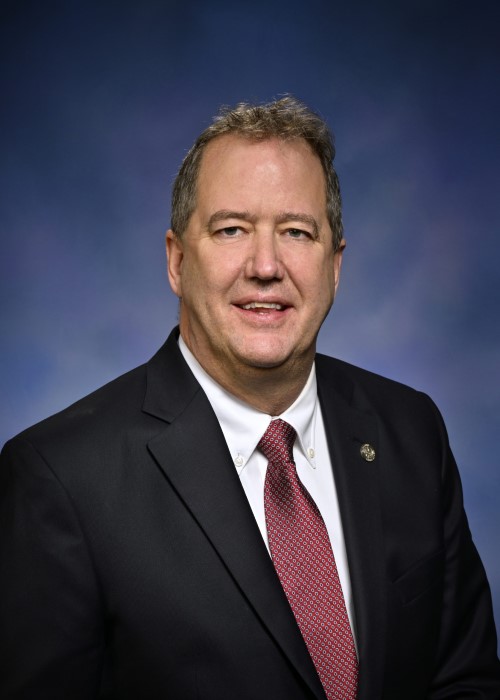
Rep. Cam Cavitt
Sponsored bills
Maddy summaryHB 4786 creates the Upper Peninsula Natural Resources Commission under Michigan's Natural Resources and Environmental Protection Act. The commission, appointed by the governor from lists provided by UP legislators, will make rules specifically about game and sport fish management that affect only the Upper Peninsula. Members serve two-year terms without pay but receive expense reimbursement. This bill requires three related bills (HB 4783, 4784, and 4785) to also pass before taking effect.
Maddy summaryHB 4784 gives Michigan's Upper Peninsula Natural Resources Commission (UP Commission) new authority to manage wildlife specifically in the Upper Peninsula. It authorizes the UP Commission to establish the first hunting seasons for moose and wolves in the region, while requiring all decisions to follow scientific wildlife management principles. The bill also grants the UP Commission exclusive authority over game species that primarily affect the Upper Peninsula or have minimal impact outside the region. This change directly affects the UP Commission's management decisions, hunters pursuing moose or wolves in the UP, and wildlife conservation efforts focused on the Upper Peninsula. The law mandates public hearings and scientific review before implementing hunting regulations.
Maddy summaryHB 4785 creates the Upper Peninsula natural resources commission (UP commission) by amending Michigan's Natural Resources and Environmental Protection Act to define it as a new entity. The bill also amends section 40102 to authorize the UP commission to issue orders regarding deer or elk feeding, a specific wildlife management issue. This commission will provide a regional decision-making body for natural resource matters in the Upper Peninsula, particularly concerning wildlife impacts on local ecosystems. The bill is tied to three other related bills (HB 4784, HB 4786, and HB 4783), requiring all to pass together.
Maddy summaryHB 4781 amends Michigan's Whistleblowers' Protection Act to strengthen penalties for employers who retaliate against employees reporting violations. It increases the civil fine for violations from $500 to $2,000 per offense and requires employers to pay triple back wages to affected employees. The bill directly impacts workers who report wrongdoing (whistleblowers) and employers who retaliate, ensuring greater financial accountability. All collected fines must be deposited into the state general fund.
Maddy summaryHB 4046 designates a specific segment of US-31 in Grand Traverse County (between Three Mile Road and Bunker Hill Road) as the "Trooper James E. Boland Memorial Highway." This procedural bill amends Michigan's highway naming statute to honor Trooper James E. Boland through a permanent memorial designation. It has no policy or funding mechanisms - only renaming a public roadway. The bill took immediate effect upon approval by the Governor on August 15, 2025.
Maddy summaryHB 4081 allows counties and municipalities in Michigan to set higher limits than the current state cap on the number of separate land parcels created when dividing a single property. It amends state law (MCL 560.108) that previously limited most land divisions to 12 parcels. The bill directly affects local governments, developers, and property owners by giving communities more flexibility to manage land use and development density. This change removes the state-imposed cap, enabling local authorities to establish their own parcel limits based on community needs.
Maddy summaryHB 4751 would remove "sexual orientation" and "gender identity or expression" from the list of protected characteristics under Michigan's Elliott-Larsen Civil Rights Act. This change would eliminate legal protections against discrimination based on these factors in employment, housing, public accommodations, and education. The bill amends multiple sections of the Act (including Sections 102, 202, and 203) to delete these categories from the prohibited grounds for discrimination. If enacted, it would directly affect LGBTQ+ individuals who previously could seek legal recourse for discrimination based on these characteristics. The bill is currently in committee referral after its introduction on July 29, 2025.
Maddy summaryHB 4753 amends Michigan's Elliott-Larsen Civil Rights Act to restore protections for employees regarding pregnancy, childbirth, and termination of pregnancy by removing a 2023 exclusion that previously excluded "nontherapeutic abortion not intended to save the life of the mother." It directly affects employees and employers covered by the act, ensuring pregnancy-related conditions - including termination of pregnancy - are treated as protected categories under anti-discrimination law. The key provision redefines "sex" in Section 201 to include pregnancy termination without the 2023 exception, and updates Section 202 to prohibit employment discrimination based on these conditions. This bill reverses a prior amendment, restoring the original language that explicitly covered pregnancy-related medical conditions.
Maddy summaryHB 4756 amends Michigan's Capitol Historic Site Act to allow licensed individuals (including those with out-of-state permits) to carry concealed pistols inside the state capitol building. It specifically requires that such individuals present their concealed pistol license to capitol security officers or legislative sergeants at arms upon request. This bill directly affects licensed gun carriers who currently face restrictions within the capitol building. The change removes the existing prohibition on concealed carry in the capitol, aligning with the commission's role in managing the site without restricting licensed carry.