Maddy summaryThis bill designates euchre as the official game of the state of Michigan. It creates a new act to formally establish this title in state law. The legislation does not impose any regulations or restrictions on how the game is played, but rather serves as a symbolic designation for the state.

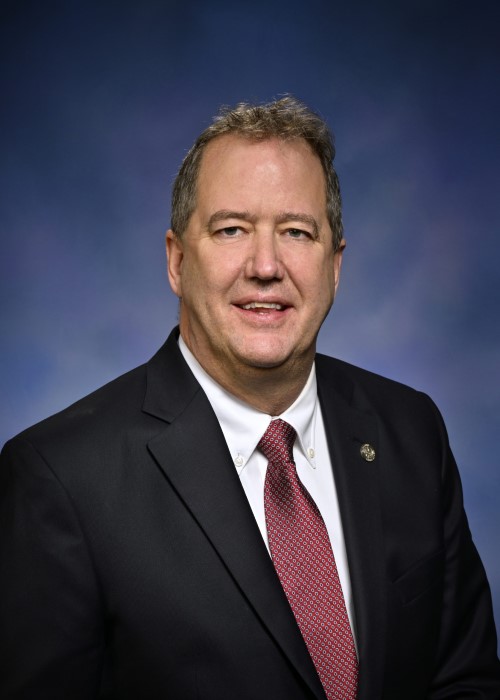
Rep. Cam Cavitt
Sponsored bills
Maddy summaryHB 6247 establishes a comprehensive regulatory framework in Michigan for the geologic storage of carbon dioxide, requiring operators to obtain permits from the Department of Environment, Great Lakes, and Energy that align with federal standards. The bill authorizes the leasing of state-owned lands and pore space for these projects, while permitting specific surface activities on commercial forestland and wilderness areas under strict conditions to protect natural resources. It creates a unitization process to manage shared subsurface interests among multiple property owners and mandates long-term monitoring of storage sites for at least 50 years after injection ceases. Upon successful completion and verification of site safety, the state assumes ownership and liability for the stored carbon dioxide, releasing the original operator from future regulatory responsibilities.
Maddy summaryMichigan House Bill 6249 establishes that ownership of subsurface pore space, which can be used for storing carbon dioxide or other substances, is vested in the owner of the surface land unless it has been previously separated. The bill allows this pore space to be sold, leased, or otherwise transferred independently from the surface estate, provided that any such separation clearly describes the specific geological formation, depth, and scope of surface use rights involved. It clarifies that selling mineral rights does not automatically transfer pore space ownership, which must be explicitly stated in the agreement. This legislation takes effect only if two related companion bills are also enacted into law.

Maddy summaryMichigan House Bill 6248 updates the definitions in the state's crude oil and petroleum act to explicitly include carbon dioxide substances used for storage or enhanced recovery operations. The bill clarifies that individuals and companies do not have an inherent right to transport, store, or deal in these substances via pipelines without authorization from the Michigan Public Service Commission. It also specifies that this regulatory framework does not apply to rights that existed before 1929 or to carbon sequestration wells operating under separate environmental laws. This legislation is tied to two other bills and will only take effect if all three are enacted into law by the current legislature.
Maddy summaryHB 5940 allows electric utilities and other providers to install electronic transmission infrastructure, such as high-voltage power lines, within existing highway rights-of-way without needing separate consent from local governments. The bill establishes specific standards for underground placement to avoid increasing road maintenance costs and introduces a fee structure where utilities pay a one-time permit fee, with revenues dedicated to highway capital and maintenance. Additionally, the legislation creates a coordination process between the state transportation department and utilities to identify suitable routes and includes protections that prevent the state from relocating transmission lines for at least five years once a route is approved.
Maddy summaryThis bill updates Michigan's Natural Resources and Environmental Protection Act to clarify definitions and procedures for commercial fishing in the state's Great Lakes waters. It directly affects licensed commercial fishermen, fish dealers, and the Department of Natural Resources by establishing precise meanings for terms like "abandoned gear," "quota," and various types of fishing nets. The legislation also adds new definitions to improve record-keeping requirements for fish production, storage, and sale, ensuring that all commercial activities are clearly regulated. By amending multiple existing sections and adding a new one, the bill aims to provide a more structured framework for managing allowable catch limits and enforcing fishing privileges.
Maddy summaryHB 5919 creates a new statewide school district called the Learner-First District to offer parents and students additional educational choices beyond traditional local school districts. The bill defines this new district as a public entity that covers the entire state and allows parents to hire independent contractors, such as teachers, directly to provide instruction to their children. Key provisions establish rules for mastery-based learning, where students progress based on demonstrating knowledge rather than time spent in class, and outline how the district will operate under the supervision of the state board of education.
Maddy summaryThis Michigan bill updates high school graduation requirements by allowing students to earn math credits through approved career and technical education programs in trades like welding, construction, and engineering. It adds a new section to the state school code that recognizes formal CTE programs as equivalent to traditional math courses when they cover the same content as state assessments. The legislation also clarifies how personal finance courses can count toward multiple subject requirements, including math, arts, and foreign language credits. These changes directly affect public school districts and academies in Michigan by providing more flexibility in how students meet graduation standards while maintaining core academic expectations.
Maddy summaryHB 5359 creates tax credits for Michigan retail dealers selling specific ethanol-blended fuels. It provides a $0.05 per gallon credit for E15 fuel (10-15% ethanol) and $0.085 per gallon for E85 fuel (50-83% ethanol) sold through metered pumps at their retail sites. The credit applies to tax years 2026-2030 and can be refunded if it exceeds the dealer's tax liability. This directly affects motor fuel retailers who sell these ethanol blends to the public, with eligibility defined under Michigan's motor fuel tax act.
Maddy summaryThis bill expands the powers and duties of Michigan's Office of the Legislative Corrections Ombudsman, which handles complaints from prisoners, their advocates, and legislators regarding conditions in state correctional facilities. Key changes require the ombudsman to notify complainants and affected prisoners when investigating or declining to investigate complaints, and mandate that the office consult with the Department of Corrections before issuing any report that criticizes the department or its staff. The legislation also establishes strict reporting requirements, forcing the ombudsman to publish detailed monthly and annual reports on complaint statistics and department responses, while adding protections to ensure that individuals cannot be penalized for filing complaints or cooperating with the ombudsman. Additionally, the bill clarifies that the ombudsman's authority operates alongside, rather than replacing, existing legal remedies and appeal processes for prisoners.