

Maddy summaryHB 5920 expands the powers of Michigan's Office of the Legislative Corrections Ombudsman to better investigate issues within the Department of Corrections. The bill allows the ombudsman to launch investigations based on complaints from prisoners, legislators, or family members, as well as on their own initiative regarding safety and security concerns. Key provisions include granting the ombudsman access to medical and mortality records, the ability to hire qualified experts for inspections, and the authority to enter correctional facilities at any time, including during emergencies.
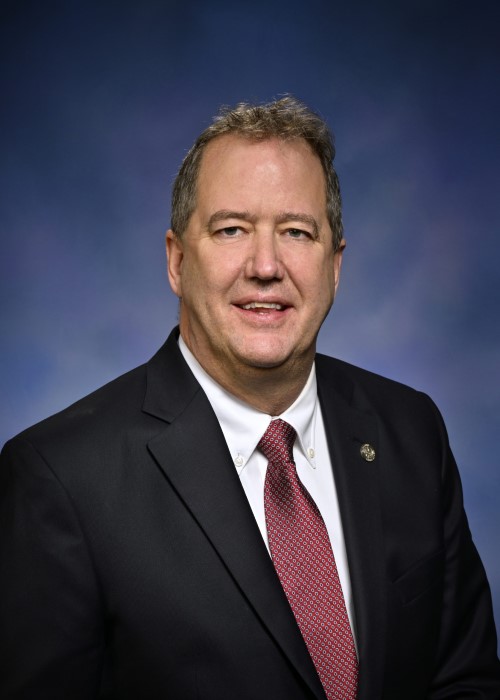
Rep. Cam Cavitt
Sponsored bills
Maddy summaryHB 4202 amends Michigan's income tax code to update deductions for retirement benefits and education-related payments. It specifically adjusts the maximum deductible amount for retirement/pension benefits (currently $42,240 for singles/$84,480 for couples) to automatically increase annually based on the Consumer Price Index, and clarifies rules for deducting payments made to Michigan's education trust for tuition. The bill affects Michigan taxpayers who claim these deductions, particularly retirees and those using education trust programs. It does not create a new "fetus exemption" (a misstatement in the bill title), but refines existing tax code provisions for retirement income and education savings. The bill is currently in committee after its March 2025 introduction.
Maddy summaryThis bill prohibits large institutional investors from buying single-family homes in Michigan to prevent corporate ownership of residential properties. It defines these investors as for-profit entities managing or owning over 100 homes statewide with at least $375 million in assets, while allowing exceptions for new construction projects or those that renovate homes with significant improvements. The law applies to various acquisition methods, including mergers and foreclosures, and sets a civil penalty of up to $25,000 per home for any violations.
Maddy summaryThis bill requires K-5 teachers and literacy support staff in Michigan to complete specific professional training focused on reading and literacy instruction by the 2029-2030 school year. The legislation designates a single state-approved provider to deliver the training, which must cover evidence-based reading methods, assessment strategies, and a multitiered system of supports for addressing learning difficulties. School districts must report annual compliance data to the state department, which will publish public reports on implementation progress and recommend funding adjustments as needed. The training includes mandatory components on phonics, vocabulary, comprehension, and data-driven decision-making, with phased implementation beginning in the 2026-2027 school year.
Maddy summaryHB 4189 names a specific bridge on South Grand Avenue over I-96 in Fowlerville as the "LCpl Michael W. Hanks Memorial Bridge" to commemorate a fallen Marine. The bill requires the state transportation department and Livingston County road commission to install signs at both approaches of the bridge designating its new name. This is a purely commemorative measure with no policy changes or financial impact, directly affecting the bridge location and signage in Fowlerville. It amends Michigan's Memorial Highway Act to add this designation without altering transportation policies or funding.
Maddy summaryHB 4062 restricts lobbying by former Michigan state legislators to prevent potential conflicts of interest. It prohibits former senators or representatives from engaging in paid lobbying activities for two years after leaving office, specifically banning them from spending money or receiving compensation for lobbying that meets the threshold requiring lobbyist registration. The law applies to legislators whose term began on or after January 1, 2025, and violations are punishable by a misdemeanor fine of up to $1,000 or 90 days in jail. This bill directly affects former lawmakers seeking to lobby government officials, aiming to limit immediate post-office influence in policy decisions.
Maddy summaryHB 4063 prohibits former governors, lieutenant governors, and heads of major state departments from accepting payment or reimbursement for lobbying if their activities exceed the threshold requiring lobbyist registration. This 2-year restriction applies to officials whose terms begin on or after January 1, 2025. Violating the ban carries penalties of up to 90 days in jail or a $1,000 fine. The bill targets high-level former officials to limit potential conflicts of interest after leaving public office.
Maddy summaryHB 4750 requires Michigan's foster care department to use or save existing benefits (such as Medicaid or education funds) for children in foster care when it serves their best interests, directly affecting all children in the state's foster care system. The bill amends Michigan's foster care law to mandate this approach, ensuring benefits are prioritized for the child's well-being rather than other uses. Key provisions include adding a new section (8f) to the existing law, directing the department to make decisions based on each child's specific needs. This policy change clarifies how resources must be managed without specifying new funding or programs.
Maddy summaryHB 4350 amends Michigan's Natural Resources and Environmental Protection Act to allow individuals to feed wild birds and other wildlife under specific conditions. This bill permits such feeding if it occurs within 300 feet of a residence and the total amount of feed does not exceed two gallons. It clarifies that this allowance does not apply to activities like baiting for hunting, normal agricultural practices, or feeding conducted in a way that excludes deer and elk. This aims to create limited exceptions for recreational or preventative feeding of wildlife by residents.
Maddy summaryHB 4187 modifies Michigan's corporate income tax law by adjusting how the tax base is calculated and clarifying revenue distribution. It requires corporations to add back certain taxes and expenses previously deducted for federal purposes (like state taxes or related-party royalties) and eliminates deductions for oil/gas and mineral-related income and expenses. For the 2021-2022 fiscal year, the bill directs $800 million of corporate tax revenue to the Michigan taxpayer rebate fund, while other years’ revenue flows to the general fund. This directly affects corporations operating in Michigan and the state’s budget allocation process.