

Maddy summaryHB 4017 modifies workplace safety reporting rules by reducing the maximum penalty for failing to report a death if the death occurs on a family farm. It specifically lowers the penalty amount for employers who don't report fatalities involving certain individuals (like family members) working on their own farm. The bill affects employers in Michigan who operate family farms and are subject to workplace safety laws under MCL 408.1035. This change directly alters the penalty structure for reporting requirements related to farm-related workplace deaths.
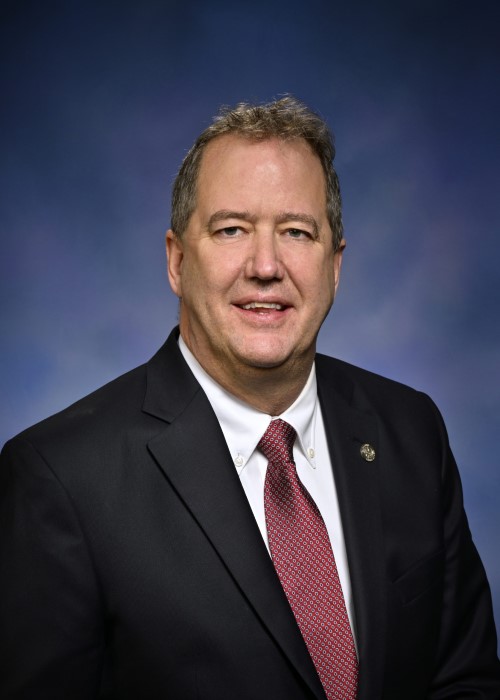
Rep. Cam Cavitt
Sponsored bills
Maddy summaryThis is a ceremonial resolution (not a law) declaring September 2025 as "Big Brothers Big Sisters Youth Mentoring Month" in Michigan. It recognizes the work of Big Brothers Big Sisters, a nonprofit providing youth mentoring programs, and highlights statistics about the program's benefits for children. The resolution has no legal effect or policy changes - it simply symbolically honors the organization and its volunteers. It was introduced and adopted by the Michigan House of Representatives on September 4, 2025.
Maddy summaryHR 160 is a ceremonial House resolution congratulating Pope Leo XIV on his election as the 267th pontiff of the Catholic Church and the first American-born pope. It recognizes his historic significance for American Catholics and commends his lifetime of service, humility, and commitment to pastoral care. The resolution does not enact policy or affect any individuals or groups; it is purely symbolic. It was introduced and adopted by the House on September 3, 2025, with no further legislative action required.
Maddy summaryHB 4830 amends Michigan's Drain Code to update compensation and expense reimbursement rules for board members reviewing drain projects. It requires their pay and mileage to match county commissioners' rates (or be set by the drain commissioner if commissioners aren't paid per diem), with all costs covered by the drainage district. This affects local drain commissioners and drainage districts responsible for funding these boards. The bill focuses on procedural adjustments to board member payments, not changes to drain project requirements.
Maddy summaryHB 4832 amends Michigan's Public Health Code to establish a new licensure process for anesthesiologist assistants (AAs), directly affecting AAs seeking to practice in the state and the Michigan Board of Medicine. The bill adds new sections defining AA qualifications, supervision requirements, and scope of practice, while updating existing licensing statutes to include AAs as a distinct licensed profession. Key provisions require AAs to complete state-approved education programs and work under physician supervision, with specific standards for training and clinical responsibilities. This bill is procedural in nature, creating the regulatory framework for AA licensure rather than changing patient care standards. It was introduced on August 27, 2025, and referred to the Health Policy Committee.
Maddy summaryHB 4831 amends Michigan's Drain Code to update procedures for changing drainage district boundaries, affecting counties, landowners, and municipalities liable for drainage assessments. It requires petitions signed by landowners (or municipalities) to add/remove counties from a district, followed by a drainage board meeting where boundaries are reviewed and cost-sharing between counties is determined. The bill specifies notice requirements for landowners and municipalities, and outlines how revised boundaries must be documented and filed with county officials. This procedural update streamlines boundary adjustments for public health, convenience, or welfare needs without altering drainage funding or service obligations.
Maddy summaryHB 4821 requires Michigan municipalities imposing drainage fees that generate over $10 million annually or 5% of their general fund budget to create separate, segregated accounts for those revenues. The bill mandates that these funds cannot be mixed with general funds, must be spent only on direct drainage-related services (like infrastructure maintenance or stormwater management), and requires annual public reports detailing revenue, expenditures, fee proportionality, and account balances. Municipalities must also hold public hearings on these reports and face fines or suspension of fee collection for violations. The law aims to increase transparency and prevent municipalities from misclassifying drainage fees as non-tax revenue to avoid voter approval requirements.
Maddy summaryHB 4802 allocates over $12.8 million in supplemental funding for Michigan's rural school districts for the 2025-2026 fiscal year. It creates two distinct funding streams: $3.89 million for districts with fewer than 250 students and specific geographic isolation (e.g., Upper Peninsula locations >30 miles from other schools or island districts), and $8.38 million for districts with low population density (<10 pupils per square mile) or large land area (>250 square miles). Eligible districts must meet defined criteria, and funds are distributed based on financial need through a cooperative spending plan developed with intermediate superintendents. The bill amends existing school aid appropriation language (sections 11 and 22d of the State School Aid Act) to implement these targeted payments.
Maddy summaryHB 4047 creates a new legal cause of action allowing individuals to sue media organizations that falsely depict them engaging in sexual conduct. The law directly affects media companies publishing such false content and individuals whose reputations were harmed by the inaccurate depictions. It establishes specific procedures for filing these lawsuits within the civil court system. The bill became law on August 26, 2025, after approval by the Governor.
Maddy summaryHB 4048 adds a new sentencing guideline for distributing intimate deepfake sexual images with aggravating circumstances, classifying it as a Class F felony punishable by up to 3 years in prison. This directly affects individuals convicted of disseminating such deepfakes, particularly those with prior offenses under Michigan law. The bill amends sentencing guidelines in Chapter XVII of the Michigan Penal Code to specifically address this crime, establishing a clear penalty framework for courts to apply. It became effective immediately upon the Governor's approval on August 26, 2025.