

Maddy summaryHB 5634 prevents Michigan's health department from creating stricter rules or requiring additional paperwork for school immunization exemptions. It preserves only two existing exemption types: medical (certified by a physician) and religious/philosophical (via a parent's written statement). The bill explicitly blocks the department from mandating new exemption forms or imposing extra requirements beyond these two categories. This directly affects schools, parents seeking exemptions, and the health department's regulatory authority. The legislation maintains the current exemption framework without expanding or altering it.
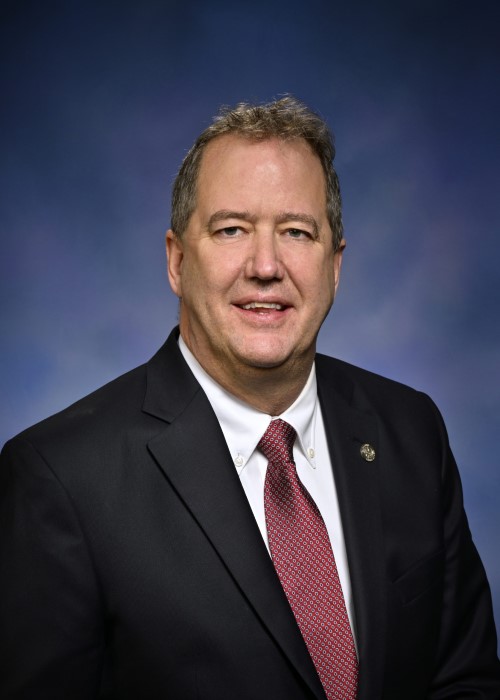
Rep. Cam Cavitt
Sponsored bills
Maddy summaryHB 4932 modifies Michigan's continuing education requirements for pharmacists and pharmacy technicians renewing their licenses. It adds a new requirement that 100% of the continuing education hours must include pain and symptom management content, as specified by the department. The bill also allows all continuing education to be completed online or electronically through department-approved programs. This applies directly to licensed pharmacists and pharmacy technicians seeking license renewal in Michigan, without changing the existing hour requirements (30 hours for pharmacists, 20 hours for technicians).
Maddy summaryHB 5210 allows commercial fishing license holders to list multiple vessels on a single license instead of requiring separate licenses for each boat. Licensees can add or remove vessels anytime by providing written notice to the department. The bill also clarifies rules for transferring licenses when boats are sold, damaged, or lost, including fee adjustments for larger vessels or non-resident transfers. All vessels listed under one license must operate within 50 miles of the originally designated port.
Maddy summaryHB 5219 would allow direct farm-to-consumer sales of raw milk and raw milk products in Michigan by amending the Food Law. It defines "direct farm-to-consumer product" to explicitly include raw milk meeting requirements under the 2001 Manufacturing Milk Law, enabling farmers to sell these products directly to consumers on their property. The bill adds new sections (4102a and 4102b) to establish this sales pathway while maintaining existing pasteurization requirements for other sales. This change directly affects farmers producing raw milk and consumers purchasing it directly from farms, without altering commercial milk sales rules.
Maddy summaryHB 5217 would allow direct farm-to-consumer sales of raw (unpasteurized) milk and milk products by dairy producers who comply with specific safety standards under Michigan's Food Law (2000). It amends existing milk regulations to explicitly permit this sale method, provided producers meet requirements in Section 4102a of the Food Law and adhere to the definition of "direct farm-to-consumer producer" from the Food Law. This change affects small dairy farms selling directly to consumers, not restaurants or grocery stores, and maintains existing pasteurization requirements for all other milk sales. The bill requires compliance with state safety protocols but does not alter pasteurization rules for commercial distribution.
Maddy summaryHB 5534 requires Michigan state departments and agencies to submit annual reports to the legislature within 90 days of each legislative session's start. These reports must include specific recommendations for reducing the rules and requirements (regulatory burden) imposed by each department or agency. The bill directly affects all state executive branch departments and agencies by mandating this transparency and accountability measure. It creates a formal process for the legislature to review and potentially act on agency regulations, without specifying any required changes to the regulations themselves.
Maddy summaryHB 5543 increases the annual funding for grade crossing surface improvements from $3 million to $6 million per year by amending Section 10(1)(b) of Michigan's Transportation Fund Act (MCL 247.660). This change directs more state transportation funds toward safety and surface repairs at railroad crossings - locations where roads intersect train tracks - across Michigan. The bill specifically adjusts the allocation within the state trunk line fund, ensuring doubled resources for maintaining these critical infrastructure points. It does not alter other funding mechanisms but directly affects how money is distributed for grade crossing safety upgrades.
Maddy summaryHB 5556 allows industrial construction permit applicants in Michigan to purchase wetland credits from approved mitigation banks instead of always restoring or creating wetlands on-site to offset project impacts. The bill introduces temporary credits for short-term delays during on-site mitigation and establishes a stewardship fund for alternatives like conservation easements or payments. It updates rules to encourage wetland bank development by expanding service areas within watersheds, reducing required mitigation ratios when using bank credits, and allowing credit transfers between projects. This directly affects developers and construction companies requiring permits for projects impacting wetlands.
Maddy summaryHB 5317 amends Michigan's law governing county parks and recreation commissions by changing their membership requirements. It allows counties with fewer than 100,000 residents (starting January 1, 2027) to reduce appointed members from seven to four, while still requiring at least one county commissioner on the commission. For counties with populations between 750,000 and 1,000,000, it adds a requirement to appoint a neighborhood representative living near the most frequently used county park. The bill directly affects county governments managing parks and recreation commissions, modifying how these advisory bodies are structured and composed.
Maddy summaryHB 4981 amends Michigan's Public Health Code to update the terminology from "limited licensed counselor" to "limited licensed professional counselor" in multiple sections governing mental health licensing and client privileges. The bill directly affects counselors holding a limited license, ensuring consistent terminology in legal references to their practice and the associated client privilege protections. This technical correction standardizes language across the code without changing existing practice requirements or scope of services for these professionals. The change aligns with current regulatory terminology used in the state's licensing framework for mental health counselors.