

Maddy summaryThis bill amends Michigan's penal code to update penalties and exemptions related to firearm possession, particularly within school zones. It modifies existing laws to clarify when individuals, such as licensed concealed carry permit holders and certain security personnel, are exempt from school zone restrictions. The legislation also adjusts penalties for altering firearm markings and expands exemptions for law enforcement, military personnel, and school security employees. Additionally, it provides specific exceptions for transporting unloaded firearms in vehicles under certain conditions, such as hunting trips or moving between residences.
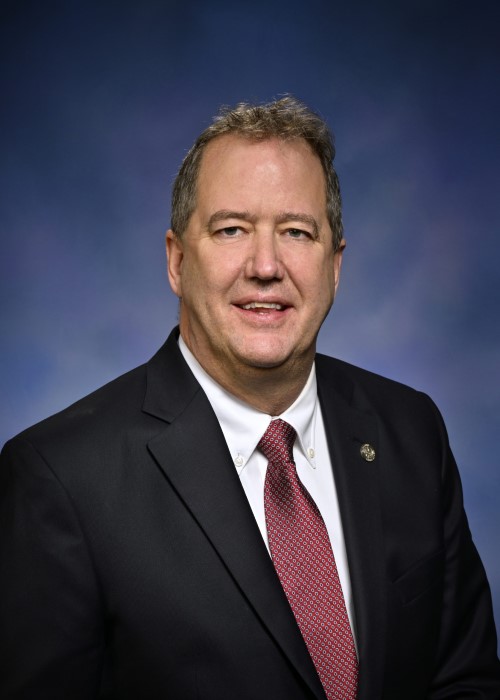
Rep. Cam Cavitt
Sponsored bills
Maddy summaryThis bill updates Michigan's sentencing guidelines for firearms-related crimes by modernizing references to existing laws. It directly affects individuals charged with firearm offenses and legal professionals who apply sentencing rules. The legislation amends specific sections of the state's criminal procedure code to ensure current legal citations are accurate and consistent. No new penalties or restrictions are introduced; the changes are purely administrative to align with prior legislative updates.
Maddy summaryThis bill updates Michigan's firearm licensing laws by modernizing references to other statutes and clarifying requirements for obtaining a license to purchase, carry, possess, or transport firearms. It directly affects individuals seeking firearm licenses, law enforcement agencies issuing those licenses, and the Department of State Police administering the program. The key provision requires licensing authorities to issue licenses to qualified applicants without unnecessary delay, while specifying that applicants must meet criteria such as being at least 18 or 21 years old, being a legal Michigan resident, and not being subject to certain protective orders or mental health restrictions. The bill also maintains existing rules prohibiting unlicensed firearm transactions and outlines procedures for licensing military personnel returning to Michigan.
Maddy summaryThis bill updates the Natural Resources and Environmental Protection Act to clarify firearm transport rules for individuals in areas frequented by wild animals. It maintains the requirement that hunters generally need a license to carry firearms in wildlife areas but explicitly allows licensed concealed pistol carriers and those with specific legal exemptions to transport loaded pistols. The bill also clarifies that these transport provisions do not authorize individuals to hunt wild animals without proper hunting licenses.
Maddy summaryThis bill updates legal references in Michigan's Corrections Code to align with current criminal statutes, specifically modernizing citations for various firearm-related offenses. It directly affects prisoners convicted of crimes listed in the bill, such as those involving illegal possession or use of firearms, by clarifying the legal sections they are subject to under parole eligibility rules. The bill does not change parole eligibility requirements themselves but ensures the referenced criminal codes are correctly cited in the corrections law. It includes a provision that requires another related bill to pass first before this update takes effect.
Maddy summaryThis bill creates a new corporate income tax credit for Michigan employers who train apprentices and employ students in career and technical education programs. Starting in 2026, eligible businesses can receive tax credits covering up to 50% of certain training expenses or $2,000 per apprentice or student, with small businesses under 50 employees receiving an additional 10% bonus credit. The credit applies to qualified expenses such as wages, benefits, and classroom instruction costs, and any unused portion can be refunded to the taxpayer. Additionally, the bill requires the state Department of Labor to annually report on program participation, employment outcomes, and the fiscal impact of the credits to legislative committees.
Maddy summaryThis resolution designates March 1-4, 2026, as Great American Prayer Week in Michigan to recognize the Great American Prayer Revival movement. The bill does not create new laws or change government operations but serves as a symbolic declaration honoring the movement's focus on prayer and national unity. It references historical religious revivals in American history to frame the week as a time for spiritual reflection and community engagement. The measure is a ceremonial resolution with no legal effect beyond official recognition of the date.
Maddy summaryThis bill amends Michigan's ethics law to allow certain local government employees and officers to hold additional public positions without violating conflict-of-interest rules. It specifically permits county officials and township employees to serve on boards of various development authorities, including tax increment finance and downtown development boards, as well as housing commissions and land banks. The legislation also clarifies that officials in smaller communities (under 40,000 population) can serve as emergency medical personnel or public safety officers without conflict, and allows school board members to volunteer as extracurricular coaches under specific conditions. These changes aim to provide more flexibility for local government workers to contribute to community development and public safety initiatives while maintaining ethical standards.
Maddy summaryHB 5635 amends Michigan's School Code (MCL 380.1177) to prevent schools or health departments from requiring stricter exemption documentation than state law allows for student immunizations. It directly affects students entering school for the first time or in grade 7, and their families seeking exemptions based on religious beliefs or other objections. The bill ensures schools can only accept the three standard exemption options: a physician's statement, a parent's religious exemption, or a statement showing the child is in process of compliance. It does not change existing immunization requirements but prohibits additional barriers to claiming exemptions beyond those specified in state law.
Maddy summaryHB 5602 allocates funding for Michigan's Department of Environment, Great Lakes, and Energy for the 2026-2027 fiscal year. It establishes the specific budget amounts the department can spend on operations and programs during that period. This bill directly affects the department's ability to manage environmental protection, Great Lakes restoration, and energy initiatives through its allocated budget. As a standard appropriations act, it does not create new policies or regulations.