

Maddy summaryHB 5522 amends Michigan's Public Health Code to update delegation rules for physician assistants (PAs). It clarifies that supervising physicians may delegate specific medical tasks to PAs under certain conditions, including direct physical supervision during procedures. The bill specifies that PAs can perform surgical tasks only when a licensed physician is present, and outlines requirements for health facilities to authorize such delegation. These changes directly affect PAs, physicians, and healthcare facilities by defining clearer boundaries for PA scope of practice under supervision.
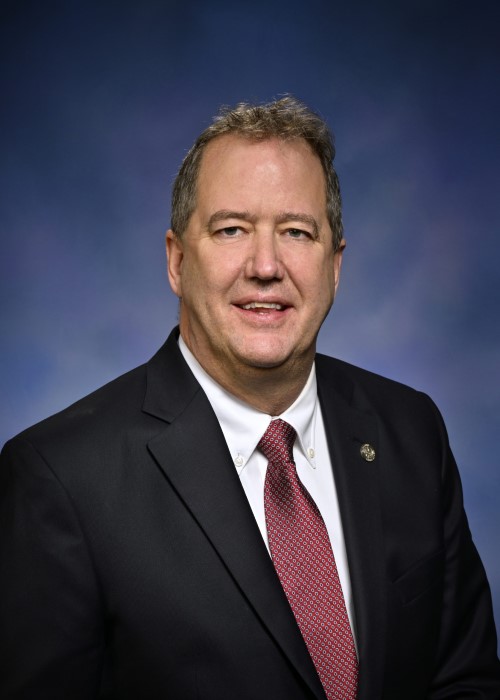
Rep. Cam Cavitt
Sponsored bills
Maddy summaryThis is a ceremonial resolution (not a law), declaring February 11, 2026, as "2-1-1 Day" in Michigan. It recognizes the 2-1-1 helpline service, which connects Michiganders to free health and human services (like housing, food, and disaster assistance) without creating new policies or changing how the service operates. The resolution aims to raise public awareness about the existing 2-1-1 resource, which handled over 400,000 contacts in fiscal year 2025. It has no binding effect on state programs or funding.
Maddy summaryHB 5313 modifies Michigan's licensing rules for health professionals by removing certain disciplinary records from public view and adjusting continuing education requirements. It directly affects licensed healthcare workers (like nurses, doctors, and therapists) by changing how past disciplinary actions are handled and what training they must complete. Key provisions include adding new sections (16211a and 16231b) to limit public access to some disciplinary records, updating continuing education standards, and modifying sanctions for violations. The bill focuses on administrative changes to licensing processes without altering core professional standards or creating new funding.
Maddy summaryHB 4855 would amend Michigan law to permit bow hunters to carry a pistol while hunting. This directly affects licensed bow hunters who currently cannot possess a firearm during hunting activities under existing law (MCL 324.43510). The bill changes the prohibition in the 1994 Michigan Penal Code to allow pistol possession specifically for bow hunters during hunting. The amendment would remove the current restriction, enabling bow hunters to carry a pistol for lawful use while hunting.
Maddy summaryHB 5489 would allow 17-year-olds to apply for medical first responder and emergency medical technician (EMT) licenses in Michigan, provided their application includes parental or guardian consent. It maintains an 18-year-old minimum for higher-level roles like paramedics, emergency medical services instructors, or EMT specialists. The bill amends Michigan's Public Health Code to establish these age requirements for EMS licensure, directly affecting young individuals seeking entry into emergency medical careers. This change requires the concurrent passage of HB 5488 to take effect.
Maddy summaryHB 5490 removes the existing list of prohibited nonnative species from Michigan's Natural Resources and Environmental Protection Act. The bill amends Section 41301 to eliminate specific prohibitions on species like giant salvinia, Asian longhorned beetles, and Eurasian ruffe, which previously required DNR oversight. This change directly affects individuals and businesses that previously had to comply with restrictions on these species. The key mechanism is deleting the defined prohibitions, reducing regulatory authority for the Department of Natural Resources regarding these specific nonnative species.
Maddy summaryHB 5488 lowers the minimum age requirement for licensure as a medical first responder or emergency medical technician (EMT) in Michigan from 18 to 17 years old. It amends Section 20950 of the Public Health Code (MCL 333.20950), specifically changing the age requirement in subsection (2)(a) from "18 years of age or older" to allow 17-year-olds to apply. The bill does not alter other licensing requirements, such as education programs, passing exams administered by the National Registry of Emergency Medical Technicians, or military service pathways. This change directly affects 17-year-olds seeking these emergency medical services roles who previously could not obtain licensure until age 18.
Maddy summaryHB 5315 amends Michigan law to clarify when the Attorney General must intervene in court cases involving the state. It changes Section 28 of the Revised Statutes to require the Attorney General to intervene in state court cases when specifically requested by the Governor or either legislative chamber, rather than having discretion. This directly affects the Attorney General's office and state entities involved in civil or criminal cases where the state has an interest. The bill modifies existing procedure by making intervention mandatory upon request, streamlining the process for state representation in court. (Procedural bill; summary concise per guidelines.)
Maddy summaryHB 5314 repeals a specific section (MCL 14.102) from an old 1919 law that required certain lawsuits brought by the Michigan Attorney General on behalf of the state to be filed in Ingham County circuit court. This procedural change eliminates the requirement for those cases to be filed in a specific county, allowing the Attorney General to file such lawsuits in appropriate courts as needed. The bill does not create new legal requirements or affect who can bring lawsuits; it only removes a historical jurisdictional rule. This is a straightforward procedural update with no direct impact on public employees, officers, or state operations.
Maddy summaryHB 5316 modifies Michigan's court venue rules for cases brought by the state's attorney general. It requires that lawsuits filed by the attorney general "in the name of the state" must be filed and tried in the county where the state government is headquartered (typically Ingham County, where Lansing is located). This change specifically applies to cases seeking relief for the state or its citizens, such as enforcement actions against businesses or public officials. The bill does not alter the substance of the cases but clarifies where they must be heard.