

Maddy summaryHD 1540 establishes a Pediatric Cancer Research and Resource Project Trust Fund in Massachusetts to provide grants for pediatric cancer research and support projects. The fund receives state appropriations, private donations, and interest, with unused balances carrying forward annually. It supports two types of projects: research focused on causes, prevention, or treatment of childhood cancer (capping operational costs at 5%), and resource projects offering education, awareness, or psychosocial support (also capping operational costs at 5%). A 7-member advisory committee, including cancer survivors and advocates, will manage grant allocations, and the Health and Human Services office must report annually to legislative committees on funded projects and outcomes.
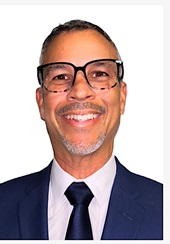
Rep. Homar Gomez
Sponsored bills
Maddy summaryHD 1177 establishes a special commission to study Massachusetts' micro-transit services. The commission will benchmark different service models, assess funding needs and gaps, define micro-transit for state funding eligibility, and estimate annual funding requirements to address transportation access gaps, especially in rural areas and underserved communities. The 15-member commission includes representatives from transit authorities, advocacy groups, health organizations, rural policy, and local governments, and must submit a final report within 15 months. This bill creates a study body to inform future state funding decisions for micro-transit, not an immediate policy change.
Maddy summaryThis bill restricts most law enforcement use of facial recognition technology in Massachusetts. It prohibits police agencies from acquiring or using facial recognition without specific legal authorization, except for limited exceptions like verifying identities for driver's licenses or investigating felonies with a warrant. The law requires strict documentation for emergency uses, mandates transparency by requiring law enforcement to share all technical details about facial recognition searches with defendants in criminal cases, and establishes public reporting requirements for all searches conducted. These provisions directly affect law enforcement agencies, public officials, and individuals involved in criminal cases where facial recognition was used.
Maddy summaryHD 794 restricts Massachusetts law enforcement and public agencies from using facial recognition and other biometric surveillance technology without specific authorization, with key exceptions for identity verification at the motor vehicle department and limited law enforcement uses. The bill requires warrants for most facial recognition searches related to felonies, mandates detailed documentation for emergency searches within 48 hours, and demands that defendants in criminal cases be notified and provided with records about any facial recognition search used against them. It also requires public reporting of all searches - including demographic data and system accuracy - by law enforcement agencies quarterly and annually to the executive office of public safety. The law ensures transparency by prohibiting the use of unapproved technology and requiring public hearings before new systems can be adopted.
Maddy summaryHD 2209 strengthens penalties for sexual assaults committed by adults in positions of trust or authority over children. The bill targets individuals like teachers, coaches, mentors, caregivers, or family members who sexually assault minors (ages 14-17 or under 14) while in such roles or afterward. For victims aged 14-17, offenders face up to 10 years in prison; for victims under 14, sentences are life imprisonment with a mandatory minimum of 10 years (no probation, parole, or sentence reductions for 10 years). The law explicitly states children under 18 cannot consent and removes defenses based on the termination of the trusted relationship. This bill directly affects offenders in trusted roles and provides enhanced protections for child victims.
Maddy summaryThis bill creates a new Office of Access and Opportunity (OAO) within the governor's office to ensure equal access for Limited English Proficient (LEP) and deaf or hard of hearing residents. The OAO, led by a governor-appointed deputy chief, will develop policies to advance non-discrimination in state employment, procurement, and services, and require all state agencies to create language access plans. These plans must outline how agencies will provide oral interpretation, translation, and auxiliary services to ensure LEP and deaf/hard of hearing individuals can effectively access state programs. The bill directly affects state agencies and the public they serve, mandating concrete steps to remove language barriers in government services.
Maddy summaryThis bill creates a state task force to address endometriosis in Massachusetts. The task force, led by the health and human services secretary and including government officials, medical society representatives, patient advocates, and industry stakeholders, will develop annual reports on research, care access, and treatment advances. It must create and update a strategic plan to improve health outcomes, focusing on research, early diagnosis, public awareness, and care delivery for people with endometriosis. The task force will submit its annual recommendations to the governor and state legislators by December 31 each year.
Maddy summaryThis bill creates a new endometriosis task force within Massachusetts' Executive Office of Health and Human Services. The task force, composed of health officials, medical associations, patient advocates, and industry representatives, must annually develop summaries on research and care access, monitor endometriosis services, and create a strategic plan with specific recommendations to improve diagnosis, treatment, and research. It requires the task force to submit annual reports to the governor and state legislators by December 31 each year. The bill directly affects individuals with endometriosis by establishing a formal process to address gaps in their care and research.
Maddy summaryHD 628 establishes Indigenous Peoples Day in Massachusetts, requiring the governor to annually proclaim the second Monday in October as this observance. The bill directs the governor to recommend public and school activities to acknowledge the history of genocide and discrimination against Indigenous peoples, honor their histories and contributions, and celebrate their cultures and resilience. It directly affects state government (via the governor's proclamation) and public schools (through recommended exercises). The key mechanism is a mandatory annual state-level recognition, replacing any existing observance with this specific date and purpose.
Maddy summaryHD 1552 requires shelters, schools, and correctional facilities to provide free disposable menstrual products (like pads, tampons, and liners) to menstruating individuals without stigma. It applies to temporary housing providers (e.g., domestic violence shelters, emergency hotels), all public primary/secondary schools, and correctional facilities (jails, prisons). The bill mandates these products be available in convenient, non-stigmatizing ways, such as in restrooms. This directly affects menstruating people experiencing homelessness, attending school, or in detention. The law creates a new requirement for these specific institutions to cover the cost of products.