

Maddy summaryHD 4025 amends a state law to extend disability benefits for POST-certified police officers disabled by cardiac disease to additional police forces. The bill adds the University of Massachusetts police, Massachusetts Port Authority police, state university and community college police, environmental law enforcement, and Department of Mental Health campus police to the list of covered entities. Previously, officers in these forces were excluded from the same benefit provision that applied to entities like the Massachusetts Bay Transportation Authority. This change directly affects POST-certified officers in these newly included forces by making them eligible for the same cardiac disability benefits.
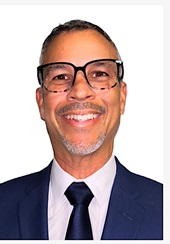
Rep. Homar Gomez
Sponsored bills
By Mr. Gomez, a petition (accompanied by bill, Senate, No. 1545) of Adam Gomez and Homar Gómez for legislation relative to APOL1 mediated kidney disease. Public Health.
Maddy summaryHD 766 creates a permanent 17-member commission focused on improving educational outcomes for American Indian and Alaska Native students in Massachusetts. The commission, appointed with representation from state education and health departments plus tribal consultation, will investigate resource use, partner with agencies on school/community programs (like suicide prevention), and make annual recommendations to the governor and legislature. It will operate independently, hold public meetings, and accept separate funding for its work. The bill directly affects tribal communities and state education agencies by requiring ongoing collaboration to address educational disparities and support cultural heritage learning. The commission must report annually by June 2 on findings and recommendations.
Maddy summaryThis bill creates a state grant program to address student food insecurity at public colleges and universities in Massachusetts. It provides funding for institutions to implement campus food support programs, including partnerships with meal vendors that accept federal nutrition benefits and student meal credit sharing systems. The program requires participating colleges to meet specific criteria, such as designating staff to assist students with food assistance programs and establishing campus awareness initiatives. A dedicated "Hunger-Free Campus Trust Fund" will manage the grants, with annual reports tracking participating schools, student engagement, and program outcomes.
Maddy summaryH 4408 establishes a state grant program to address student food insecurity at public colleges and universities in Massachusetts. The bill creates a "Hunger-Free Campus Trust Fund" to provide grants to eligible institutions - including minority-serving colleges and municipally administered schools - to support on-campus food assistance programs. Participating schools must meet specific requirements, such as designating staff to connect students with federal food aid, accepting nutrition benefits at campus vendors, and implementing meal-sharing initiatives. The program requires annual reporting on grant usage, campus activities, and student outcomes to track progress toward reducing food insecurity among students.
Maddy summaryThis bill establishes a paint stewardship program requiring paint manufacturers to fund recycling for architectural paint (under 5 gallons) and aerosol coatings. Manufacturers must submit plans to the Department of Environmental Protection detailing collection sites, environmental management practices, consumer education, and a per-container fee added to paint prices. Retailers must display fee information or list approved brands on the department's website, and cannot sell paint without an approved program. The program directly affects manufacturers, retailers, and consumers who generate leftover paint, creating a system for free household paint recycling through designated collection sites.
Maddy summaryThis bill modifies Massachusetts teacher retirement system rules to ensure continuity for educators. It requires that teachers moving to roles in the Executive Office of Education or Department of Elementary and Secondary Education retain their teacher retirement status without service interruption, with provisions for making up any contribution differences. It also creates a one-time 180-day window for certain teachers (who joined before July 2001 and didn't opt into an alternative retirement plan) to switch to that program. Additionally, the bill allows school districts to temporarily hire retired teachers during staff shortages, though this service doesn't count toward retirement credits. These changes primarily affect current and retired teachers employed in Massachusetts public schools or education agencies.
Maddy summaryThis bill requires the state to fully reimburse school districts for special education transportation costs that exceed regular program costs. It directly affects cities, towns, regional school districts, and vocational schools serving students with special education needs. Reimbursement covers the regular program's average per-pupil cost plus excess costs (capped at 110% of the statewide average), calculated using specific department-defined methods. Funding increases gradually, reaching 100% reimbursement by fiscal year 2029. The bill ensures districts aren't burdened by costs not covered under existing programs.
By Representative Gómez of Easthampton, a petition (subject to Joint Rule 12) of Homar Gómez and Lindsay N. Sabadosa relative to charter school reimbursements. Education.