

Maddy summaryThis bill allows the city of Easthampton to issue up to eight new liquor licenses for the sale of all alcoholic beverages. These licenses must be issued according to existing state laws, with one specific exception regarding certain transfer restrictions. The city cannot move these new licenses to a different location within the city, but they can be transferred to a new business at the same address if all taxes and fees are paid. If a license holder stops operating or fails to renew, the license returns to the city to be issued to a new applicant at that same location.

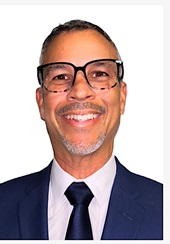
Rep. Homar Gomez
Sponsored bills
Maddy summaryThis bill authorizes the town of South Hadley to issue four new licenses for businesses to serve alcoholic beverages for immediate on-site consumption (like in restaurants or bars) and two new licenses for businesses to sell alcoholic beverages for off-site consumption (like in liquor stores). On-site licenses must be used exclusively in dining rooms or approved public areas of restaurants and cannot be moved to a different location. If a license is terminated, the town may reissue it at the same location within three years to a new business that has paid all taxes and fees. Additionally, businesses receiving a new off-site license must return their existing wine and malt beverage license to the town.
Maddy summaryThis bill amends an existing law to include licensed drinking water operators in a specific retirement classification. It adds these operators - those certified by the Board of Certification of Drinking Water Supply Facilities under Chapter 112, Section 87CCCC - to the list of professionals covered under retirement provisions already applicable to hospital workers. The change clarifies that drinking water operators are directly affected by this retirement classification, ensuring they fall under the same system as other licensed professionals. No new benefits or requirements are created; the bill simply updates the legal description to include this group.
Maddy summaryHD 434 amends Massachusetts law to explicitly include the cultivation of hemp and marijuana within the legal definition of agriculture. This change directly affects farmers and businesses growing hemp or marijuana, bringing their operations under the state's agricultural regulatory framework. The bill modifies MGL Chapter 128, Section 1a by adding the phrase "the growing and cultivation of both hemp and marijuana" after existing references to floricultural and horticultural commodities. This clarification ensures hemp and marijuana cultivation is treated as agricultural activity for regulatory purposes, without altering the legal status of these crops.
Maddy summaryHD 252 prevents homeowner associations and similar property groups from imposing unreasonable restrictions on solar energy systems. It voids any rules that forbid or unreasonably restrict solar installations, requiring associations to review requests within 60 days and explain any denials. Unreasonable restrictions include cost increases over 10% or $1,000, efficiency losses over 10%, or substantial interference with sunlight access. Homeowners can sue for violations and recover legal fees if they win. The bill directly affects homeowners in communities governed by associations that control property use.
Maddy summaryHD 3895, titled the "No Harm No Foul Act," amends Massachusetts law to allow courts to dismiss simple psilocybin possession charges under specific conditions. It directly affects adults aged 21 or older caught with small amounts of psilocybin (not for distribution) who were not driving and did not endanger children or cause visible harm to others. The key provision requires a court to dismiss the case if it finds all three conditions met: defendant over 21, not operating a vehicle, and no harm to health/safety. This changes how minor psilocybin possession offenses are handled, shifting from prosecution to dismissal when these criteria are satisfied. The bill does not decriminalize psilocybin but creates a specific pathway for case dismissal in limited circumstances.
Maddy summaryHD 1372 eliminates all fees charged by Massachusetts' Office of the Chief Medical Examiner (OCME) for removing, transporting, or handling the body of a deceased child. It directly affects grieving families who would otherwise pay these costs, covering children under age 5 (including reportable fetal deaths). The bill prohibits OCME from imposing such fees immediately upon enactment and requires the state to fund this service through budget adjustments. It also mandates an annual OCME report to the Legislature tracking cases, costs, and funding needs related to the policy change.
Maddy summaryThis bill (HD 4166) requires Massachusetts' Department of Public Health to study APOL1 gene variants linked to higher kidney disease risk. The department must issue a report by December 2026 with recommendations to increase awareness, screening, and genetic testing for these variants, plus analysis of funding strategies. The report will specifically address how to improve access to screening for Massachusetts residents affected by this genetic risk. It does not create new programs or funding but mandates a review to inform future health initiatives.
Maddy summarySD 1104 updates bail procedures for youth aged 12-18 involved in the justice system. It requires officers to immediately notify a parent, guardian, or the Department of Children and Families for all youth 12-18 arrested without a warrant when courts are not in session. For youth aged 14-18, officers must also notify a bail magistrate, who must review the case before release. The bill clarifies that youth may be released on bail with a written promise from a responsible adult, but must be detained in approved facilities if they cannot post bail, are charged with non-bailable offenses, or if a court orders detention pending appearance. This directly affects youth in custody and law enforcement officers handling juvenile arrests.
Maddy summarySD 2049 expands Massachusetts' low-income home energy assistance program to include cooling support. It provides up to $500 per household for air conditioners, ceiling fans, or box fans, plus electric bill assistance during hot weather, targeting households earning under 60% of state median income. The bill requires 10% of annual LIHEAP funds to support this program, prioritizing underserved communities based on income, housing conditions, and climate vulnerability. The Department of Housing must report annually on program participation, equipment distributed, and costs to relevant legislative committees.