

Maddy summaryThis bill establishes an occupational presumption for frontline healthcare workers in Massachusetts who contracted COVID-19 on or before June 15, 2021, allowing them to receive workers' compensation benefits without needing to prove their illness was work-related. The law mandates that these workers do not have to use accrued paid time off, such as sick leave or vacation, during periods of hospitalization, quarantine, or self-quarantine resulting from their infection. Employers are required to reinstate these workers to their previous positions once they have recovered or completed their quarantine, provided the employer followed all relevant safety orders and advisories regarding personal protective equipment and social distancing. Additionally, the bill allows healthcare workers who refuse to return to an essential employer due to a good-faith fear of exposure to be treated as constructively discharged for the purpose of receiving unemployment benefits.
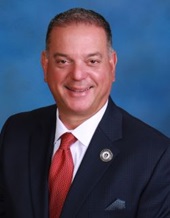
Rep. Angelo Puppolo
Sponsored bills
Maddy summaryThis bill updates the legal definition of a person with a developmental disability in Massachusetts to clarify eligibility criteria for state services. It establishes that the condition must involve severe, chronic impairments appearing before age 22 that limit functioning in at least three major life areas, such as self-care, learning, or mobility. The legislation also specifies that individuals under five with a high probability of developing such disabilities are included if they do not receive necessary services. Additionally, the law clarifies that having a developmental disability does not automatically mean a person is mentally ill, ensuring these conditions are treated as distinct categories. These changes will take effect on January 1, 2025.
Maddy summaryThis bill updates the legal definition of a person with a developmental disability in Massachusetts to clarify who qualifies for state services. It applies to individuals aged five and older who have a severe, chronic impairment that began before age 22 and limits their ability to perform at least three major life activities, such as self-care or learning, as well as younger children with conditions likely to result in such disabilities without intervention. The legislation also explicitly states that having a developmental disability does not automatically mean a person is mentally ill, ensuring these groups are not misclassified for care purposes. These changes will officially take effect on January 1, 2025.
Maddy summaryThis bill creates a new legal framework to require large streaming entertainment companies to pay fees to the state for using public roads and infrastructure to deliver their services. It defines "streaming entertainment operators" as companies earning more than $250,000 annually in Massachusetts and establishes a new advisory board to calculate fair payment rates that help fund public access television channels. The legislation gives the state authority to collect these assessments and enforce penalties for non-compliance while explicitly stating that the state cannot regulate the prices streaming companies charge their customers.
Maddy summaryThis bill aims to update how the state of Massachusetts provides financial support to local community media organizations. It seeks to modernize the existing funding framework to ensure these groups can continue producing programming that serves their specific neighborhoods. The legislation would allow for a more flexible allocation of public funds to help these media outlets operate effectively.
By Representative Puppolo of Springfield, a petition (accompanied by bill, House, No. 3207) of Angelo J. Puppolo, Jr., and Brian M. Ashe relative to the allocation of costs of energy monitoring systems in certain rental housing. Telecommunications, Utilities and Energy.
Maddy summaryThis bill amends Massachusetts law to ensure municipal employees receive health insurance coverage starting on their first day of work if they enroll within the first 10 days of employment. The key provision allows eligible city and town workers to subscribe to coverage retroactively, meaning the policy becomes effective on the later of their start date or the date they sign up, rather than waiting for the standard enrollment period to end. To enforce this change, the Group Insurance Commission is required to create new regulations within three months of the bill's effective date. The legislation directly affects municipal employees and their employers by clarifying the timeline for obtaining health benefits at the start of a job.
Maddy summaryThis bill aims to increase access to dental care for MassHealth enrollees by offering financial incentives to participating dentists and public health dental hygienists. Under the new provisions, eligible providers located in specific municipalities with high numbers of MassHealth members and low dental service usage will receive an additional payment of $31 for each patient encounter. To qualify for these supplemental payments, providers must be licensed in Massachusetts, enrolled with MassHealth, and located in areas designated by the Secretary of Health and Human Services as having significant unmet dental needs. The legislation requires the department to create regulations defining which municipalities are eligible based on historical enrollment and utilization data.
Maddy summaryThis bill requires public employers in Massachusetts to provide full-time firefighter employees with free cancer screenings every three years, starting at least three years after they begin working. The screenings must cover a specific list of cancers including lung, colon, and prostate cancer, and the employer's health plan must pay for all costs without requiring any co-pays or deductibles from the firefighters. The law applies to firefighters working for state agencies, cities, towns, and various military and port authority fire departments.
By Representatives Gentile of Sudbury and Kane of Shrewsbury, a petition (accompanied by bill, House, No. 2182) of Carmine Lawrence Gentile, Hannah Kane and others for legislation to reduce incidence and death from pancreatic cancer. Public Health.