

Maddy summaryThis bill directs the executive office for administration and finance to provide appropriate funding for the civil service unit within the state's human resources division. The primary goal is to ensure the unit can maintain a budget that supports its independent and objective role in resolving appeals and disputes for public employees. Additionally, the legislation aims to improve the unit's ability to advertise and communicate career opportunities in public service. By securing necessary financial resources, the bill seeks to sustain the civil service unit's core functions without altering its existing operational structure.
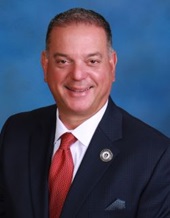
Rep. Angelo Puppolo
Sponsored bills
Maddy summaryThis bill amends Massachusetts state law to adjust the maximum annual benefit amount for public retirees receiving pension supplements. It replaces a fixed dollar limit of $18,000 with a new calculation based on 85 percent of the maximum Social Security benefit available to a worker retiring at full age. The change directly affects public employees who rely on these state-funded benefits to supplement their retirement income. By linking the cap to Social Security rather than a static figure, the legislation ensures the benefit limit adjusts automatically with changes in Social Security payouts.
Maddy summaryThis bill requires construction contractors and subcontractors in Massachusetts to hire apprentices from state-approved programs on specific building projects. Under the new rules, these companies must have an active apprenticeship program and employ apprentices throughout the duration of the contract, with a new requirement effective in 2025 that the program must have successfully trained at least three apprentices to journey worker status in the past five years. Contractors must also submit proof of compliance and identify their apprenticeship program to the Attorney General within 45 days after a contract is awarded. The law applies to contracts issued more than 90 days after the bill takes effect and covers a wide range of construction, maintenance, and repair work.
Maddy summaryThis bill establishes a formal training program for supporters and decision-makers involved in supported decision-making agreements for adults with disabilities in Massachusetts. It requires state agencies to educate these individuals on their rights and obligations while ensuring the training is accessible and developed with input from those who use the system. Additionally, the legislation mandates that schools inform students and families about supported decision-making as an alternative to guardianship during transition planning and Individualized Education Program meetings. Finally, the bill updates legal procedures to require courts to consider alternatives to guardianship and to review any existing supported decision-making agreements when evaluating a request for guardianship.
Maddy summaryThis Massachusetts bill aims to reduce toxic chemicals in firefighter gear by banning the sale of equipment containing intentionally added PFAS chemicals, a class of fluorinated substances, starting in 2027. It directly affects manufacturers, distributors, and local governments that buy or sell firefighting personal protective equipment such as jackets, pants, and helmets. Before the ban takes effect, the law requires sellers to provide written notice to buyers explaining that the gear contains these chemicals and the reasons for their inclusion, with records kept for three years. The legislation defines key terms like "firefighting personal protective equipment" and "local governments" to ensure clarity in enforcement.
May 2, 2024 -- The committee on The Judiciary, to whom was referred the petitions (accompanied by bill, Senate, No. 1142) of John C. Velis, Patrick M. O'Connor, Jack Patrick Lewis, Steven George Xiarhos and other members of the General Court for legislation relative to the humane protection of animals; and (accompanied by bill, House, No. 1718) of Edward R. Philips, Jessica Ann Giannino and others for legislation relative to the humane protection of animals and establishing a task force to complete a systematic review of the laws pertaining to animal cruelty and protection, report the accompanying bill (Senate, No. 2757).
Maddy summaryThis bill requires the Massachusetts Department of Children and Families to review veterinary records and behavior assessments of pets when investigating families seeking to adopt or foster children. It mandates that applicants provide proof that their animals are vaccinated, licensed, and free from disease, while explicitly prohibiting the denial of a child's placement based solely on the breed of a dog in the home. The legislation also allows the department to consider specific factors such as the dog's age, size, and any history of dangerous behavior, with the cost of required assessments falling on the family. Additionally, the bill grants the department authority to create further regulations to ensure the safety and well-being of children in relation to household animals.
By Representatives Fiola of Fall River and Jones of North Reading, a petition (accompanied by bill, House, No. 3245) of Carole A. Fiola, Bradley H. Jones, Jr., and others relative to the use of elephants, big cats, primates, giraffes, and bears in traveling exhibits and shows. Tourism, Arts and Cultural Development.
Maddy summaryThis bill, known as Ollie's Law, aims to improve safety standards for commercial kennels and dog daycares by establishing a dedicated fund to support efforts in reducing homeless animal populations. It requires kennel owners to obtain a license before operating and mandates that these facilities pass an inspection by an animal control officer before the license is issued or renewed. The legislation also empowers local officials to inspect kennels at least once a year and creates a process for citizens to petition for hearings if they believe a kennel is causing a nuisance through excessive barking or other conditions. Additionally, the bill directs the state to create detailed regulations covering facility requirements, staff training, and safety protocols for businesses that board or train dogs.
Maddy summaryThis bill creates a new law in Massachusetts to prevent individuals convicted of specific animal cruelty crimes from owning, fostering, or working with animals. It directly affects people who have been found guilty of offenses such as animal abuse or neglect, banning them from possessing or residing with animals for a minimum of five years for a first offense and fifteen years for repeat offenses. The law requires courts to notify animal control and licensing officials about these restrictions within thirty days to ensure enforcement, while also allowing convicted individuals to petition the court once per year to potentially shorten the ban if they demonstrate rehabilitation.