

Maddy summarySB 606 requires the Maryland Transportation Authority to analyze unused E-ZPass commuter trips from 2023-2025 and submit a report by September 2026. The report must include data on unused trips (numbers, costs, demographics) and recommend solutions like extending usage windows or offering rollovers to reduce forfeited funds. It also mandates a corrective action plan if over 25% of discount plans had unused trips during those years. The bill directly affects E-ZPass commuters, particularly low-income residents and those in communities with limited banking access, by addressing financial losses from unused prepaid trips. The law takes effect July 1, 2026, and expires June 30, 2027.
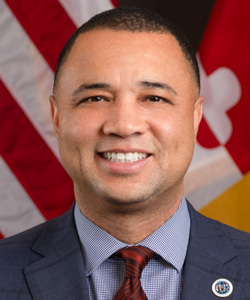
Sen. Antonio Hayes
Sponsored bills
Maddy summarySB 820 prohibits retailers (including stores, restaurants, hotels, and food companies) from selling, advertising, or displaying "unauthorized consumable products," specifically tianeptine products and certain kratom products under defined restrictions. The bill expands the Alcohol, Tobacco, and Cannabis Commission’s enforcement authority to seize, confiscate, or destroy these products and requires the Maryland Department of Health to report related changes to the Commission. Key provisions clarify that retailers cannot promote or handle these products in prohibited ways, as defined in existing health laws. The bill updates enforcement mechanisms without creating new taxes or fees, focusing on compliance and product safety.
Maddy summarySB 818 amends Maryland law to establish new requirements for developing the 28-acre State Center property in Baltimore City. It requires all new or modified development contracts to include an enforceable community benefits agreement with the State Center Neighborhood Alliance, a local hiring plan with job goals, and an economic improvement plan prioritizing minority- and women-owned businesses. The bill also creates a State Center Advisory Group composed of neighborhood associations, anchor institutions, and community organizations within a 1-mile radius to provide community input, leverage neighborhood benefits, and ensure transparency. This directly affects the developer of the State Center project and surrounding Baltimore neighborhoods.
Maddy summarySB 279 authorizes Baltimore City to create and enforce local laws that are stricter than state regulations for cigarettes, other tobacco products, and electronic smoking devices. It allows the Baltimore City Council to pass such laws (subject to exceptions for state-issued licenses and taxes) and the Mayor to enforce them, directly affecting local businesses selling these products and residents. The bill amends Maryland law to explicitly permit Baltimore to regulate sales and distribution with rules matching or exceeding state standards, effective October 1, 2026. It does not create new restrictions but enables the city to adopt tighter local controls.
Maddy summarySB 555 establishes the Dementia Services and Brain Health Program within the Maryland Department of Health to lead state public health efforts for brain health and dementia care. The bill shifts responsibilities from a "Director" position to this new Program, requiring it to staff the Virginia I. Jones Alzheimer’s Council, oversee implementation of the State Plan on dementia, and develop a clinical toolkit for healthcare providers. The toolkit will provide evidence-based guidance to help providers deliver person-centered dementia care across medical settings. This bill directly affects Maryland residents living with dementia or at risk, healthcare providers who will use the toolkit, and the Council’s operations.
Maddy summarySB 579 requires Maryland counties with volunteer fire companies to provide no-cost preventive cancer screenings to volunteer firefighters, based on guidelines from the International Association of Fire Fighters. Volunteer fire companies must maintain and annually submit updated lists of their members to the county, which must then keep these records. Counties can meet this requirement by offering annual exams including cancer screenings or applying for specific grants to fund innovative screening technologies. The bill directly affects volunteer firefighters and counties, creating a structured process for access to preventive care without cost to the firefighters.
Maddy summaryThis bill expands Maryland's child abuse reporting requirements by explicitly including female genital mutilation in the legal definition of abuse, which directly affects healthcare providers, educators, and other mandated reporters. It mandates that these professionals report suspected cases of female genital mutilation to authorities and increases penalties for violations while allowing individuals subjected to the procedure to file civil lawsuits for relief. The legislation also requires the Maryland Department of Health to create and distribute educational materials about female genital mutilation in partnership with various public and private organizations. Additionally, the bill authorizes health licensing boards to revoke licenses of individuals who commit violations related to female genital mutilation under specific circumstances.
Maddy summarySB 7 repeals the expiration date for the Douglas J. J. Peters Veterans of the Afghanistan and Iraq Conflicts Scholarship, removing the June 30, 2030 cutoff that previously prevented new awards after that date. This change allows the scholarship to be awarded indefinitely to eligible veterans, active service members, or their dependents who meet Maryland residency and educational requirements. The bill also removes restrictions on renewing scholarships for recipients who received their initial award before 2030. The scholarship covers up to 50% of tuition, fees, and room/board at Maryland public universities, requiring a 2.5 GPA and 5 years of full-time study. It takes effect July 1, 2026.
Maddy summarySB 811 requires developers, builders, brokers, and real estate agents to enter the final sale price of new homes into a multiple listing service (MLS) or similar real estate database within 30 days of closing. This applies to all new home sales in Maryland and aims to improve price transparency by making final sale data accessible to the public and professionals. The bill defines an MLS as a database used by real estate professionals for facilitating sales and market evaluations. It takes effect October 1, 2026, and directly affects those handling new home transactions.
Maddy summarySB 489 modifies Maryland's licensing rules for physicians trained at international medical schools. It exempts applicants who provide evidence of completing two years of postgraduate training accredited by ACGME-I or another board-recognized body from standard educational requirements. These physicians would be permitted to practice medicine only during their initial license term under mandatory supervision, as specified by the Board. The bill takes effect October 1, 2026, directly affecting international medical graduates meeting these specific training criteria.