

Maddy summaryHB 1144 would bar individuals alleged to have committed assault or caused bodily injury to transit staff or passengers from using Maryland's state public transit services or stations for set periods. First offenses trigger a 30-day exclusion, second offenses 180 days, and third offenses or weapon use result in a lifetime ban. State officials can adjust these exclusion periods, and violators face trespassing charges under existing law. The bill applies specifically to incidents occurring on transit vehicles or at transit stations, taking effect October 1, 2025.
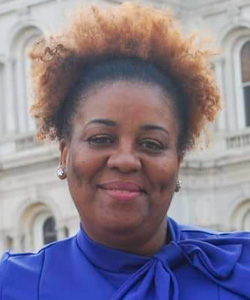
Del. Jackie Addison
Sponsored bills
Maddy summaryHB 425 exempts licensed auctioneers acting on behalf of sellers (without taking title to the vessel) from being classified as "dealers" under Maryland's State Boat Act. This change specifically affects auctioneers who sell boats for owners or secured parties, such as lienholders, where title passes directly to the buyer. The bill amends the State Boat Act by adding a clear exclusion to the definition of "dealer" in Section 8-701(c)(3), ensuring auctioneers aren't subject to dealer licensing requirements when operating under these conditions. The law takes effect July 1, 2025.
Maddy summaryHB 731 establishes the Maryland Connectivity Coalition to coordinate wildlife protection efforts, creates a Wildlife Connectivity Fund for habitat projects, and requires the State Highway Administration to include wildlife data in transportation planning. It directly affects the State Highway Administration, county planners, and wildlife conservation efforts by mandating that counties consider habitat connectivity when updating local plans. Key provisions include prioritizing highway crossings in high-collision areas and locations dividing habitats of threatened/endangered species. The bill aims to reduce vehicle-wildlife collisions and protect species from habitat fragmentation through coordinated planning and funding.
Maddy summaryHB 744 updates Maryland's traffic safety laws by increasing penalties for dangerous driving. It defines reckless driving as driving 30+ miles per hour over the speed limit (previously undefined), adds 2 points to a driver's record for negligent driving, and adds 6 points for speeding over 30 mph above the limit. The bill also redefines aggressive driving as committing two or more specific traffic violations (like tailgating or illegal passing) during a single driving period, with fines up to $1,000. These changes directly affect drivers convicted of these offenses, with the law taking effect October 1, 2025.
Maddy summaryHB 470 prohibits drivers from obscuring, modifying, or blocking vehicle registration plates in a way that hides the plate number or makes identification difficult. It directly affects vehicle owners who currently use plate covers, tinted shields, or other modifications that prevent clear visibility of license plates. Violations are classified as moving violations, subjecting offenders to points on their driving record under Maryland law. The bill takes effect on October 1, 2025, and amends Maryland's Transportation Code to clarify this prohibition.
Maddy summaryHB 436 repeals the 2-year expiration requirement for medical exemptions allowing tinted windows with less than 35% light transmittance in Maryland. It directly affects residents with medical conditions requiring enhanced window tinting (e.g., photosensitivity), who previously needed to renew certifications every two years. The bill removes the time limit from Section 22-406(i)(4)(ii) of the Maryland Annotated Code, allowing exemptions to remain valid as long as the medical need persists. This change simplifies the process for affected drivers by eliminating the need for periodic renewal. The bill takes effect October 1, 2025.
Maddy summaryHB 681 changes Maryland law to require courts to send child support calculation details and orders to the Child Support Administration after establishing a payment order. It modifies license suspension rules by mandating written notice to parents (obligors) before suspension, including their right to request an investigation for inaccurate arrears, employment impact, or undue hardship. The bill also establishes a process for administrative appeals and requires reinstatement of licenses once payments are made, a payment agreement is met, or hardship grounds are verified. This directly affects parents who owe child support and streamlines communication between courts, child support agencies, and the Motor Vehicle Administration.
Maddy summaryHB 375 (Jay's Law) modifies Maryland's transportation code to allow bicyclists, riders of play vehicles, and unicyclists to ride on sidewalks or sidewalk areas unless prohibited by local ordinance. It requires these riders to yield the right-of-way to pedestrians and users of electric personal assistive mobility devices when on sidewalks or in crosswalks. The bill directly affects cyclists, pedestrians, and local governments (which retain authority to ban sidewalk riding). Key provisions amend sections 21-1103 and 21-1202 of Maryland's Annotated Code, taking effect October 1, 2025.
Maddy summaryHB 1465 creates income-based installment payment plans for drivers who owe $250 or more in unpaid tolls and civil penalties. It requires the Maryland Transportation Authority to establish this program, allowing eligible individuals to pay gradually based on their income instead of paying the full amount upfront. The bill amends existing law to replace the previous 30-day payment deadline with this new payment option, which can prevent license suspension for non-payment. Drivers must qualify by meeting income requirements and applying through the new program.
Maddy summaryHB 1293 establishes a Neighborhood Services Unit within Baltimore City’s Office of the Sheriff to enforce local alcoholic beverage laws. It requires this unit to partner with Baltimore City’s Board of License Commissioners, formalizing their roles through a required memorandum of understanding (codified in Sections 2-316.1 and 12-2605 of Maryland law). The bill redirects revenue from certain court surcharges - specifically 10% of fees from civil cases like tenant disputes - to fund the unit’s operations and enhance sheriff services. This creates a new structural partnership for alcohol law enforcement in Baltimore City, effective October 1, 2025.