

Maddy summaryHB 594 changes Maryland's sales tax distribution by requiring the state to pay one-third of sales tax revenue collected from retail sales within Baltimore City directly to the city government, instead of sending it to the state general fund. Previously, this revenue flowed to the state, but the bill redirects it to Baltimore for local use. The bill also adjusts the percentage of remaining sales tax revenue sent to Maryland's education fund (starting at 9.2% in 2023 and rising to 12.1% by 2027), with the rest going to the state general fund. This directly affects Baltimore City by increasing its local revenue from in-city retail sales, effective July 1, 2026.
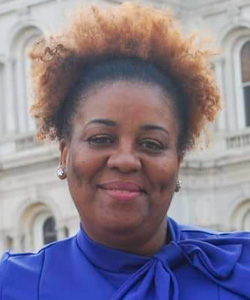
Del. Jackie Addison
Sponsored bills
Maddy summaryHB 334 requires state procurement officers to mandate that all bidders and contractors certify they are not violating the U.S. or Maryland Constitution and will refrain from such actions during the contract period. This applies to every entity seeking state contracts, including affiliates and divisions of bidders. The bill adds specific certification requirements to Maryland’s procurement law (sections 13-212.2 and 13-230), making constitutional compliance a condition for bidding and contract execution. It takes effect October 1, 2026, with no defined scope for what constitutes a constitutional violation. The policy change directly affects all businesses competing for state procurement contracts.
Maddy summaryHB 484 modifies Maryland's corporate income tax code to disallow deductions for certain direct-to-consumer (DTC) pharmaceutical advertising expenses that are deductible under federal law. It specifically targets expenses paid by "covered entities" (pharmaceutical sponsors or companies owning drug outsourcing facilities) for advertising "covered drugs" (prescription drugs under federal law) to the general public via media like TV, radio, social media, or digital platforms. The bill requires these expenses - already deducted federally - to be added back to Maryland taxable income, effectively eliminating the state tax deduction for such advertising. This change applies to taxable years beginning after December 31, 2025, and directly affects pharmaceutical companies engaging in DTC advertising for covered drugs.
Maddy summaryHB 25 (Family Law - Grandparent Visitation) changes Maryland's rules for when family courts can grant grandparents visitation rights. It requires courts to grant visitation if a child lived with a grandparent for at least 12 months or if the grandparent has died, provided it’s in the child’s best interest and won’t harm the parent-child relationship. Courts must consider prior contact between the grandparent and child when deciding petitions filed after divorce or custody cases. The bill also prevents courts from denying visitation solely based on claims of interference without evidence showing harm would occur.
Maddy summaryHB 472 authorizes Baltimore City's Board of License Commissioners to issue a Class C beer, wine, and liquor license for businesses operating in the 400 block of East Oliver Street within the 45th Alcoholic Beverages District. This license is only available under specific conditions: alcoholic beverages must be served outdoors only to seated patrons, off-premises sales are prohibited, service must begin no earlier than 10 a.m., and the applicant must sign a memorandum of understanding with the Greenmount West Community Association. The bill modifies existing licensing rules to create this new option in a specific downtown Baltimore location while maintaining stricter operating requirements than standard licenses. It does not affect other districts or existing license types outside this defined area.
Maddy summaryHB 1380 requires Maryland hospitals providing obstetrical services and freestanding birthing centers to meet minimum perinatal care standards as a condition of licensure. The bill mandates the Maryland Department of Health to adopt regulations establishing these standards, which must meet or exceed existing Maryland Perinatal System Standards. Hospitals and birthing centers must comply with these standards to maintain their operating licenses. The law amends specific sections of Maryland's Health Code (19-319 and 19-3B-03) to implement this requirement, effective October 1, 2025.
Maddy summaryHB 666 requires Maryland's Medicaid program (Maryland Medical Assistance Program) and most health insurance plans to cover calcium score testing for individuals with specific heart disease risk factors. It directly affects people with diabetes, high blood pressure, high cholesterol, or a family history of early heart disease - requiring coverage if they have at least three of these risk factors. The law mandates coverage starting January 1, 2026, for Medicaid and all health insurance policies issued or renewed after that date. This change applies to insurers, nonprofit health plans, health maintenance organizations, and managed care organizations operating in Maryland. The bill does not alter coverage for other medical services but specifically adds calcium scoring to required benefits.
Maddy summaryHB 798 requires Maryland's Office of Overdose Response (with the Department of Health) to create and maintain a public interactive dashboard tracking how settlement funds from opioid-related lawsuits are spent. The dashboard must show, by state, county, and municipality: payment schedules, past spending, spending plans, funded initiatives, and public hearing details. Local governments receiving these funds must submit required financial data through an online portal to the Department for inclusion on the dashboard. The dashboard will be developed and maintained using existing Opioid Restitution Fund money from the state budget, not new appropriations. This bill focuses solely on transparency, with no new policy changes or funding mechanisms.
Maddy summaryHB 1375 allows tow trucks in Maryland to display portable digital message signs while at the scene of accidents or disabled vehicles. The bill requires these signs to follow state traffic control device standards and only show messages approved by the State Highway Administration. This change specifically applies to tow truck operations and does not affect other vehicle types. The law will take effect on October 1, 2025.
Maddy summaryHB 707 (Eric’s ID Law) requires Maryland’s Motor Vehicle Administration to add a voluntary notation for nonapparent disabilities - such as developmental or intellectual disabilities - on driver’s licenses, ID cards, and moped permits. Applicants can choose to indicate this disability without providing proof or paying extra fees, and the notation will appear on the document’s bottom. The law prohibits the Administration from disclosing this information to insurers or using it to refer applicants to medical boards. It also mandates public outreach to inform people about this option. This directly affects individuals with nonapparent disabilities who apply for or renew these documents.