

Maddy summaryThis bill allows Baltimore City to set different property tax rates for specific property classes (like commercial buildings or residential units) instead of applying a single rate to all properties. It directly affects Baltimore property owners whose properties fall into these defined categories, such as those designated as vacant or unfit for use. The city must annually report on these special rates, including revenue generated and how funds are spent. The policy change takes effect for taxable years beginning after June 30, 2025.
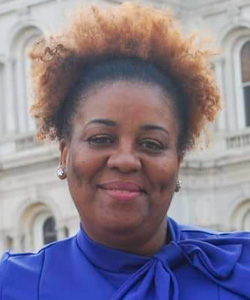
Del. Jackie Addison
Sponsored bills
Maddy summaryHB 591 changes Maryland law to set a 3-year deadline for local authorities to take action against violations of local consumer protection codes. Specifically, it requires that prosecutions or enforcement efforts for fines, penalties, or remedies must begin within 3 years after local officials knew or should have known about the violation. This applies directly to local governments and consumer protection agencies enforcing codes related to unfair business practices. The bill does not alter existing laws for other types of cases, focusing solely on consumer protection enforcement timelines. It takes effect October 1, 2025.
Maddy summaryHB 915 requires Maryland counties and municipalities with automated traffic enforcement programs to submit quarterly reports to the Vision Zero coordinator detailing citations issued to vehicles registered in other states (including registration number, payment status, and overdue status). It authorizes Maryland’s Attorney General or local prosecutors to sue drivers or vehicle owners (specifically District of Columbia residents or vehicles registered in the District) for unpaid and overdue traffic fines. The bill responds to the District of Columbia’s STEER Act, which allows DC to pursue similar actions against Maryland drivers. This aims to improve enforcement of traffic laws against out-of-state drivers and support Maryland’s Vision Zero goal of eliminating traffic fatalities by 2030.
Maddy summaryHB 219 allows Baltimore City to tow, remove, or impound vehicles owned by new Maryland residents who fail to register with the Maryland Motor Vehicle Administration (MVA) and display valid Maryland license plates within 60 days of moving to the city. It directly affects new residents who do not comply with the existing 60-day registration grace period for out-of-state vehicles. The bill amends Maryland law to specifically authorize Baltimore City to enforce this requirement through towing or impoundment, rather than relying on general vehicle parking regulations. This change clarifies Baltimore City's authority to act during the 60-day registration window, aligning with current state law but specifying the city's enforcement power.
Maddy summaryHB 1352 prohibits Maryland institutions of higher education from denying students access to facilities or services due to sickle cell disease diagnosis and requires them to provide reasonable accommodations. The bill mandates the Maryland Department of Health to develop an education campaign for campuses about sickle cell disease challenges, create uniform procedures with the Maryland Higher Education Commission for supporting affected students, and compile training materials for faculty and staff. Institutions must also establish clear reporting procedures for violations and publicly share accommodation policies. These requirements take effect October 1, 2025, directly impacting all Maryland colleges and universities and students with sickle cell disease.
Maddy summaryHB 1198, the Monica Cooper Prerelease Act, requires Maryland to establish a dedicated prerelease facility for female incarcerated individuals in Baltimore City (on at least 3 acres) by 2027. The facility must serve women with low violence/escape risk and satisfactory behavior, offering evidence-based programs like education, vocational training, trauma-informed healthcare, and family reunification support. It mandates the Department of Public Safety to provide comprehensive rehabilitative services - including help with public health benefits applications - and report progress to lawmakers by 2026. This bill directly affects female inmates eligible for prerelease status, aiming to reduce recidivism through gender-responsive reentry planning.
Maddy summaryHB 1434 establishes a 13-member Food Deserts Workgroup to study areas in Maryland with limited access to affordable, nutritious food (known as "food deserts"). The Workgroup, including state agency secretaries, county representatives, and community stakeholders, must analyze health and economic impacts of food deserts and assess strategies to attract grocery stores by November 1, 2025. It will produce a report with recommendations for eliminating food deserts, to be submitted to the Governor and relevant legislative committees. The bill expires automatically on June 30, 2026, and does not create new funding or regulations - only a study process.
Maddy summaryHB 610 expands expungement eligibility in Maryland by allowing certain criminal charges to be cleared from records when dismissed without a conviction. Specifically, it adds that charges may be expunged if the court issued a "no finding" or terminated the case without a finding - rather than resulting in a conviction. This applies to charges already listed as eligible under current law (such as specific misdemeanors and felonies), without changing the list of offenses. The bill does not alter existing eligibility criteria but broadens the circumstances under which expungement is possible for dismissed cases.
Maddy summaryHB 164 makes it a misdemeanor to fraudulently claim or possess residential property you don’t legally own or possess, targeting individuals who intend to defraud property owners. It establishes penalties of up to 90 days in jail or $500 for a first offense, increasing to 1 year or $2,500 for repeat violations within 2 years. Property owners can submit a sworn affidavit to a sheriff, who must then remove occupants found to be fraudulently occupying the property unless the occupant proves lawful possession. The bill explicitly states it does not affect existing civil wrongful detainer lawsuits under Maryland law. The law takes effect October 1, 2025.
Maddy summaryHB 667 establishes November 1 as a permanent state legal holiday and employee holiday in Maryland, replacing the current requirement that the Governor annually proclaim the date. The bill repeals Section 7-420 (which mandated the Governor’s yearly proclamation for Maryland Emancipation Day) and updates two key sections of Maryland law to include November 1 as a fixed holiday for state employees and government operations. This means state offices will close and employees will receive the day off every year on November 1, without needing a new gubernatorial order each year. The change takes effect October 1, 2025.