

Maddy summaryThis bill requires Maryland's Governor to annually proclaim May as Water Safety Month. It directs the Governor to urge educational and civic organizations to host events focused on drowning prevention and safe water practices. The law modifies Maryland's code to establish this annual designation, taking effect October 1, 2026. It directly affects the Governor's office and organizations coordinating public safety awareness.
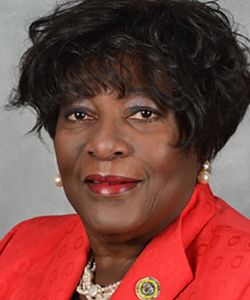
Rep. Edith Patterson
Sponsored bills
Maddy summaryHB 1522 removes a legal exemption that previously protected vehicle rental companies from liability for traffic violations captured by traffic control signal or speed monitoring systems. The bill repeals specific sections of Maryland law (21-202.1 and 21-809) that excluded rental companies and special plate holders from receiving citations for red-light running or speeding violations recorded by these systems. As a result, rental companies will now be directly liable for such violations, facing the same civil penalties as individual vehicle owners. This change affects all vehicle rental companies operating in Maryland, requiring them to address violations recorded by municipal or state monitoring systems. The bill takes effect October 1, 2026.
Maddy summaryThis bill requires Maryland colleges and universities to provide reasonable accommodations to students with sickle cell disease and prohibits denying them access to facilities or services based on their diagnosis. It mandates the Maryland Department of Health to create an education campaign for campus staff, develop guidelines for supporting students with sickle cell disease, and compile training materials for faculty and administrators. The law directly affects students with sickle cell disease at public and private institutions of higher education in Maryland, as well as campus staff responsible for implementing these policies. The requirements take effect October 1, 2026, with institutions needing to establish clear reporting procedures for violations.
Maddy summaryThis bill requires Maryland public schools to recognize autism diagnoses made by licensed medical, mental health, or educational professionals until the school completes its own initial evaluation. It mandates that schools begin their evaluation process within 30 days of receiving an external autism diagnosis and parental consent, while also requiring schools to provide supports recommended in the diagnosis during the evaluation period. The law specifies which professionals qualify for making external diagnoses, including developmental pediatricians, clinical psychologists, and psychiatrists, and allows schools to offer alternative supports only if the original recommendations conflict with laws or pose safety risks. This legislation takes effect on July 1, 2026, ensuring students with external autism diagnoses receive appropriate support during the school's evaluation timeline.
Maddy summaryHB 897 (the "Lower Bills and Local Power Act of 2026") requires electric companies operating high-voltage transmission lines (>69,000 volts) in Maryland to join regional transmission organizations. It mandates new application details for certain utility projects, creates a Solar and Energy Storage Market Stabilization Program within the Maryland Energy Administration, and redirects funds from the Maryland Strategic Energy Investment Fund to provide refunds or credits to residential electricity customers. The bill also requires studies on siting transmission lines and battery storage systems within existing rights-of-way and sets deadlines for the Public Service Commission to review project certificates. These provisions directly affect electric utilities, the Public Service Commission, and residential electricity customers through cost adjustments.
Maddy summaryHB 916 establishes three new regional transportation funds for Baltimore, the Capital region, and Southern Maryland. It directs specific tax revenues - including 70% of sales tax surcharges and hotel surcharges collected in each region - to these funds, while the remaining 30% is distributed to local jurisdictions based on sales activity. The funds are designated as special, nonlapsing accounts, meaning they carry over year-to-year, and interest earned on these funds must be credited back to the same accounts. This bill creates the legal framework for regional transportation authorities to develop and implement transportation plans using these dedicated revenue streams.
Maddy summaryHB 178 establishes three specialized sickle cell disease clinics in Montgomery County, Harford County, and an Eastern Shore county, operating under a hub-and-spoke model to provide comprehensive care including pain management, mental health services, genetic counseling, and social support. It allocates $6.1 million for fiscal year 2028 to fund clinic operations, staff, training, and community partnerships, with priority for addressing social barriers like transportation and housing. The bill also creates a scholarship program for medical residents specializing in sickle cell disease hematology, requiring recipients to practice in Maryland after training. These provisions directly affect Maryland residents living with sickle cell disease, particularly in underserved communities, by expanding access to coordinated care and increasing specialist availability.
Maddy summaryHB 853 creates a State Board of Common Ownership Community Managers within Maryland’s Department of Labor to license and regulate professionals managing residential communities. It directly affects condominiums, cooperatives, and homeowners associations (excluding timeshares) by requiring community managers to hold licenses, mandating community registration under certain conditions, and requiring contracts to include fidelity bonds or theft insurance. Key provisions include setting licensing standards, specifying required contract terms for management services, and establishing a dedicated fund to cover board operations. The bill aims to standardize oversight for community management services across Maryland’s residential communities.
Maddy summaryThis bill requires recipients of Maryland state and local government funding to report annually to the Comptroller on how they use those funds, including details about any contractors or subcontractors they hire. Entities receiving payments for providing goods or services must also include this information on their income tax returns, such as the number of employees, work locations, and whether contractors are certified minority businesses. The Comptroller will then compile this data and submit a summary report to the General Assembly each year, showing the percentage of in-state versus out-of-state contractors, average employee counts, and the share of minority business enterprises. These reporting requirements apply to state, county, and municipal government units as well as individuals and corporations that receive public funding.
Maddy summaryThis bill creates a state income tax credit for Maryland residents aged 77 and older to help reduce their tax burden. Eligible taxpayers must have federal adjusted gross income below $175,000 for individuals or $250,000 for couples filing jointly. The credit amount increases with age, ranging from 25% of the state income tax for those turning 77 to a full 100% credit for those aged 80 and older. The bill applies to taxable years beginning after December 31, 2025, and prevents taxpayers from claiming both this credit and another existing senior tax credit in the same year.