

Maddy summaryThis is a symbolic resolution, not a bill with enforceable policy changes. Maryland's General Assembly formally joins other states (like California and Oregon) and local jurisdictions in endorsing the "Back from the Brink" initiative. It urges Maryland's congressional delegation to cosponsor a federal resolution supporting the UN Treaty on the Prohibition of Nuclear Weapons and asks the U.S. President and Senate to endorse that treaty. The resolution expresses concern about nuclear risks but does not create new laws or directly affect any individuals or entities.
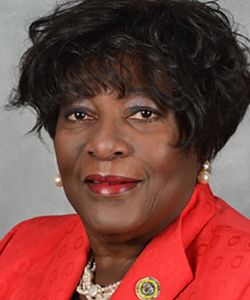
Rep. Edith Patterson
Sponsored bills
Maddy summaryHB 960 establishes Maryland's Federal Employee-to-Entrepreneur Program within the Department of Commerce to assist former or transitioning federal employees in starting businesses. The program provides annual training, one-on-one coaching, and tools for business planning, compliance, marketing, and capital readiness to 60 participants (4 cohorts of 15) each fiscal year. It requires the Department to develop application procedures and a curriculum, with $400,000 in annual state funding to support these services. The bill takes effect October 1, 2026, creating a structured pathway for federal workers seeking entrepreneurial careers.
Maddy summaryHB 971 creates a workgroup to study whether Maryland should adopt a fee-for-service model for all Medicaid services, meaning providers would be paid directly per service (instead of through managed care organizations). The workgroup, composed of two legislators, a health care commission representative, and three Governor-appointed members (including a provider and an advocate), will assess the feasibility of this change. The study will examine how a fee-for-service model could work across the entire Medicaid program, including its impact on access and costs. The bill does not change current Medicaid policy but mandates this study to inform future decisions.
Maddy summaryHB 884 requires Maryland to appropriate at least $5 million annually to the University of Maryland Eastern Shore (UMES) starting in fiscal year 2028, continuing until a total of $321,181,312 is funded. This addresses a historical funding disparity between UMES (Maryland's 1890 land-grant university for historically Black students) and the University of Maryland, College Park (the 1862 land-grant institution), which received less state funding per student from 1987-2020. Funds must supplement - never replace - existing state budget allocations and can be used for infrastructure, faculty investment, scholarships, or other institutional needs identified by UMES. The bill mandates annual appropriations that cannot decrease year-over-year, aiming to fully remediate the identified funding gap.
Maddy summaryHB 614 requires every county board of education in Maryland to collect monthly data on energy usage in school buildings and submit it to the Interagency Commission on School Construction. The Commission must then create rules specifying exactly what data to collect and how often to report it. After gathering this data, the Commission must analyze it and provide specific recommendations to county boards for improving school energy efficiency. This bill directly affects county school districts and the state Commission, aiming to standardize energy reporting and drive efficiency improvements in public schools.
Maddy summaryHB 444 prohibits Maryland state and local governments, including county sheriffs and agencies, from entering into new agreements with federal authorities to enforce civil immigration law. It requires existing agreements to be terminated by July 1, 2026, or immediately upon the law’s effective date (June 1, 2026). The bill specifically targets contracts, memorandums, or agreements that allow local entities to assist in federal immigration enforcement under federal laws like 8 U.S.C. § 1103 or § 1357. This directly affects local law enforcement agencies and government bodies that previously collaborated with federal immigration authorities. The law aims to prevent state/local resources from being used for immigration enforcement under federal programs.
Maddy summaryHB 1131 (Pregnancy Outcome Protection Act) prohibits law enforcement and agencies from investigating, prosecuting, or imposing civil liability on individuals who experienced pregnancy loss (including miscarriage, stillbirth, or self-managed abortion), except when independent evidence of unrelated criminal conduct exists or the individual consents. It protects healthcare providers from liability for supporting patients during or after pregnancy loss and restricts disclosure of medical records related to pregnancy loss without evidence of abuse, unrelated criminal conduct, or patient consent. The bill creates a private right to sue for violations and establishes misdemeanor penalties for knowingly violating its provisions. These changes apply to all Maryland residents and healthcare providers within the state’s health system.
Maddy summaryHB 825 (Tahjai's Law) requires Maryland's Governor to annually proclaim May as "Brain Health and Chronic Headache Awareness Month," aligning with national brain tumor awareness efforts. It establishes a permanent Maryland Brain Health Grant Fund to provide financial support to nonprofits, healthcare providers, and community programs for brain health awareness, screening, prevention, and services like treatment for brain tumors, chronic headaches, and traumatic brain injury. The Maryland Department of Health must develop guidelines for incorporating brain health evaluations into routine physical exams and recommend insurance coverage parity for necessary diagnostic tools. Additionally, the Department must submit annual reports on brain tumor prevalence, emergency visits related to brain conditions, access to diagnostic imaging, and barriers to care.
Maddy summaryHB 1309 establishes a Commission to study racial disparities in Maryland’s criminal justice system, directly affecting African American, Hispanic, and other non-White individuals who experience disproportionate treatment. The Commission, composed of legislative leaders, public defenders, prosecutors, court officials, and community advocates, will examine disparities in policing, arrests, sentencing, and data collection. It will specifically assess cumulative impacts of disparate practices, mandatory minimums (including firearm offenses), and propose reforms like race-neutral risk assessments and expanded judicial discretion. The Commission must make recommendations by 2028, focusing on systemic changes to improve transparency and reduce racial inequities without implementing new laws itself.
Maddy summaryHB 28 allows private career schools in Maryland to advertise programs and collect student contact information before receiving full state approval to operate. It requires schools to disclose that approval is pending and include specific details like opening dates and application processes in all ads. The Secretary of Higher Education will establish rules for approving these pre-approval advertisements. This affects schools training students for jobs like technicians or skilled workers (not universities), but does not change the standards for final approval.