

Maddy summaryHB 1321 modifies Maryland's Child Care Scholarship Program to protect certain low-income families from enrollment freezes. It prohibits enrollment freezes from applying to families receiving Temporary Cash Assistance, TANF, children on Social Security Income, or homeless children - ensuring these groups maintain access. If a freeze occurs, the State Department of Education must create a waitlist prioritizing these protected individuals. The bill also limits copay increases for specific participants and requires the Department to identify applicants eligible for free prekindergarten.

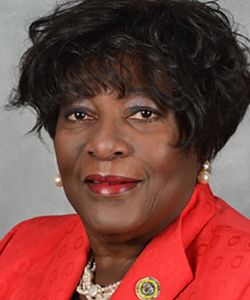
Rep. Edith Patterson
Sponsored bills
Maddy summaryHB 849 prevents certain groups from being cut off from Maryland's Child Care Scholarship Program if a freeze on new enrollments is implemented. It specifically protects families receiving Temporary Cash Assistance, TANF, or Social Security Income; siblings of currently enrolled children; individuals who recently lost jobs (within 30 days); and government workers furloughed due to a shutdown lasting over 7 days. The bill adds these exceptions to the existing rules that would otherwise allow the program to freeze enrollment. This change ensures these vulnerable groups maintain access to child care assistance during enrollment freezes.
Maddy summaryHB 1587 removes a limit on handheld devices displaying bingo cards (previously capped at 54) and increases the maximum number of electronic instant bingo machines operators may use. It eliminates the requirement for paper tickets for each game, unless a player specifically requests one. The bill directly affects gaming venues operating electronic bingo machines in Maryland. These changes modify existing regulations to allow more flexible operation of electronic bingo systems under state law.
Maddy summaryHB 1300 updates Maryland's Commission for Women by changing how its executive director is appointed and clarifying the Commission's responsibilities. It removes the Secretary of Human Services' authority to appoint the director, stating the director will be a regular state employee (not a "special appointee") and receive standard state compensation. The bill revises the Commission's duties to focus on conducting studies, supporting programs, and advocating for policies that promote equality for women, including career development, violence prevention, and economic opportunities. These changes directly affect the Commission's operations and its executive director, effective October 1, 2026.
Maddy summaryHB 1096 requires Baltimore City and Maryland counties to include written notice of eligible property tax credits on property tax bills sent to taxpayers. This applies to existing property tax credits (such as those for seniors or veterans) that taxpayers may qualify for but might not be aware of. If someone other than the taxpayer receives the bill, the recipient must forward the notice to the actual taxpayer in writing. The bill does not create new credits but ensures taxpayers receive clear information about existing ones through their tax billing process.
Maddy summaryHB 894, the Maryland Transit and Housing Opportunity Act, automatically designates qualifying transit-oriented developments (near rail stations with at least hourly service Monday-Friday 8am-6pm) as enterprise zones, granting tax incentives without separate approval. The bill requires the Maryland Development Corporation to prioritize redevelopment projects near transit in its loan programs and delays certain development fees for residential housing projects. It also changes local land use regulations near transit stations by altering municipal authority to restrict development in these areas.
Maddy summaryHB 1611 repeals a fixed $100,000 federal adjusted gross income limit for disabled veterans seeking a property tax credit on their primary residence. Instead, it allows counties and municipalities to set their own income eligibility criteria for the credit, based on a veteran's federal adjusted gross income. The bill directly affects disabled veterans (with service-connected disabilities of 50%+) and their surviving spouses who own their homes. Key provisions shift authority from the state to local governments to determine income thresholds, while maintaining existing credit rates (25% or 50% of property tax) based on disability rating. The change takes effect June 1, 2026, for tax years beginning after that date.
Maddy summaryHB 200 requires home sellers in Maryland to provide buyers with a standardized flood risk disclosure form before finalizing a property sale. The form, created by the Department of the Environment, must detail if a property is in a high-risk flood zone (1% annual chance), moderate-risk area (0.2% annual chance), has flood insurance requirements, or has a history of flood damage or claims. Sellers must provide this form and, if available, a FEMA elevation certificate and records of past flood claims. The requirement takes effect July 1, 2027, directly affecting residential property sellers and buyers.
Maddy summaryHB 102 requires Maryland counties to allow dependent children of active-duty military members to enroll in schools *before* relocating to the area, using remote registration without fees or in-person visits. It ensures children with disabilities continue receiving their Individualized Education Programs (IEPs) or 504 plans without delay when enrolling. The bill also mandates that counties coordinate with the sending state’s school system and allows military families to use temporary housing addresses for residency proof. Additionally, children who enroll through this process may stay in their school for the full academic year, even if their residency status changes.
Maddy summaryHB 474, the "Clear Before You Drive Act," prohibits drivers in Maryland from operating or towing vehicles with accumulated snow or ice on exposed surfaces - including windshields, roofs, windows, and truck trailers - that poses a safety threat. It directly affects all vehicle operators, requiring snow/ice removal before driving, with fines starting at $25 for first-time noncommercial vehicle violations and escalating to $200 for repeated offenses. The bill also imposes higher penalties - $200-$1,000 for noncommercial or $500-$1,500 for commercial vehicles - if snow/ice contributes to accidents causing property damage, injury, or death. Key provisions mandate pre-drive snow removal and establish tiered fines based on vehicle type and offense history.