

Maddy summaryHB 935 requires Maryland to establish a dedicated prerelease facility for female incarcerated individuals, directly affecting women eligible for prerelease programs at the Maryland Correctional Institution for Women. The bill mandates a separate facility meeting specific criteria: at least 3 acres, not within 1 mile of other prisons, and designed to house 1.25 times the 2024 prerelease-eligible population. It requires the Department of Public Safety and Correctional Services to provide comprehensive rehabilitative services (including gender-responsive programming) and report progress to legislative committees by a specified deadline. The facility must operate by June 1, 2023, with the Department of General Services directing procurement for its construction.
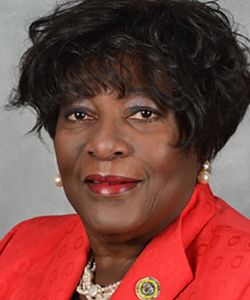
Rep. Edith Patterson
Sponsored bills
Maddy summaryHB 835 repeals Maryland’s authority to issue no-knock search warrants and establishes new procedures for all search warrants. It requires law enforcement to provide written justification for any warrant request, including evidence supporting the need for no notice, details on why less invasive methods weren’t used, and specific information about occupants (including disabilities or pets). Warrants must now be executed between 8 a.m. and 7 p.m. unless exigent circumstances exist, and officers must have completed specialized breach-entry training. This bill directly affects law enforcement agencies when obtaining warrants and impacts residents whose properties may be searched. The changes aim to increase transparency and safety during warrant executions.
Maddy summaryHB 924, the "Safe Kids Act," creates a new civil legal remedy allowing parents or legal guardians of minors depicted in or exposed to child exploitation material to sue online platforms directly. It prohibits platforms from knowingly distributing such material - including AI-generated images defined as "computer-generated" under the law - and requires them to remove it. The bill updates definitions to explicitly include AI-created images in child pornography laws and increases the age threshold for victims in certain criminal cases. This allows civil lawsuits for damages (including attorney fees) without needing prior criminal convictions, targeting platforms that facilitate distribution rather than just criminalizing possession.
Maddy summaryHB 530 establishes a task force to study using artificial intelligence to proactively review audio and video recordings from special education buses, aiming to enhance student safety. The task force, composed of state education officials, transportation representatives, disability advocates, and parents, will examine AI tools, privacy concerns, costs, and best practices from other states. It will analyze current recording systems, investigate incidents like abuse or harassment, and evaluate implementation feasibility for special education bus safety. The task force must report findings and recommendations to Maryland lawmakers by December 1, 2026, with the bill expiring June 30, 2027.
Maddy summaryHB 488 establishes the geographic boundaries for Maryland's eight congressional districts for the 2026 elections. It specifies exact county and election district portions, using census tract data to define district lines where precincts are split, based on boundaries as they existed on January 13, 2026. This bill directly affects voters in Maryland's congressional districts by determining which communities are grouped together for electing U.S. Representatives. It replaces previous election law sections (8-702 through 8-709) and clarifies that certain districting rules apply only to state legislative districts, not congressional ones.
Maddy summaryHB 722 removes the legal protection known as "charitable immunity" that previously shielded charitable organizations (like youth programs or non-profits) from lawsuits related to child sexual abuse. It allows victims to sue these organizations for abuse that occurred while they were minors, regardless of when the abuse happened, and applies retroactively to all past, pending, or dismissed cases. The bill also sets limits on attorney fees for such cases (20% of settlements or 25% of judgments) and takes effect on October 1, 2026. This change directly affects victims seeking compensation and charitable organizations previously protected from liability in these claims.
Maddy summaryHB 699 amends Maryland's use of force statute to require police officers to intervene when another officer uses excessive force and to provide basic first aid to individuals injured during police actions. It creates two new misdemeanor offenses: intentionally failing to intervene (penalty: up to 10 years imprisonment) or failing to render first aid and request medical assistance (penalty: up to 5 years imprisonment). The bill directly affects all police officers and supervisors, mandating they sign a "sanctity of life pledge," undergo de-escalation training, document force incidents, and supervisors must review video evidence of use-of-force cases. These provisions aim to enforce accountability during police encounters by codifying specific duties to prevent harm and provide aid.
Maddy summaryHB 5 establishes Maryland's New Markets Development Program, administered by the Department of Housing and Community Development. It allows businesses to claim tax credits against certain state insurance taxes (like premium receipts tax) for equity investments in qualifying community development entities that serve low-income areas. The credit equals 0% of the investment amount for the first three years and 12.5% for the next four years, applicable to investments made on or after July 1, 2026. This directly affects investors in qualifying community development entities and businesses meeting the "qualified active low-income community business" criteria, including those relocating operations to Maryland.
Maddy summaryHB 64 establishes a task force to study how delays in counting student enrollment affect school funding and how growing student populations impact funding levels. The task force includes education officials, school board representatives, teachers, parents, and county government members. It will analyze these challenges and recommend improvements to the school funding system. The task force must submit its findings and recommendations to the Governor and legislature by December 15, 2026, after which the bill expires. This bill creates a review process but does not directly change funding policies.
Maddy summaryHB 163 requires Maryland county school boards to create and adopt policies restricting students' use of personal electronic devices (like smartphones or tablets) during school hours, with specific exceptions for students with individualized education plans (IEPs), documented health needs, or educational activities. The policy must be published online, in school handbooks, and reviewed every two years by the county board or state department. School boards must also establish enforcement procedures, including potential in-school suspensions for violations. This bill directly affects all public school students and county school boards across Maryland, aiming to standardize device use rules while accommodating specific student needs.