

Maddy summaryHB 956 establishes a 15-member workgroup to monitor artificial intelligence (AI) issues affecting consumers in Maryland. The workgroup includes two Senate and two House members, the Attorney General, a tech corporation official, and industry representatives from technology, e-commerce, biotech, real estate, healthcare, and education sectors. It must monitor AI regulation in decisions impacting livelihoods, privacy protections, consumer rights, and private sector AI use, then submit annual recommendations to legislative committees starting July 1, 2026. The bill directly affects how Maryland tracks AI impacts on consumers, with no immediate policy changes - only a process for future guidance.
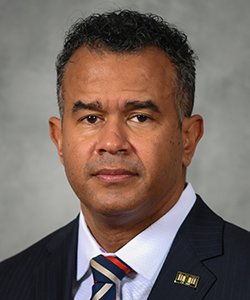
Del. C.T. Wilson
Sponsored bills
Maddy summaryHB 957 requires state contractors to ensure a specified percentage of workers on certain projects are Maryland residents and that a certain percentage of work hours are performed by residents. It directs the Maryland Department of Labor to enforce these residency requirements for state procurement contracts. Contractors who violate these rules may be debarred from future state contracts, with debarment triggered by specific violations like criminal convictions related to contracting or failure to meet residency standards. The bill amends existing procurement law and adds new sections (17-6B-01 to 17-6B-05) to establish these requirements.
Maddy summaryHB 5 updates Maryland's criminal law to explicitly include artificial intelligence-generated images in the definition of "computer-generated image" under child pornography statutes. This means AI-created images that appear indistinguishable from real child abuse material - such as those adapted to look like actual minors - will now be covered under existing laws prohibiting possession or viewing of such content. The bill directly affects individuals who create, possess, or access these AI-generated images, applying the same penalties (up to 5 years in jail or $2,500 fine for misdemeanors) as real child pornography. It maintains exceptions for artistic works like drawings or cartoons and parental photos of children in non-exploitative contexts. The law aims to close a legal gap as AI technology advances, ensuring existing protections apply to digitally generated content.
Maddy summaryHB 1240 prohibits health care providers and insurers from using artificial intelligence systems designed solely to cut costs at the expense of care quality, delays, or coverage denials. It requires these entities to publicly post annual data about AI-driven decisions (including misdiagnosis rates and overrides by staff) on their websites starting in 2026, and undergo third-party audits to verify alignment with medical/ethical standards. The bill directly affects hospitals, clinics, insurers, and other covered health care entities that use AI for clinical or coverage decisions. Violations could result in fines up to $10,000 per offense, with penalties considering factors like severity and history of violations.
Maddy summaryHB 1304 requires Maryland's Department of State Police to submit detailed, annual crime data to the Department of Legislative Services by November 30 each year. This data includes violent crime statistics (homicide, rape, robbery, assault, etc.) broken down by victim/offender age, race, ethnicity, sex, location, and whether an arrest was made or the incident was a hate crime. The bill also mandates a work plan to improve hate crime data collection and reporting, and requires the Department of Legislative Services to submit annual reports on this data to the Governor and General Assembly by June 30 starting in 2026. The law directly affects law enforcement data collection practices and state government reporting processes.
Maddy summaryHB 1545 allows Maryland to withhold state payments to the federal government when the federal government fails to pay overdue funds that courts have ruled it must pay. The Board of Public Works would first determine if the federal government is delinquent in paying funds owed to Maryland, based on court decisions upholding congressionally approved spending. The Comptroller could then withhold up to the amount of the overdue funds, after consulting with the Board. This bill directly affects how Maryland manages its financial transactions with the federal government when payments are overdue.
Maddy summaryHB 1546 requires Maryland's Central Collection Unit (CCU) to collect delinquent federal funds owed to the state, specifically when the federal government fails to comply with court decisions upholding congressionally approved spending. The Board of Public Works gains authority to officially declare the federal government delinquent in these cases, and the CCU can place liens on federal property within Maryland under those circumstances. This bill amends existing state law (sections 3-302, 3-304, and 10-208 of the State Finance and Procurement Article) to formalize these collection procedures and lien mechanisms. It directly affects how Maryland handles unpaid federal obligations, streamlining the state's ability to recover funds through established legal channels.
Maddy summaryHB 1079 requires Maryland's Public Service Commission to study the state's electric transmission and distribution systems by January 2026. The study must identify current and future system weaknesses, evaluate alternatives to building new transmission lines (including grid-enhancing technologies like dynamic line rating and microgrids), and assess economic, environmental, and social impacts. It also mandates including public input and recommending investments for modernization focused on reliability, cybersecurity, physical security, and energy conservation through technologies like two-way meters and demand response. This study will inform future grid improvements without mandating new infrastructure.
Maddy summaryHB 1425 bans using artificial intelligence or deepfake technology to impersonate someone and cause harm like financial loss, emotional distress, or physical injury. It defines "deepfake" as digital content indistinguishable from a real person (excluding cartoons, drawings, or sculptures) and prohibits creating such content for identity fraud. Victims can file civil lawsuits against perpetrators for damages. The law amends Maryland’s criminal code to specifically address AI-driven identity fraud, targeting the misuse of personal information for deceptive purposes.
Maddy summaryHB 1432 requires Maryland's Governor's Office of Small, Minority, and Women Business Affairs (GOSMWA) to coordinate with the Department of Commerce and the Office of the Comptroller to promote existing benefits and incentives for minority business enterprises (MBEs). MBEs - defined as businesses owned by minorities at 51% (publicly owned) or 50% (other) thresholds - will directly benefit from this coordination, including access to tax incentives, grants, and technical assistance in enterprise zones. The bill mandates GOSMWA to establish a mentoring program for MBEs (offering recognition and networking opportunities to mentors) and include annual analyses of coordination efforts in reports for 2026-2028, evaluating impacts on MBEs and suggesting improvements. These concrete policy changes aim to streamline support for MBEs through interagency collaboration.