

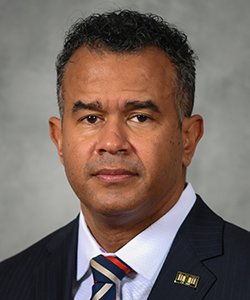
Photo of C.T. Wilson
D Maryland House · District 28

Rep. C.T. Wilson

Compare
Total votes
6,880
all sessions
Attendance
85%
1,012 missed
Lower than 98% of chamber peers
With party
99%
of cast votes
Near the chamber average
Bipartisan score
0%
crosses aisle rarely
Near the chamber average
Sponsored
124
bills & resolutions
Lower than 95% of chamber peers
Committees
4
assignments
124 bills and resolutions

Sponsored bills

Total
124
Primary
124
Co-sponsor
0
This page
124
matching current filters
Primary HB 1305
Signed into law · Maryland House · Lead sponsor
State Child Welfare System - Reporting

Maddy summaryHB 1305 requires Maryland's State Department of Education to annually report specific data on students in the state's child welfare system, including school stability, graduation rates, college enrollment, and disciplinary rates. The report must break down data by county, age, gender, race, and ethnicity while protecting student confidentiality. Additionally, the Department of Education and Department of Human Services must submit a 2026 report identifying service gaps, best practices from other states, and recommendations to improve educational outcomes for foster youth. This bill directly affects foster youth in Maryland's child welfare system and the state agencies responsible for their education and care.

Signed into law May 26, 2026 0 co-sponsors
Primary HB 1326
Signed into law · Maryland House · Lead sponsor
Child Abuse and Neglect - Disclosure of Reports and Records

Maddy summaryHB 1326 expands who can access child abuse and neglect reports in Maryland. It allows the Department of Human Services to disclose these records to school personnel (including principals and superintendents), child care facility operators, and higher education institutions when they need to investigate or take action against employees or contractors who interact with children. The bill requires safeguards to protect the identity of reporters and others whose safety could be endangered by disclosure. This directly affects schools, child care centers, and colleges by enabling them to address potential abuse concerns involving staff or contractors.

Signed into law May 26, 2026 0 co-sponsors
Primary HB 396
Signed into law · Maryland House · Lead sponsor
Residential Child Care Programs - Education of Children and Training of Child and Youth Care Practitioners

Maddy summaryHB 396 requires operators of licensed residential child care programs (like group homes and emergency shelters) to ensure children aged 5-16 in their care receive proper education. It mandates enrolling children in local schools (or approved in-house programs), transferring academic records, meeting with teachers, and providing study time, homework help, and support for extracurricular activities or individualized education plans. The bill also sets new training standards for child care practitioners, requiring background checks, education credentials, and approved training on child development and their role. These changes directly affect residential programs receiving state funding and their staff in Maryland.

Signed into law May 26, 2026 0 co-sponsors
Primary HB 552
Signed into law · Maryland House · Lead sponsor
Commission on the House of Reformation and Instruction for Colored Children - Establishment

Maddy summaryHB 552 establishes an independent investigation into the historical House of Reformation and Instruction for Colored Children, a former state detention facility in Prince George’s County that housed Black youth for over a century. The investigation will use ground-penetrating radar to locate unmarked graves, review historical records to identify deceased children, and determine causes of death and institutional conditions. It requires the appointed investigators - selected for expertise in civil rights, historical inquiry, and juvenile justice - to produce a public report with recommendations for a memorial, dignified reburial of remains, and policy changes for future deaths in state custody. This bill directly affects descendants of the children buried there and the public seeking accountability for this neglected chapter of Maryland’s history.

Signed into law May 26, 2026 0 co-sponsors
Primary HB 980
Signed into law · Maryland House · Lead sponsor
Family Law and Human Services - Guardianship Assistance Program and State Foster Youth Ombudsman - Establishment (Kanaiyah's Law)

Maddy summaryHB 980 (Kanaiyah's Law) creates the Office of the Child Welfare Ombudsman within the Attorney General's office to handle complaints about Maryland's child welfare system. It requires juvenile courts to include specific information-sharing requirements in guardianship orders and expands criminal background checks to cover all adults living in a child's guardian's home. The bill also prohibits unlicensed placements for certain children, protects complainants from retaliation, and exempts certain complaint records from public disclosure. These changes directly affect child welfare agencies, guardians, and families navigating the system, aiming to improve transparency and accountability.

Signed into law Apr 28, 2026 0 co-sponsors
Primary HB 557
Signed into law · Maryland House · Lead sponsor
Occupational Licensing and Certification - Criminal History - Predetermination Review Process

Maddy summaryHB 557 creates a pre-approval review process for individuals with non-violent criminal convictions seeking occupational licenses (e.g., cosmetology, contracting, healthcare roles) in Maryland. It requires state departments (excluding Public Safety and Correctional Services) to provide a binding determination on whether an applicant’s criminal history would block their license *before* they formally apply, based on specific criteria like the nature of the offense, time since conviction, and rehabilitation evidence. The bill prohibits denial solely for past non-violent convictions unless a direct relationship to the job or safety risk exists, and establishes a $100 fee (waivable for low-income applicants) for the review. It applies to most occupational licenses but excludes sex offense convictions and automatically allows licenses after 7 years without new offenses.

Signed into law Apr 28, 2026 0 co-sponsors
Primary HB 817
Passed · Maryland House · Lead sponsor
Carbon Dioxide Capture, Removal, and Sequestration Projects - Regulations and Standards for Biochar and Wood Vault Technologies

Maddy summaryHB 817 requires Maryland's Department of the Environment to create permitting regulations for certified carbon removal technologies and practices by January 1, 2028. It mandates all state agencies to use existing funding to support carbon removal projects using technologies certified by internationally recognized third parties. The bill directly affects state agencies (which must allocate funds) and carbon removal technology providers (which must meet certification standards to qualify for permits). It aims to streamline regulatory processes by replacing outdated solid waste rules with new, technology-specific requirements.

Passed Apr 10, 2026 0 co-sponsors
Primary HB 1097
Passed · Maryland House · Lead sponsor
Public High Schools - Sports Injury Recordkeeping and Reporting - Requirements

Maddy summaryHB 1097 requires all Maryland public high schools to maintain a standardized injury log for athletic injuries occurring during school sports activities. The log must include specific details like date/time, sport, injury description, whether medical treatment was provided, and return-to-play authorization, and must be documented within 24 hours by coaches, trainers, or designated staff. Schools must retain these logs for five years and submit an annual, anonymized summary of all high school athletic injuries to the State Department of Education by July 1 each year (starting July 1, 2027). This law directly affects public high schools and their athletic staff, aiming to improve injury tracking and safety oversight while complying with student privacy laws.

Passed Mar 26, 2026 0 co-sponsors
Primary HB 1352
Passed · Maryland House · Lead sponsor
State Procurement - Worker Residency Requirements

Maddy summaryHB 1352 requires state contractors on certain projects to ensure a specified percentage of work hours are performed by Maryland residents. This directly affects construction, service, and other contractors bidding on state government contracts. The bill creates new enforcement mechanisms under a new "Worker Residency Requirements" subtitle (Sections 17-6B-01 to 17-6B-06), directing the Department of Labor to oversee compliance. Violations could lead to debarment from state contracts, though the bill focuses on establishing the residency requirement rather than detailing specific penalties.

Passed Mar 25, 2026 0 co-sponsors
Primary HB 1480
Passed · Maryland House · Lead sponsor
Labor Law - Child Labor Penalties, Private Sector Employee Labor Relations, and State Employee Labor Standards

Maddy summaryHB 1480 strengthens child labor protections by prohibiting minors from working in specific hazardous occupations (like manufacturing hazardous substances, construction, or operating machinery) and imposing civil penalties of up to $10,000 for employers who violate these rules. It also creates a new process allowing private sector employees to petition the Public Employee Relations Board to resolve workplace disputes, while banning employers from supporting organizations exempt from federal labor law (like the National Labor Relations Act). Additionally, the bill prohibits state agencies in the Executive Branch from seeking federal waivers of the Fair Labor Standards Act. These changes directly affect employers, private employees, and state government entities in Maryland.

Passed Mar 23, 2026 0 co-sponsors
Showing 1 to 10 of 124 bills
1 2 3 13 Next