

Maddy summaryHB 488 establishes the geographic boundaries for Maryland's eight congressional districts for the 2026 elections. It specifies exact county and election district portions, using census tract data to define district lines where precincts are split, based on boundaries as they existed on January 13, 2026. This bill directly affects voters in Maryland's congressional districts by determining which communities are grouped together for electing U.S. Representatives. It replaces previous election law sections (8-702 through 8-709) and clarifies that certain districting rules apply only to state legislative districts, not congressional ones.
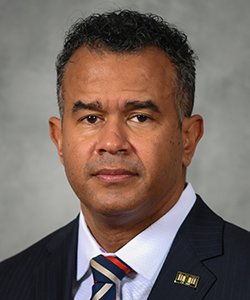
Del. C.T. Wilson
Sponsored bills
Maddy summaryHB 1294 modernizes Maryland's credit regulation framework by establishing specific rules for "earned wage access" programs, which allow workers to receive portions of their earned wages before the regular payday. The bill directly affects businesses offering these programs and the workers who use them, creating clear standards for how such services operate within the state's commercial law. Key provisions require earned wage access providers to follow transparent fee structures and disclose terms to users, aligning with broader credit regulation updates. This legislation was enacted in Maryland on May 25, 2025, under the state constitution.
Maddy summaryHB 1036, the Renewable Energy Certainty Act, streamlines approval for solar energy projects in Maryland by changing how the Public Service Commission reviews applications. The bill requires the Commission to consider climate change impacts when reviewing projects and prohibits local governments from blocking solar installations through certain regulations or delaying site development plans. It also mandates that local governments expedite reviews for qualifying solar projects and establishes rules for community solar programs and residential rooftop solar systems. This directly affects renewable energy developers, local governments, and homeowners installing solar equipment.
Maddy summaryHB 1380 requires Maryland hospitals providing obstetrical services and freestanding birthing centers to meet minimum perinatal care standards as a condition of licensure. The bill mandates the Maryland Department of Health to adopt regulations establishing these standards, which must meet or exceed existing Maryland Perinatal System Standards. Hospitals and birthing centers must comply with these standards to maintain their operating licenses. The law amends specific sections of Maryland's Health Code (19-319 and 19-3B-03) to implement this requirement, effective October 1, 2025.
Maddy summaryHB 1035, the "Next Generation Energy Act," requires Maryland's Energy Administration to negotiate agreements with neighboring states and federal agencies to develop new nuclear energy projects, particularly small modular reactors on federal land or near military facilities. It prohibits electricity suppliers from bypassing transmission systems when selling directly to large commercial/industrial customers (100+ MW demand) and mandates electric companies to procure nuclear energy from a designated escrow account. The bill establishes a new procurement process for approving nuclear and dispatchable energy projects, with requirements for the Public Service Commission to expedite reviews and for minority business assistance programs to support applicants. These changes directly affect Maryland utilities, nuclear developers, and large energy consumers, aiming to advance nuclear energy development within the state's grid planning framework.
Maddy summaryHB 809 creates a temporary exception to standard child placement limits for foster care providers when a child enrolled in college must leave campus due to academic breaks, temporary closures, or approved leave. The exemption applies only if the child, foster care provider, and agency agree to the living arrangement. This directly affects youth in foster care attending college and their foster care providers. The law requires the state to update placement regulations by July 2025.
Maddy summaryHB 930 establishes Maryland's Public Health Abortion Grant Program to improve access to abortion care by redirecting excess funds from health insurance coverage. It requires insurance carriers in Maryland to transfer 90% of unused funds from their abortion coverage accounts (after covering patient costs) into a new special fund. This fund will support abortion clinical services, particularly where federal funding is restricted, benefiting individuals seeking abortion care in Maryland. The program mandates annual reporting by insurers and transfers existing excess funds starting in 2025.
Maddy summaryHB 1443 allows Maryland counties and municipalities to create local laws granting hiring and promotion preferences to eligible veterans and specific family members. It authorizes a 10-point credit on selection tests for veterans, spouses of veterans with service-connected disabilities, spouses of active service members, and surviving spouses of veterans. The bill specifies that current government employees and veterans convicted of crimes after military service are excluded from these preferences. Local governments must adopt a formal local law before implementing these hiring or promotion options.
Maddy summaryHB 1098 requires the Maryland Automobile Insurance Fund (MAIF) to calculate and report its risk-based capital (RBC) level annually, and to maintain total adjusted capital above specific thresholds starting December 2026. It also mandates the Insurance Commissioner to review MAIF’s RBC plans if capital levels fall below requirements and ensures certain rate-making rules apply to MAIF during financial stress periods. Additionally, the bill creates a workgroup to study auto insurance affordability and submit a report to the Governor and General Assembly by a specified deadline. This directly affects MAIF’s financial operations, the Insurance Commissioner’s oversight role, and the process for evaluating auto insurance costs for Maryland drivers.
Maddy summaryHB 1378 modifies Maryland law to set a deadline for filing civil claims against the state or local government units for child sexual abuse that occurred when the victim was a minor. Specifically, it prohibits such claims from being filed on or after January 1, 2026, while maintaining the existing rule allowing claims to be filed at any time for non-government defendants. The bill does not change the $1.5 million cap on noneconomic damages for certain claims filed before October 1, 2023. This directly affects victims seeking to sue state or local government entities for historical abuse. The law takes effect October 1, 2025.