Issue · Healthcare

Healthcare

Every healthcare bill, vote, and legislator stance in Maryland, automatically classified by Maddy, our AI policy reader.

Total bills
376
2026 Regular Session
Top supporter
Alonzo Washington
100% support rate
Top opponent
Jason Gallion
0% support rate
Ranked legislators
10
5 support · 5 oppose
Key legislators

Who's moving healthcare in Maryland

Legislators moving healthcare in Maryland
Legislator Party Stance Support rate Votes
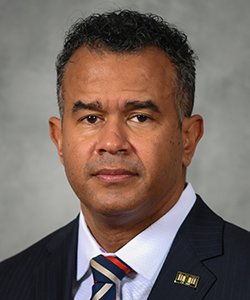
Alonzo Washington
Alonzo Washington Senate · District 22
D
Strong +
100% 68
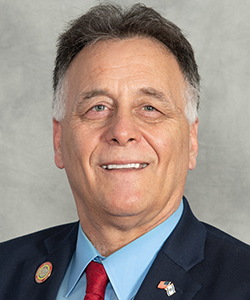
Brian Feldman
Brian Feldman Senate · District 15
D
Strong +
100% 70
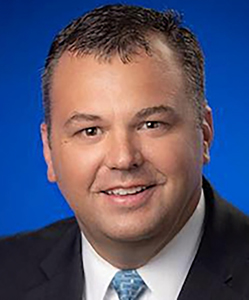
C.T. Wilson
C.T. Wilson House · District 28
D
Strong +
100% 98
Kevin Harris
Kevin Harris Senate · District 27
D
Strong +
100% 70
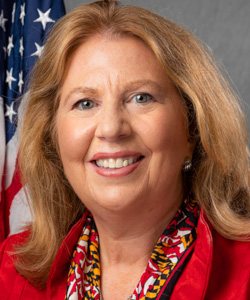
Pam Beidle
Pam Beidle Senate · District 32
D
Strong +
100% 71
Jason Gallion
Jason Gallion Senate · District 35
R
Strong −
0% 71
Jack Bailey
Jack Bailey Senate · District 29
R
Strong −
0% 69
Johnny Salling
Johnny Salling Senate · District 6
R
Strong −
4% 71
J.B. Jennings
J.B. Jennings Senate · District 7
R
Strong −
4% 71
Mary Beth Carozza
Mary Beth Carozza Senate · District 38
R
Strong −
5% 70
Showing 281–290 of 376 bills

All healthcare bills

in committee · Maryland · House of Delegates Feb 13, 2026

HB 515: Public Health - Local Drug Overdose Fatality Review Teams - Membership

HB 515 requires that hospital representatives on Maryland's county drug overdose fatality review teams hold specific leadership roles - such as vice president, chief medical officer, or assistant medical officer - instead of any hospital staff member. This change directly affects county-level review teams that analyze overdose deaths, as well as the hospitals participating in them. The bill amends existing law to specify these qualifications for hospital representatives within the team membership structure. It does not create new teams or funding but sets a clearer standard for who can serve in this role. The law takes effect October 1, 2026.
died · Maryland · House of Delegates Feb 9, 2026

HB 209: Health Care Providers - Assisted Reproductive Treatment - Informed Consent and Fraud

HB 209 requires health care providers to obtain explicit, written consent from both patients receiving assisted reproductive treatment (like IVF or egg/sperm donation) and donors before using their reproductive material. It prohibits providers from using their own sperm or eggs without patient consent, misrepresenting donor information (such as genetic history), or using donor material without proper consent. Violations can result in civil penalties (up to $50,000 per violation) or felony charges (up to 10 years in prison) for intentional misuse. The bill directly affects fertility clinics, patients seeking treatment, and donors, ensuring transparency and accountability in reproductive care.
passed · Maryland · House of Delegates Feb 13, 2026

HB 60: Sickle Cell Disease - Institutions of Higher Education - Policies, Procedures, and Educational Campaigns (Kaitlyn's Law)

This bill requires Maryland colleges and universities to provide reasonable accommodations to students with sickle cell disease and prohibits denying them access to facilities or services based on their diagnosis. It mandates the Maryland Department of Health to create an education campaign for campus staff, develop guidelines for supporting students with sickle cell disease, and compile training materials for faculty and administrators. The law directly affects students with sickle cell disease at public and private institutions of higher education in Maryland, as well as campus staff responsible for implementing these policies. The requirements take effect October 1, 2026, with institutions needing to establish clear reporting procedures for violations.
Sub-Topics Higher Education
in committee · Maryland · Senate Feb 4, 2026

SB 416: Health Maintenance Organizations - Payments to Nonparticipating Providers - Reimbursement Rate

SB 416 sets new minimum reimbursement rates that Maryland health maintenance organizations (HMOs) must pay to nonparticipating health care providers, such as doctors and hospitals not under contract with an HMO, for specific services. For trauma physicians treating trauma patients in designated trauma centers, HMOs must pay the greater of 140% of the Medicare rate (adjusted for inflation) or the 2001 rate (adjusted for inflation). For other services like routine office visits, HMOs must pay at least 125% of the rate they paid in 2019 (adjusted for inflation) or 140% of the Medicare rate from 2008 (adjusted for inflation), whichever is higher. This bill directly affects HMOs and nonparticipating providers by standardizing these minimum payment rates across Maryland.
Sub-Topics Medicare
passed · Maryland · House of Delegates Mar 23, 2026

HB 658: Maryland Department of Health - Forensic Review Boards and Community Forensic Aftercare Program

HB 658 establishes Maryland’s Community Forensic Aftercare Program within the Department of Health. The program monitors two groups: individuals found not criminally responsible due to mental illness who are on conditional release, and people with mental illness or intellectual disability requiring community monitoring under specific legal circumstances. Key provisions require the Program to create a community monitoring board to make decisions about conditional release and out-of-state travel for these individuals. The bill amends existing criminal procedure and health codes to implement this new oversight structure, replacing outdated sections with the new program framework.
Sub-Topics Mental Health
in committee · Maryland · House of Delegates Jan 23, 2026

HB 468: Health and Taxation - Digital Social Media Services and the Mental Health Care Fund for Children and Youth

HB 468 establishes a new "Mental Health Care Fund for Children and Youth" in Maryland, funded by a tax on digital social media companies' annual revenues within the state. The bill imposes a tax on qualifying digital social media services (e.g., platforms generating revenue from Maryland users) and directs all collected revenue into this dedicated, non-lapsing fund. The fund must be used exclusively to improve access to mental health care services for children and youth, supplementing existing state funding without replacing it. The Comptroller will distribute the tax revenue to the fund, which the Secretary will administer per the new provisions in the Health and Tax codes.
signed · Maryland · Senate Apr 28, 2026

SB 159: Emergency Medical Services - Vehicles and Ambulances - Required Supplies

SB 159 requires Maryland's Emergency Medical Services (EMS) providers to maintain specific equipment and supplies on ambulances, including neonatal care items, and mandates quarterly reviews of performance data like response times and service quality. It also requires counties to establish formal, accessible complaint systems for ambulance quality or conduct issues, with online and in-person filing, tracking, and quarterly reporting to the state EMS Institute. These provisions directly affect all counties and municipalities operating or contracting EMS services, as well as the Maryland Institute for EMS Systems, which coordinates the statewide standards. The bill aims to standardize ambulance equipment, improve accountability through data reviews, and enhance patient access to complaint resolution. It takes effect July 1, 2026.
passed both · Maryland · House of Delegates Apr 13, 2026

HB 222: County Boards of Education - Opioid Overdose-Reversing Medications - Policy Requirements (Naloxone Access Act)

HB 222 requires Maryland public schools and colleges to update policies and education programs to address opioid overdoses. It mandates schools to store naloxone, allow authorized staff and students to possess it, and provide liability protection for good-faith use during overdoses. The bill also adds naloxone's life-saving role to K-12 drug prevention curricula (starting in third grade) and requires annual parent notifications about school naloxone policies. Additionally, schools must report overdose incidents requiring naloxone use to the State Department. This affects all public K-12 schools and state-funded colleges.
died · Maryland · House of Delegates Feb 16, 2026

HB 71: Maryland Medical Assistance Program - Psychiatric Rehabilitation Program Services - Reimbursement (Youth Psychiatric Rehabilitation Parity Act of 2026)

HB 71 (Youth Psychiatric Rehabilitation Parity Act of 2026) requires Maryland's Medicaid program to reimburse psychiatric rehabilitation providers for 6-30 community-based mental health support services per month for specific youth. It directly affects Medicaid-covered individuals under 21 with a persistent mental disorder causing severely impaired functioning, who live with a legally responsible parent, guardian, or relative. The law mandates the Maryland Department of Health to adopt these reimbursement rules by December 2026, effective June 2026. This creates standardized billing requirements for youth mental health services, ensuring consistent coverage for qualifying cases without expanding eligibility.
Sub-Topics Medicaid Mental Health
signed · Maryland · Senate Apr 14, 2026

SB 333: Interstate Podiatric Medical Licensure Compact

SB 333 creates the Interstate Podiatric Medical Licensure Compact, allowing podiatrists (foot and ankle specialists) licensed in Maryland to practice in other participating states more easily. The bill establishes a streamlined process for obtaining an "expedited license" in multiple states without altering existing state licensing laws, requiring podiatrists to pass national exams and pass background checks. Crucially, it mandates that podiatrists follow the rules of the state where the patient is located during treatment, not where the provider is licensed. This compact directly affects licensed podiatrists seeking multi-state practice and state licensing boards overseeing medical practice.
Sub-Topics Medical Licensing
Showing 281 to 290 of 376 bills
Previous 1 28 29 30 38 Next