Issue · Healthcare

Healthcare

Every healthcare bill, vote, and legislator stance in Maryland, automatically classified by Maddy, our AI policy reader.

Total bills
376
2026 Regular Session
Top supporter
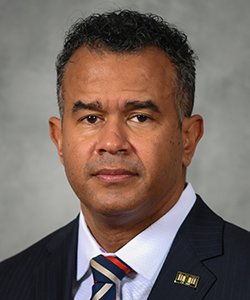
Alonzo Washington
100% support rate
Top opponent
Jason Gallion
0% support rate
Ranked legislators
10
5 support · 5 oppose
Key legislators

Who's moving healthcare in Maryland

Legislators moving healthcare in Maryland
Legislator Party Stance Support rate Votes
Alonzo Washington
Alonzo Washington Senate · District 22
D
Strong +
100% 68
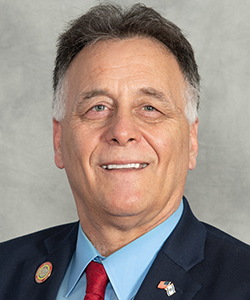
Brian Feldman
Brian Feldman Senate · District 15
D
Strong +
100% 70
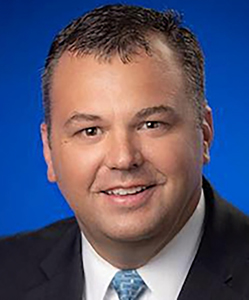
C.T. Wilson
C.T. Wilson House · District 28
D
Strong +
100% 98
Kevin Harris
Kevin Harris Senate · District 27
D
Strong +
100% 70
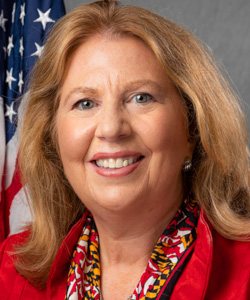
Pam Beidle
Pam Beidle Senate · District 32
D
Strong +
100% 71
Jason Gallion
Jason Gallion Senate · District 35
R
Strong −
0% 71
Jack Bailey
Jack Bailey Senate · District 29
R
Strong −
0% 69
Johnny Salling
Johnny Salling Senate · District 6
R
Strong −
4% 71
J.B. Jennings
J.B. Jennings Senate · District 7
R
Strong −
4% 71
Mary Beth Carozza
Mary Beth Carozza Senate · District 38
R
Strong −
5% 70
Showing 271–280 of 376 bills

All healthcare bills

signed · Maryland · House of Delegates May 12, 2026

HB 423: Prince George's County - Public High Schools - Drug Detection Products PG 501-26

HB 423 requires Prince George’s County public high schools to provide free drink spiking detection products (for GHB/ketamine) and fentanyl detection strips to all students starting the 2026-2027 school year. These products must be available at no cost in school health clinics or libraries. Each school must also report annually (by October 1) to Maryland’s Office of Overdose Response the quantity distributed during the prior school year. The bill applies exclusively to Prince George’s County schools and takes effect July 1, 2026.
Sub-Topics Substance Abuse
signed · Maryland · Senate May 26, 2026

SB 486: Higher Education - Maryland Graduate and Professional Scholarship Program - Eligible Institutions

SB 486 expands Maryland's Graduate and Professional Scholarship Program to include students at the University of Maryland Eastern Shore (UMES) in specific graduate programs. It adds UMES as an eligible institution for students enrolled in four programs: Master of Medical Science in Physician Assistant Studies, Doctor of Pharmacy, Doctor of Physical Therapy, and Doctor of Veterinary Medicine. This change directly affects UMES students in these fields who previously could not access the scholarship. The bill amends existing law to update the list of qualifying institutions without changing scholarship amounts ($1,000-$5,000 per year) or other program rules. The change takes effect July 1, 2026.
died · Maryland · House of Delegates Feb 16, 2026

HB 88: Health Insurance – Bulk Purchasing Pools for Prescription Drugs

HB 88 allows Maryland health insurers, nonprofit health service plans, and health maintenance organizations (HMOs) to join group buying pools for prescription drugs. This enables these entities to collectively purchase medications at potentially lower costs, directly affecting the price of covered drugs for plan members. The bill authorizes participation in such pools for entities providing prescription drug coverage through pharmacy benefit managers. It will take effect October 1, 2026, but does not require participation or guarantee cost savings.
passed · Maryland · House of Delegates Mar 19, 2026

HB 310: Correctional Services - Restrictive Housing - Individuals With Developmental or Intellectual Disabilities

HB 310 limits the use of restrictive housing (locked cell confinement for 22+ hours daily) for incarcerated individuals in Maryland state facilities who have a developmental or intellectual disability. It requires a licensed clinical professional to assess new inmates for these disabilities during intake and to recommend against placing them in restrictive housing for more than 15 consecutive days within any 30-day period. This 15-day limit does not apply if the individual commits a "prohibited act," such as causing serious injury, making threats, or possessing weapons. The bill directly affects incarcerated people with these disabilities and mandates correctional facilities to follow this assessment and limitation process.
Sub-Topics Corrections
signed · Maryland · Senate Apr 28, 2026

SB 411: Hospitals - Clinical Staffing Committees and Plans - Establishment (Safe Staffing Act of 2026)

SB 411 requires non-state hospitals in Maryland to establish clinical staffing committees with equal representation from management and frontline staff, including nurses, technicians, and other caregivers. These committees must develop evidence-based staffing plans considering patient acuity, staffing gaps, and daily patient needs, which hospitals must implement starting January 1, 2028. Hospitals must annually review these plans, publicly post staffing data on units, and submit annual reports to the Maryland Health Care Commission beginning in 2030. The bill directly affects hospital operations, staffing decisions, and transparency for frontline workers and patients.
Sub-Topics Hospitals
signed · Maryland · Senate May 26, 2026

SB 379: Recovery Residence Grant Program - Funding

This bill ensures Maryland's Recovery Residence Grant Program receives $500,000 annually from fiscal years 2024 through 2030 by requiring this funding be included in the state's annual budget. It directly supports recovery residences (such as sober living facilities) that provide housing and support services for people in addiction recovery. The law updates existing funding rules to extend the annual budget requirement through 2030, preventing potential funding gaps. This creates a stable funding mechanism for these community-based recovery programs.
Sub-Topics Substance Abuse
in committee · Maryland · House of Delegates Mar 19, 2026

HB 714: Health - Abortion Data - Submission to the Centers for Disease Control and Prevention

HB 714 requires the Maryland Department of Health to share abortion-related data with the Centers for Disease Control and Prevention (CDC) when requested, unless sharing would violate federal or state law. The bill directly affects Maryland's health department, mandating data submission under specific conditions. Key provisions include an exception allowing the department to withhold data if legal conflicts arise, and it takes effect October 1, 2026. This law updates Maryland's health reporting requirements to align with federal data collection needs.
Sub-Topics Women's Health Tags Data Reporting
signed · Maryland · Senate Apr 14, 2026

SB 24: State Emergency Medical Services Board - Public Access Automated External Defibrillator Program - Revisions

SB 24 revises Maryland's Public Access Automated External Defibrillator (AED) Program to improve oversight and accessibility. It requires most organizations using public AEDs to appoint an AED coordinator responsible for maintenance, reporting, and emergency notification, while exempting law enforcement agencies from needing certificates for AEDs in patrol vehicles. The bill also repeals outdated requirements for regional AED committees and clarifies that grocery stores and restaurants are not subject to certain AED registration rules. These changes aim to streamline compliance for entities managing public AEDs, including schools, businesses, and public facilities.
signed · Maryland · House of Delegates Apr 14, 2026

HB 442: Professional Liability Insurance Coverage - Nursing Homes, Assisted Living Facilities, Nurse Midwives, and Licensed Certified Midwives - Disclosure (Nyeli Rose Lewis Act of 2026)

HB 442 requires nursing homes, assisted living facilities, and nurse midwives in Maryland to disclose their professional liability insurance status to residents and potential residents. Specifically, these providers must provide written notice (including electronic communication) if they lack coverage or if coverage has lapsed and not been renewed, with timing requirements: at the first visit for potential residents or at application for admission, and within 30 days of a lapse for current residents. The bill also mandates that facilities without coverage post a conspicuous notice for residents and guests. This law does not change insurance requirements but ensures transparency about coverage gaps. It directly affects residents and potential residents of these care facilities by providing clear, timely disclosure of insurance status.
in committee · Maryland · House of Delegates Feb 10, 2026

HB 202: Public Health - Social Isolation and Loneliness Pilot Grant Program - Establishment

HB 202 establishes Maryland's Social Isolation and Loneliness Pilot Grant Program within the Department of Health to fund community programs addressing social isolation. The program awards up to $20,000 per grant to eligible organizations serving vulnerable populations - including youth, seniors, and rural communities - to cover operating costs like staffing and venue fees for socioemotional support services. It requires a $100,000 FY2028 budget appropriation and mandates a program evaluation by December 2029, reporting on financial use and outcomes. The pilot runs from October 2026 through March 2030, focusing on reducing health impacts of isolation without funding research or capital projects.
Showing 271 to 280 of 376 bills
Previous 1 27 28 29 38 Next