Issue · Education

Education

Every education bill, vote, and legislator stance in Maryland, automatically classified by Maddy, our AI policy reader.

Total bills
252
2026 Regular Session
Top supporter
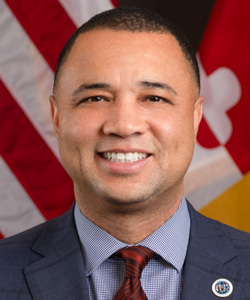
Nick Charles
100% support rate
Top opponent
Robin Grammer
6% support rate
Ranked legislators
10
5 support · 5 oppose
Key legislators

Who's moving education in Maryland

Legislators moving education in Maryland
Legislator Party Stance Support rate Votes
Nick Charles
Nick Charles Senate · District 25
D
Strong +
100% 48
Denise Roberts
Denise Roberts House · District 25
D
Strong +
96% 92
Adrian Boafo
Adrian Boafo House · District 23
D
Strong +
96% 48
Antonio Hayes
Antonio Hayes Senate · District 40
D
Strong +
95% 50
Shaneka Henson
Shaneka Henson Senate · District 30
D
Strong +
95% 51
Robin Grammer
Robin Grammer House · District 6
R
Strong −
6% 85
Matt Morgan
Matt Morgan House · District 29A
R
Strong −
9% 98
Mark Fisher
Mark Fisher House · District 27C
R
Strong −
9% 98
Nic Kipke
Nic Kipke House · District 31
R
Strong −
9% 100
Lauren Arikan
Lauren Arikan House · District 7B
R
Strong −
9% 98
Showing 161–170 of 252 bills

All education bills

signed · Maryland · Senate May 26, 2026

SB 311: Education - The Blueprint for Maryland's Future - Revisions

SB 311 revises Maryland's Blueprint for Maryland's Future education plan by making several targeted adjustments to existing provisions. It repeals the annual requirement for county school boards to submit technology spending reports, extends the timeframe for calculating compensatory education enrollment (through 2027), and removes a termination date for Concentration of Poverty Grant funds. The bill also updates teacher certification qualifications, extends deadlines for National Board Certification for principals, and revises definitions for wraparound services in community schools and Career and Technical Education (CTE) programs. These changes primarily affect school districts, teachers, and state education agencies administering the Blueprint's funding and program requirements.
died · Maryland · Senate Feb 11, 2026

SB 393: Community College Facilities Renewal Grant Program - Alterations

SB 393 removes a $1 million cost limit for community college facility projects (like repairs or upgrades) that qualify for state grants. It requires the Governor to appropriate 5% of funds allocated to the Community College Construction Grant Program annually for the Facilities Renewal Program, and to make up any shortfall if that program receives less than $80 million. The bill increases the annual grant limit from eight to sixteen and mandates equal funding distribution among eligible colleges if the total appropriation falls below $4 million. These changes directly affect Maryland community colleges seeking state funding for facility maintenance and improvements.
in committee · Maryland · House of Delegates Jan 28, 2026

HB 473: Education - Collective Bargaining - Certificated Employees - Class Size

HB 473 repeals the current ban preventing public school employers in Maryland from negotiating class size limits with teacher unions. It removes the prohibition in Section 6-406(c)(3) that previously barred discussions about "the maximum number of students assigned to a class" during collective bargaining. This change directly affects certificated school employees (like teachers) and their unions, as well as public school employers (county school systems). The bill enables these parties to negotiate class size as part of their collective bargaining agreements, alongside other terms like salaries and working conditions.
signed · Maryland · Senate May 26, 2026

SB 263: Education - Dependent Children of Active Service Members - Advance Enrollment Procedures

SB 263 allows dependent children of active-duty military members to enroll in Maryland public schools remotely before relocating, using official military orders as proof of eligibility. It requires counties to create a free, no-physical-attendance remote registration process and to note if a child has an Individualized Education Program (IEP) or 504 plan from their previous school. The bill ensures children with disabilities receive appropriate education without delay and permits continued enrollment through the school year even if residency changes. Military families can use temporary housing addresses (like base housing) as proof of residence. The Secretary of Veterans and Military Families must publish clear enrollment information on these procedures.
Sub-Topics Special Education
signed · Maryland · House of Delegates May 26, 2026

HB 288: State Superintendent of Schools - Prolonged State of Emergency - Authority to Declare

HB 288 authorizes Maryland's State Superintendent of Schools to declare a prolonged state of emergency when school closures prevent in-person attendance for 14+ consecutive days. It requires county school boards to create detailed virtual education plans before emergencies occur, covering instruction, staffing, technology, student support, and return-to-school protocols. These plans must be updated every two years and approved by the State Board. The bill aims to ensure a structured transition to remote learning during extended school disruptions, taking effect July 2026.
Sub-Topics School Safety
signed · Maryland · House of Delegates May 12, 2026

HB 569: Queen Anne's County - Authorized Uses of Revenues From Development Impact Fees - Expansion

HB 569 allows Queen Anne's County Commissioners to use revenue from development impact fees for capital costs related to replacing public school facilities. Previously, these fees could only fund specific infrastructure projects, but this bill expands their allowable use to include school building replacements. The change modifies Maryland's local government code (Section 20-706) to explicitly authorize this new purpose for Queen Anne's County. The bill takes effect July 1, 2026.
signed · Maryland · Senate May 26, 2026

SB 204: Public Schools - Maryland Civic Excellence Program - Established

SB 204 establishes the Maryland Civic Excellence Program within the State Department of Education to recognize public school students who demonstrate proficiency in civics and civic literacy. Local school systems can choose to participate, using state-developed guidelines (to be finalized by 2027-2028) to determine student eligibility. Participating schools may award a "Seal of Civic Excellence" and attach it to students' high school diplomas. The program requires annual reports from participating schools starting July 2028, and schools may collaborate with civic organizations to support implementation. The bill takes effect July 1, 2026.
Sub-Topics K-12 Education
in committee · Maryland · Senate Jan 16, 2026

SB 79: County Boards of Education - Student Technology Use Policy - Requirements

SB 79 requires Maryland county school boards to create and adopt policies restricting student use of personal electronic devices (like phones, tablets, or laptops) during school hours. It mandates a complete ban for elementary and middle school students, while allowing limited use for high school students under specific exceptions - such as for documented health needs, individualized education plans (IEPs), or educational purposes. Policies must be published online and in student handbooks, reviewed every two years, and include disciplinary measures for violations. The bill takes effect July 1, 2026, directly affecting all public school districts and students in Maryland.
signed · Maryland · House of Delegates Apr 14, 2026

HB 478: Income Tax - Subtraction Modification for Classroom Supplies Purchased by Teachers - Alteration

HB 478 modifies Maryland's income tax by expanding the existing $250 deduction for unreimbursed classroom supply expenses to include prekindergarten teachers. Previously, only K-12 classroom teachers qualified; this bill explicitly adds prekindergarten teachers employed full-time in state programs. The deduction remains limited to $250 per year for supplies used by students or for teaching preparation, excluding expenses already deducted federally. This change affects prekindergarten teachers statewide who purchase classroom supplies without reimbursement, effective for taxable years starting after December 31, 2025.
in committee · Maryland · House of Delegates Jan 28, 2026

HB 64: Task Force on Education Funding and Student Population Growth

HB 64 establishes a task force to study how delays in counting student enrollment affect school funding and how growing student populations impact funding levels. The task force includes education officials, school board representatives, teachers, parents, and county government members. It will analyze these challenges and recommend improvements to the school funding system. The task force must submit its findings and recommendations to the Governor and legislature by December 15, 2026, after which the bill expires. This bill creates a review process but does not directly change funding policies.
Sub-Topics School Funding
Showing 161 to 170 of 252 bills
Previous 1 16 17 18 26 Next