Issue · Criminal Justice

Criminal Justice

Every criminal justice bill, vote, and legislator stance in Maryland, automatically classified by Maddy, our AI policy reader.

Total bills
288
2026 Regular Session
Top supporter
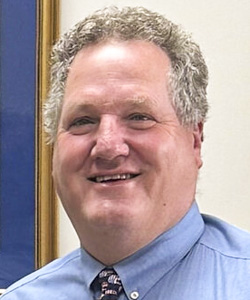
Stuart Schmidt
91% support rate
Top opponent
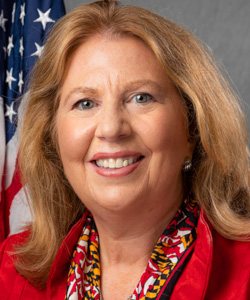
Jim Hinebaugh
41% support rate
Ranked legislators
10
5 support · 5 oppose
Key legislators

Who's moving criminal justice in Maryland

Legislators moving criminal justice in Maryland
Legislator Party Stance Support rate Votes
Stuart Schmidt
Stuart Schmidt House · District 33B
R
Strong +
91% 182
Katie Hester
Katie Hester Senate · District 9
D
Strong +
80% 86
Brian Crosby
Brian Crosby House · District 29B
D
Support
72% 101
Mary-Dulany James
Mary-Dulany James Senate · District 34
D
Support
71% 88
Matthew Schindler
Matthew Schindler House · District 2B
D
Support
67% 191
Jim Hinebaugh
Jim Hinebaugh House · District 1A
R
Mixed −
41% 162
Dalya Attar
Dalya Attar Senate · District 41
D
Mixed −
42% 77
Kevin Anderson
Kevin Anderson House · District 38A
R
Mixed −
42% 119
Steve Hershey
Steve Hershey Senate · District 36
R
Mixed −
43% 108
Mary Beth Carozza
Mary Beth Carozza Senate · District 38
R
Mixed −
43% 110
Showing 41–50 of 288 bills

All criminal justice bills

signed · Maryland · Senate May 12, 2026

SB 544: Courtroom Security - Minimum Adequate Security Standard

SB 544 establishes minimum security staffing requirements for all Maryland courthouses. It requires courthouse security providers to have specific numbers of qualified officers present during proceedings: one officer per courtroom for most cases (starting July 2027), two officers for cases involving incarcerated individuals or potential custody changes, and one additional officer for every four or fewer courtrooms per floor. Security officers must meet the qualifications for a special police officer under Maryland law. The standards phase in over time, with full implementation by July 1, 2029, and take effect October 1, 2026. This directly affects all Maryland courthouses and the security entities responsible for staffing them.
Sub-Topics Policing
signed · Maryland · Senate Apr 28, 2026

SB 473: Public Utilities - For-Hire Drivers and Transportation Network Operators - Human Trafficking Awareness and Prevention Training and Liability

SB 473 requires new applicants for taxicab, for-hire driver, or transportation network operator (e.g., Uber/Lyft) licenses in Maryland to submit proof they completed human trafficking awareness training. This includes either the U.S. Department of Transportation’s "Leaders Against Human Trafficking" program or another nationally recognized training program. The bill also protects licensed drivers from civil or criminal liability when reporting suspected trafficking in good faith. These requirements apply specifically to new license applicants, not current license holders, and are designed to help identify and prevent trafficking through driver training and reporting.
Sub-Topics Human Trafficking
passed · Maryland · Senate Mar 26, 2026

SB 689: Task Force on the Creation of a Division of Returning Citizens and Expanded Reentry Services - Requirement Alterations and Extension of Report Deadline (Bri's Law)

SB 689 (Bri's Law) creates a task force to study postrelease services for people leaving prison in Maryland, focusing on programs designed to prevent re-arrest. The task force, composed of legislative members, corrections officials, and state's attorneys, must examine all release types and existing post-release requirements by July 2027. It will recommend improvements to these programs based on its findings. The bill expires automatically on June 30, 2028, with no further legislative action required. This study directly affects individuals transitioning from incarceration back into communities.
died · Maryland · House of Delegates Feb 25, 2026

HB 1489: Criminal Procedure - Motion to Reduce Duration of Sentence - Eligibility (Vincent Anthony Fisher III Act)

HB 1489, the "Vincent Anthony Fisher III Act," allows certain incarcerated individuals to seek sentence reductions by modifying eligibility rules for motions to reduce sentence duration. It applies to two groups: (1) people convicted as adults for crimes committed as minors (with at least 20 years served and no life without parole), and (2) those convicted between ages 18-25 (with at least 20 years served, not a sex offender, and not convicted of specific violent offenses like murder of first responders or certain vehicular homicides). Courts must hold hearings considering factors like the person’s age at the offense, rehabilitation efforts, victim impact statements, and whether the individual poses a public safety risk. If the court finds the person is not a danger and justice requires it, it may reduce the sentence.
died · Maryland · Senate Feb 23, 2026

SB 591: National Public Safety Alliance for Individuals With Disabilities - Maryland Chapter - Establishment

SB 591 establishes the Maryland Chapter of the National Public Safety Alliance for Individuals with Disabilities within the Department of State Police. It creates a secure, voluntary online system allowing individuals with disabilities to share personal information (like contact details, physical descriptions, and disability-related needs) with law enforcement for emergency response. The bill requires the Department of State Police and Department of Disabilities to develop mandatory training and guidelines for law enforcement agencies, and it creates a commission to study protocols and public engagement strategies. This directly affects individuals with disabilities who choose to participate and all local law enforcement agencies required to implement the new protocols.
signed · Maryland · Senate May 12, 2026

SB 512: Criminal Law - Stalking - Penalties

SB 512 amends Maryland's stalking law to increase penalties for specific stalking offenses. It elevates stalking to a felony (with up to 10 years in prison or $10,000 fine) if the offender had a protective order against them, violated a court order prohibiting the behavior, or has a prior stalking conviction in Maryland or another state. The bill directly affects individuals convicted of stalking who meet these aggravating conditions. Key provisions clarify that stalking includes unwanted electronic tracking without consent and define the circumstances under which penalties escalate. The law maintains existing definitions of stalking but strengthens consequences for repeat offenders and those violating court orders.
in committee · Maryland · Senate Feb 12, 2026

SB 660: Public Safety - Law Enforcement - Response to Immigration Enforcement Actions

SB 660 requires Maryland law enforcement agencies to respond to reports of federal immigration enforcement actions within their jurisdiction. Officers must observe the activity, record it with body cameras when possible, and file detailed reports including location, agencies involved, force used, medical needs, and any violations. These reports and recordings must be made public under Maryland's Public Information Act and stored for 4 months (footage) or 4 years (reports). The bill directly affects local law enforcement agencies, mandating transparency during federal immigration operations while preserving constitutional officer duties.
in committee · Maryland · House of Delegates Feb 16, 2026

HB 1309: Commission to Review and Assess Racial Disparities in the State Criminal Justice System - Establishment

HB 1309 establishes a Commission to study racial disparities in Maryland’s criminal justice system, directly affecting African American, Hispanic, and other non-White individuals who experience disproportionate treatment. The Commission, composed of legislative leaders, public defenders, prosecutors, court officials, and community advocates, will examine disparities in policing, arrests, sentencing, and data collection. It will specifically assess cumulative impacts of disparate practices, mandatory minimums (including firearm offenses), and propose reforms like race-neutral risk assessments and expanded judicial discretion. The Commission must make recommendations by 2028, focusing on systemic changes to improve transparency and reduce racial inequities without implementing new laws itself.
in committee · Maryland · Senate Feb 12, 2026

SB 736: Criminal Law - Obscene Matter - Visual Representation of Child

SB 736 updates Maryland's criminal law regarding visual representations of children. It raises the age limit from 16 to 18 for material depicting children in sexual contexts or abuse, making possession or viewing such material illegal for children under 18. Penalties increase significantly, with first offenses carrying up to 10 years in prison or $25,000 in fines, and repeat offenses becoming felonies with up to 20 years in prison or $50,000 fines. The bill also allows individuals depicted in such material to file civil lawsuits for damages (including up to $250,000 in punitive damages) without needing a prior criminal conviction, and requires the Attorney General to submit annual reports on enforcement and technology changes.
in committee · Maryland · House of Delegates Feb 5, 2026

HB 782: Criminal Law - Taking and Breaking Open Letters - Penalty

HB 782 amends Maryland's criminal law to increase the penalty for illegally opening another person's mail. The bill raises the fine for violating this prohibition from $15 to $500 while keeping the maximum jail term at six days. It directly affects individuals who take or break open letters addressed to others without permission, including mail carriers or others accessing private correspondence. The key change is the substantial fine increase, making the penalty more severe for this specific violation. The amendment becomes effective October 1, 2026.
Sub-Topics Corrections
Showing 41 to 50 of 288 bills
Previous 1 4 5 6 29 Next