Issue · Criminal Justice

Criminal Justice

Every criminal justice bill, vote, and legislator stance in Maryland, automatically classified by Maddy, our AI policy reader.

Total bills
229
2026 Regular Session
Top supporter
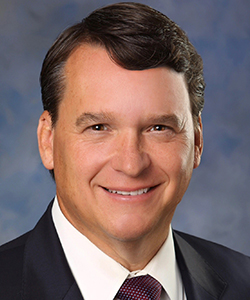
Stuart Schmidt
91% support rate
Top opponent
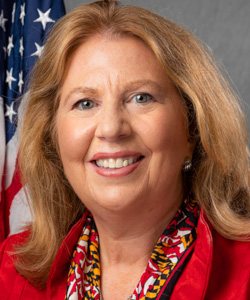
Jim Hinebaugh
41% support rate
Ranked legislators
10
5 support · 5 oppose
Key legislators

Who's moving criminal justice in Maryland

Legislators moving criminal justice in Maryland
Legislator Party Stance Support rate Votes
Stuart Schmidt
Stuart Schmidt House · District 33B
R
Strong +
91% 182
Katie Hester
Katie Hester Senate · District 9
D
Strong +
80% 86
Brian Crosby
Brian Crosby House · District 29B
D
Support
72% 101
Mary-Dulany James
Mary-Dulany James Senate · District 34
D
Support
71% 88
Matthew Schindler
Matthew Schindler House · District 2B
D
Support
67% 191
Jim Hinebaugh
Jim Hinebaugh House · District 1A
R
Mixed −
41% 162
Dalya Attar
Dalya Attar Senate · District 41
D
Mixed −
42% 77
Kevin Anderson
Kevin Anderson House · District 38A
R
Mixed −
42% 119
Steve Hershey
Steve Hershey Senate · District 36
R
Mixed −
43% 108
Mary Beth Carozza
Mary Beth Carozza Senate · District 38
R
Mixed −
43% 110
Showing 181–190 of 229 bills

All criminal justice bills

in committee · Maryland · House of Delegates Jan 16, 2026

HB 309: Judicial Facilities - Stops, Detentions, and Arrests - Limitations

HB 309 prohibits law enforcement from stopping, detaining, or arresting individuals for civil offenses (like unpaid fines) while they are inside a courthouse or within one mile of it for court-related purposes. It requires officers to notify a judge or court administrator before such actions and mandates they avoid disrupting court proceedings. Evidence obtained in violation is inadmissible in court, and individuals wrongfully stopped can sue for damages, attorney fees, or court costs. The law applies to all judicial facilities, including courthouses, hearing centers, and surrounding areas within 1,000 feet, but excludes arrests for criminal offenses, warrants, or other legally authorized actions.
signed · Maryland · Senate May 12, 2026

SB 294: Criminal Procedure – Protection of Identity of Victim of Sexual Assault or Stalking

SB 294 requires courts and parties in criminal or juvenile delinquency cases to redact identifying information (like names, addresses, or details that could reveal identity) from court filings and records involving victims of sexual assault or stalking. It directly affects these victims by preventing public disclosure of their personal details in court documents, unless a court finds "good cause" to allow it. The bill mandates that courts automatically redact such information upon request from a victim of sexual assault or stalking, and prohibits disclosure to nonparties without redaction. This applies to all court filings, including charging documents, and covers both current and existing case records. The law takes effect October 1, 2026.
signed · Maryland · Senate May 31, 2026

SB 322: Courts - Jury Service - Disqualification

SB 322 modifies Maryland's jury service disqualification rules for individuals with criminal convictions. It removes the requirement that someone must be "currently serving a sentence" for a crime punishable by over one year to be disqualified, while maintaining disqualifications for specific offenses like perjury, witness/jury intimidation, or crimes under Title 8 of the Criminal Law Article. The bill also keeps the existing provision allowing those pardoned for disqualifying convictions to serve on juries. This change affects individuals previously disqualified solely due to past convictions without active sentences, but not those convicted of the specified serious offenses. The bill takes effect October 1, 2026.
in committee · Maryland · House of Delegates Feb 23, 2026

HB 449: Juvenile Justice Restoration Act

HB 449, the Juvenile Justice Restoration Act, requires law enforcement officers to consult with an attorney before questioning a child (under 18) in custody. It mandates that officers first notify the child’s parent/guardian and ensure the child speaks with an attorney - either one retained by the parent or provided by the Office of the Public Defender - before any interrogation. Exceptions only apply if an officer believes immediate public safety is threatened (with limited questions) or if a parent consents to skip the attorney consultation. The bill also requires detailed records of notifications and attorney contact, and creates a strong presumption that any statement obtained without compliance is inadmissible in court. The Office of the Public Defender must develop policies to guide attorneys on these new requirements.
in committee · Maryland · House of Delegates Feb 2, 2026

HB 699: Maryland Use of Force Statute - Failure to Prevent Excessive Force or Render First Aid - Misdemeanor

HB 699 amends Maryland's use of force statute to require police officers to intervene when another officer uses excessive force and to provide basic first aid to individuals injured during police actions. It creates two new misdemeanor offenses: intentionally failing to intervene (penalty: up to 10 years imprisonment) or failing to render first aid and request medical assistance (penalty: up to 5 years imprisonment). The bill directly affects all police officers and supervisors, mandating they sign a "sanctity of life pledge," undergo de-escalation training, document force incidents, and supervisors must review video evidence of use-of-force cases. These provisions aim to enforce accountability during police encounters by codifying specific duties to prevent harm and provide aid.
Sub-Topics Policing
in committee · Maryland · Senate Jan 14, 2026

SB 171: Mail Theft

SB 171 proposes to update Maryland's mail theft laws by adding new prohibitions against stealing mail or packages under specific circumstances and banning possession of "arrow keys" in certain contexts. The bill creates two new sections (3-905 and 3-905.1) in the Criminal Law Article, explicitly making mail theft a criminal offense and clarifying jurisdiction for prosecuting such cases. It also revises court jurisdiction rules to ensure District Courts can handle mail theft violations, adding them to the list of cases under the court's authority. This legislation directly affects individuals who steal mail or packages, as well as law enforcement and courts handling these offenses. The bill is currently in the pre-filed stage, with no votes recorded yet.
in committee · Maryland · House of Delegates Jan 22, 2026

HB 389: Juveniles - Detention and Confinement - Limitations on Juvenile Contact With Incarcerated Adults

HB 389 prohibits holding juveniles (under 18) who are arrested, convicted, or awaiting trial for criminal charges in any facility where they might have contact with, see, or hear adults in jail or prison. It bans holding juveniles in adult correctional facilities except for up to six hours during processing if they are kept separated by sight and sound from adults and then transferred to a juvenile facility. The bill requires courts to place juveniles in secure juvenile facilities unless no space is available, the juvenile is released pretrial, or the court determines juvenile facility detention would pose a risk of harm. This law directly affects young people in Maryland's justice system who face criminal charges.
passed · Maryland · Senate Apr 10, 2026

SB 407: Criminal Law - Sexual Offense by a Person in a Position of Authority

SB 407 strengthens protections for minors by prohibiting individuals in positions of authority (such as teachers, coaches, or school staff) from engaging in sexual contact with minors they supervise who are at least 6 years younger. It specifically amends Maryland's criminal code to increase penalties for violations, including up to 3 years in prison for repeat offenders, and adds this offense as a basis for sex offender registry classification. The bill also refines definitions of "person in a position of authority" to include school staff and program leaders, and clarifies that these offenses cannot be treated as lesser included crimes. This directly affects school employees, youth program leaders, and minors under 18 in their care.
Sub-Topics Corrections
in committee · Maryland · Senate Jan 14, 2026

SB 138: Criminal Procedure - Sentencing - Domestic Violence as a Mitigating Factor (Providing Alternatives Through Healing for Justice-Involved Individuals (PATH) Act)

SB 138 allows defendants in specific criminal cases to present evidence that they were victims of domestic violence and that this violence significantly contributed to their crime as a mitigating factor during sentencing or within five years for sentence modification. It applies to crimes of violence, drug offenses tied to coercion, human trafficking, and other crimes committed under domestic violence circumstances - excluding murder, sexual offenses, and certain abuse crimes. If the court finds domestic violence was a significant factor, it must treat it as a mitigating factor and may reduce sentences below mandatory minimums or sentencing guidelines. The defendant bears the burden of proof (preponderance of evidence), and courts must state their reasoning for decisions related to this factor.
passed · Maryland · House of Delegates Mar 25, 2026

HB 16: Correctional Services - Maryland Parole Commission - Members and Hearing Examiners

HB 16 restructures Maryland's Parole Commission by increasing its membership from 10 to 15-20 members and changing how they are appointed. The bill requires the Governor to appoint members from a panel of 8 specific experts (including the Public Defender, a mental health specialist, and a prisoners' rights advocate), with the panel only needed for initial appointments. It eliminates the Commission's authority to use hearing examiners for parole hearings, replacing that role entirely. These changes directly affect parole commissioners, the parole hearing process, and individuals seeking parole in Maryland.
Sub-Topics Probation & Parole
Showing 181 to 190 of 229 bills
Previous 1 18 19 20 23 Next