Issue · Criminal Justice

Criminal Justice

Every criminal justice bill, vote, and legislator stance in Maryland, automatically classified by Maddy, our AI policy reader.

Total bills
288
2026 Regular Session
Top supporter
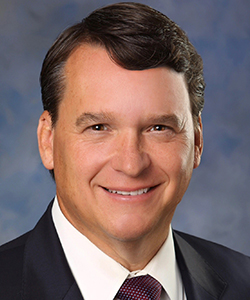
Stuart Schmidt
91% support rate
Top opponent
Jim Hinebaugh
41% support rate
Ranked legislators
10
5 support · 5 oppose
Key legislators

Who's moving criminal justice in Maryland

Legislators moving criminal justice in Maryland
Legislator Party Stance Support rate Votes
Stuart Schmidt
Stuart Schmidt House · District 33B
R
Strong +
91% 182
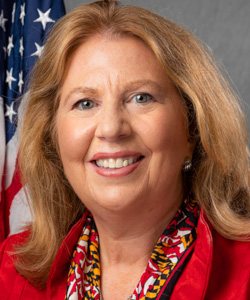
Katie Hester
Katie Hester Senate · District 9
D
Strong +
80% 86
Brian Crosby
Brian Crosby House · District 29B
D
Support
72% 101
Mary-Dulany James
Mary-Dulany James Senate · District 34
D
Support
71% 88
Matthew Schindler
Matthew Schindler House · District 2B
D
Support
67% 191
Jim Hinebaugh
Jim Hinebaugh House · District 1A
R
Mixed −
41% 162
Dalya Attar
Dalya Attar Senate · District 41
D
Mixed −
42% 77
Kevin Anderson
Kevin Anderson House · District 38A
R
Mixed −
42% 119
Steve Hershey
Steve Hershey Senate · District 36
R
Mixed −
43% 108
Mary Beth Carozza
Mary Beth Carozza Senate · District 38
R
Mixed −
43% 110
Showing 151–160 of 288 bills

All criminal justice bills

in committee · Maryland · House of Delegates Jan 29, 2026

HB 527: Correctional Services - Home Detention - Removal

This bill changes Maryland's home detention rules by giving the Commissioner of Correction (or their designee) the authority to immediately remove an incarcerated person from home detention for any reason, not just violations. It specifically requires removal if someone violates a condition of their home detention placement. The bill directly affects individuals currently participating in Maryland's home detention programs. The changes take effect October 1, 2026.
Sub-Topics Probation & Parole
in committee · Maryland · House of Delegates Feb 4, 2026

HB 722: Child Sexual Abuse Claims - Doctrine of Charitable Immunity - Abrogation

HB 722 removes the legal protection known as "charitable immunity" that previously shielded charitable organizations (like youth programs or non-profits) from lawsuits related to child sexual abuse. It allows victims to sue these organizations for abuse that occurred while they were minors, regardless of when the abuse happened, and applies retroactively to all past, pending, or dismissed cases. The bill also sets limits on attorney fees for such cases (20% of settlements or 25% of judgments) and takes effect on October 1, 2026. This change directly affects victims seeking compensation and charitable organizations previously protected from liability in these claims.
passed · Maryland · House of Delegates Mar 23, 2026

HB 658: Maryland Department of Health - Forensic Review Boards and Community Forensic Aftercare Program

HB 658 establishes Maryland’s Community Forensic Aftercare Program within the Department of Health. The program monitors two groups: individuals found not criminally responsible due to mental illness who are on conditional release, and people with mental illness or intellectual disability requiring community monitoring under specific legal circumstances. Key provisions require the Program to create a community monitoring board to make decisions about conditional release and out-of-state travel for these individuals. The bill amends existing criminal procedure and health codes to implement this new oversight structure, replacing outdated sections with the new program framework.
Sub-Topics Mental Health
in committee · Maryland · House of Delegates Jan 29, 2026

HB 31: Police Discipline - Order to Show Cause

HB 31 allows police officers in Maryland who are denied a right under disciplinary rules to seek court intervention before a formal hearing. Specifically, officers can apply to a circuit court for an order requiring their law enforcement agency to explain why the right should not be granted. The bill specifies that countywide/local agency officers must file in their county’s circuit court, while statewide/bicounty agency officers file in Anne Arundel County circuit court. This process applies to disciplinary proceedings under Maryland’s Public Safety subtitle and takes effect October 1, 2026.
in committee · Maryland · Senate Jan 28, 2026

SB 349: Vehicle Laws - Eluding Police - Penalties

SB 349 increases penalties for drivers who elude police officers and cause a death, reclassifying this as a felony. First-time offenders face up to 5 years in prison or a $5,000 fine, while repeat offenders face up to 10 years. The bill maintains existing misdemeanor penalties for eluding that causes bodily injury or no injury. It applies to drivers who fail to stop after a police officer signals to stop, whether the officer is in uniform or in a marked police vehicle.
Sub-Topics Corrections Policing
in committee · Maryland · Senate Jan 27, 2026

SB 295: Civil Actions - Immunity - Disclosure of Allegations of Sexually Assaultive Behavior (Stop Silencing Survivors Act)

SB 295, the "Stop Silencing Survivors Act," protects individuals who in good faith disclose information about allegations of sexually assaultive behavior from liability. It establishes that such disclosures - like reporting misconduct to employers or authorities - cannot be used against the discloser in court, unless proven to be false or made with malicious intent. The bill also requires courts to award attorney fees to those successfully defending against claims that they disclosed information without good faith. It defines "sexually assaultive behavior" to include specific criminal offenses under Maryland law, such as sexual crimes, abuse of minors, or violations of federal law. The law takes effect October 1, 2026.
Sub-Topics Courts
passed · Maryland · Senate Mar 26, 2026

SB 464: Commission to Examine the Expungement Laws of Maryland

SB 464 establishes a 10-member Commission to review Maryland's current expungement laws and processes, focusing on improving efficiency and equity. The Commission includes representatives from state government (like the Public Defender and State Court Administrator), legal advocates, workforce organizations, crime victims' groups, and two individuals with criminal records currently ineligible for expungement. It must examine existing laws, compare them with other states, and propose a streamlined, broader-expungement system by December 31, 2027. The bill expires automatically on June 30, 2028, without requiring further legislative action. This process directly affects how Maryland might reform its criminal record clearance system for residents.
Sub-Topics Courts
signed · Maryland · House of Delegates May 12, 2026

HB 351: Civil Actions - Violation of Constitutional Rights (No Kings Act)

HB 351 allows Maryland's Attorney General or State's Attorney to direct the Maryland State Police to collect and securely retain specific digital data (like license plates, cell tower records, GPS, or facial recognition data) about federal agents when a complaint alleges misconduct such as excessive force or civil rights violations. It directly affects complainants who file such misconduct claims and law enforcement agencies handling those cases. The bill requires that complainants can only access this digital data through a court order in a 42 U.S.C. § 1983 civil rights case or a related criminal proceeding. It does not authorize general surveillance but creates a targeted process for gathering evidence in verified misconduct complaints against federal agents. The law takes effect October 1, 2026.
Sub-Topics Civil Rights Courts Policing Tags Civil Liberties
signed · Maryland · House of Delegates May 12, 2026

HB 491: Criminal Procedure - Victims of Sexually Assaultive Behavior - Request for Verbal Acknowledgement

HB 491 prohibits law enforcement agencies from requesting verbal acknowledgments from victims of sexually assaultive behavior that could limit investigations, prevent prosecutions, or restrict victims' legal rights. It specifically bans forms or requests that: relieve the agency of obligations to the victim, define investigation scope, block prosecutions, or limit private legal actions. The bill requires agencies to thoroughly document any victim request to limit or suspend an investigation and follow up per Maryland Police Commission guidelines. Agencies must adopt and submit compliance policies to the Maryland Sexual Assault Evidence Kit Committee by January 15, 2021, with the law taking effect October 1, 2026.
in committee · Maryland · Senate Jan 22, 2026

SB 296: Juveniles - Detention and Confinement - Limitations on Juvenile Contact With Incarcerated Adults

This bill prohibits detaining juveniles (under 18) in any facility where they could see, hear, or otherwise have contact with incarcerated adults. It applies to all juveniles awaiting trial, convicted, or held in custody for offenses tried in adult court. The law requires juveniles to be held in secure juvenile facilities unless temporarily held for up to 6 hours in an adult facility - while separated by sight/sound - pending transfer to a juvenile facility. Exceptions for capacity issues or safety risks remain but must be documented by the court.
Showing 151 to 160 of 288 bills
Previous 1 15 16 17 29 Next