Issue · Criminal Justice

Criminal Justice

Every criminal justice bill, vote, and legislator stance in Maryland, automatically classified by Maddy, our AI policy reader.

Total bills
229
2026 Regular Session
Top supporter
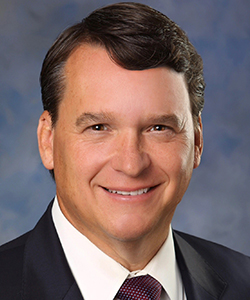
Stuart Schmidt
91% support rate
Top opponent
Jim Hinebaugh
41% support rate
Ranked legislators
10
5 support · 5 oppose
Key legislators

Who's moving criminal justice in Maryland

Legislators moving criminal justice in Maryland
Legislator Party Stance Support rate Votes
Stuart Schmidt
Stuart Schmidt House · District 33B
R
Strong +
91% 182
Katie Hester
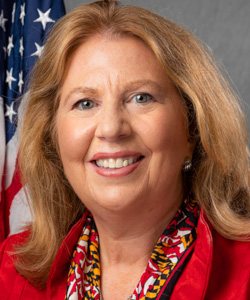
Katie Hester Senate · District 9
D
Strong +
80% 86
Brian Crosby
Brian Crosby House · District 29B
D
Support
72% 101
Mary-Dulany James
Mary-Dulany James Senate · District 34
D
Support
71% 88
Matthew Schindler
Matthew Schindler House · District 2B
D
Support
67% 191
Jim Hinebaugh
Jim Hinebaugh House · District 1A
R
Mixed −
41% 162
Dalya Attar
Dalya Attar Senate · District 41
D
Mixed −
42% 77
Kevin Anderson
Kevin Anderson House · District 38A
R
Mixed −
42% 119
Steve Hershey
Steve Hershey Senate · District 36
R
Mixed −
43% 108
Mary Beth Carozza
Mary Beth Carozza Senate · District 38
R
Mixed −
43% 110
Showing 131–140 of 229 bills

All criminal justice bills

in committee · Maryland · House of Delegates Jan 29, 2026

HB 397: Criminal Procedure - Expungement - Failure to Obey a Court Order to Report to Confinement

HB 397 allows individuals convicted of failing to report to confinement (a misdemeanor) to petition for expungement of their record. It adds this specific offense to Maryland’s list of eligible cases under expungement law. The bill requires a 5-year waiting period after completing all sentence terms before filing such a petition. This applies only to misdemeanor convictions for not showing up to jail as ordered by a court.
Sub-Topics Corrections Courts
passed · Maryland · House of Delegates Mar 19, 2026

HB 688: Intercepted Communications - Penalty

HB 688 would reclassify violations of Maryland's law against intercepting or disclosing wire, oral, or electronic communications from a felony to a misdemeanor. This affects anyone who unlawfully intercepts, discloses, or uses the contents of such communications in violation of the law. The bill amends Section 10-402(b) of Maryland's Courts and Judicial Proceedings code to change the penalty level, though it maintains the same maximum fine ($10,000) and potential imprisonment (up to 5 years) for the offense.
in committee · Maryland · Senate Jan 14, 2026

SB 20: Family and Law Enforcement Protection Act

SB 20, the "Family and Law Enforcement Protection Act," modifies Maryland's domestic violence protective order process to require firearm surrender when abuse involves firearms or threats. It directly affects victims seeking protective orders, respondents (abusers) who possess firearms, and law enforcement handling these cases. Key provisions mandate petitioners to provide specific firearm details (make, model, location, and vehicle info) if firearms are alleged to be in the respondent's possession, and require courts to automatically order firearm surrender and license relinquishment in temporary protective orders when abuse involved firearm use, threats, or serious harm. This strengthens firearm safety measures during domestic violence proceedings without changing eligibility for protective orders.
signed · Maryland · House of Delegates Apr 28, 2026

HB 281: Family Law - Child Care Providers - Criminal Background Investigations

HB 281 requires background checks for individuals working with children in specific settings. It mandates licensed child care centers, family child care homes, foster care facilities, schools, camps, and similar organizations to obtain national and state criminal history checks for all employees, volunteers, and certain caregivers - including neighbors or friends providing sudden care due to a primary caretaker's unavailability. Facilities must submit fingerprints and pay a fee to the Criminal Justice Information System Central Repository. The bill directly affects providers serving minors and expands background check requirements to include new categories like "sudden caregivers" and individuals residing in homes where informal child care occurs.
Sub-Topics Firearms
signed · Maryland · Senate Feb 17, 2026

SB 245: Public Safety - Immigration Enforcement Agreements - Prohibition

Maryland's SB 245 prohibits state, local governments, county sheriffs, and their agencies from entering new agreements with federal authorities to enforce civil immigration law. It defines such agreements as contracts under federal laws like 8 U.S.C. § 1103 or § 1357. Existing agreements must be terminated by July 1, 2026, or immediately upon the bill's effective date of June 1, 2026. The law directly affects all Maryland local law enforcement entities and state agencies that previously collaborated with federal immigration enforcement.
in committee · Maryland · House of Delegates Jan 29, 2026

HB 465: Civil Actions - Immunity - Disclosure of Allegations of Sexually Assaultive Behavior (Stop Silencing Survivors Act)

HB 465 (Stop Silencing Survivors Act) creates legal immunity for individuals who in good faith disclose allegations of sexually assaultive behavior (defined as acts meeting Maryland’s criminal law standards for sexual offenses or equivalent offenses). It protects disclosers from liability claims unless proven to have acted with actual malice or intentionally shared false information. The bill also requires courts to award attorney fees and costs to successful defendants in such cases. This directly affects survivors reporting abuse, individuals sharing such information, and courts handling related civil cases. The law takes effect October 1, 2026.
in committee · Maryland · House of Delegates Feb 2, 2026

HB 626: Custodial Interrogation of Minors - Admissibility of Statements (Exonerated 5 Act)

This bill creates a rule that a minor's statement during a custodial interrogation is presumed involuntary and inadmissible in court if law enforcement intentionally used false information to obtain it. It directly affects minors facing juvenile or criminal charges, as their statements could be excluded from proceedings under this presumption. The presumption can be overcome only with clear and convincing evidence proving the statement was voluntary despite the false information. The law applies to all custodial interrogations of minors in Maryland, modifying admissibility standards under Maryland's judicial code.
passed · Maryland · House of Delegates Mar 24, 2026

HB 22: Correctional Services - Incarcerated Individuals - Identification Cards, Driver's Licenses, and Birth Certificates

HB 22 requires Maryland correctional facilities to return valid photo ID cards or driver's licenses to incarcerated individuals at release if they entered custody with them. It also mandates state corrections officials to help inmates obtain birth certificates and Social Security cards before release, with written consent required. Facilities must work with inmates six months before release (for those serving 1+ year sentences) to ensure they have valid ID or driver's licenses available upon release. The bill takes effect October 1, 2026, and explicitly states it cannot delay release.
died · Maryland · Senate Feb 16, 2026

SB 97: Reentry and Reintegration Support Program - Establishment

SB 97 establishes a voluntary program to help individuals released from Maryland state prisons access essential benefits more smoothly. It requires the Departments of Human Services, Public Safety, and Health to create a coordinated system where correctional facilities assist "returning citizens" (those expected to be released within 90 days) in applying for SNAP, Temporary Cash Assistance, and Maryland Medical Assistance *before* release. Key provisions include a standardized prerelease application process, help obtaining required documents (like birth certificates and Social Security cards), and secure data sharing to ensure benefits are active upon release. The program must be implemented by October 1, 2026, with departments required to finalize a data-sharing agreement by April 2027. This directly affects people transitioning from incarceration to community life in Maryland.
passed · Maryland · House of Delegates Mar 24, 2026

HB 172: Municipalities - Enforcement Officers - Body-Worn Cameras

HB 172 allows Maryland municipalities to authorize code, parking, and traffic enforcement officers to use body-worn cameras during their duties. It expands the legal definition of "law enforcement officer" to include these municipal officers for camera use, requiring cities to adopt policies that align with state standards for body-worn camera use. The bill mandates that municipalities publishing such policies must follow guidelines similar to those for police body cameras, including notifying individuals when recording is occurring. The law takes effect October 1, 2026, and does not require municipalities to implement the policy.
Showing 131 to 140 of 229 bills
Previous 1 13 14 15 23 Next