Issue · Criminal Justice

Criminal Justice

Every criminal justice bill, vote, and legislator stance in Maryland, automatically classified by Maddy, our AI policy reader.

Total bills
288
2026 Regular Session
Top supporter
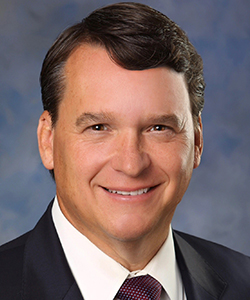
Stuart Schmidt
91% support rate
Top opponent
Jim Hinebaugh
41% support rate
Ranked legislators
10
5 support · 5 oppose
Key legislators

Who's moving criminal justice in Maryland

Legislators moving criminal justice in Maryland
Legislator Party Stance Support rate Votes
Stuart Schmidt
Stuart Schmidt House · District 33B
R
Strong +
91% 182
Katie Hester
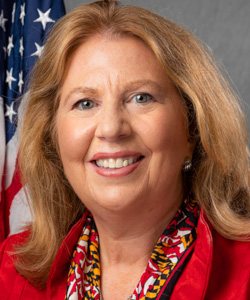
Katie Hester Senate · District 9
D
Strong +
80% 86
Brian Crosby
Brian Crosby House · District 29B
D
Support
72% 101
Mary-Dulany James
Mary-Dulany James Senate · District 34
D
Support
71% 88
Matthew Schindler
Matthew Schindler House · District 2B
D
Support
67% 191
Jim Hinebaugh
Jim Hinebaugh House · District 1A
R
Mixed −
41% 162
Dalya Attar
Dalya Attar Senate · District 41
D
Mixed −
42% 77
Kevin Anderson
Kevin Anderson House · District 38A
R
Mixed −
42% 119
Steve Hershey
Steve Hershey Senate · District 36
R
Mixed −
43% 108
Mary Beth Carozza
Mary Beth Carozza Senate · District 38
R
Mixed −
43% 110
Showing 101–110 of 288 bills

All criminal justice bills

in committee · Maryland · Senate Feb 12, 2026

SB 752: Commission to Review and Assess Racial Disparities in the State Criminal Justice System - Establishment

SB 752 establishes a 15-member Commission to study racial disparities in Maryland's criminal justice system. The Commission, appointed by legislative leaders, the Governor, and criminal justice stakeholders, will examine how African Americans, Hispanics, and other non-White individuals experience differences in policing, arrests, sentencing, and other system stages. It must study issues like mandatory minimums, risk assessment tools, felony murder doctrine, and data collection methods, then hold public hearings and submit recommendations. The bill does not change laws but creates a body to analyze systemic inequities and propose reforms. This affects all Marylanders interacting with the criminal justice system by directing a formal review of racial bias patterns.
Sub-Topics Sentencing
passed both · Maryland · Senate Apr 10, 2026

SB 823: Correctional Services - Maryland Parole Commission - Members

SB 823 changes how Maryland Parole Commission members are appointed. It replaces the current process where the Governor appoints members with Senate approval, requiring instead a new panel to submit at least three nominees per vacancy. The panel includes specific officials (like the Public Safety Secretary and Public Defender) plus representatives from mental health, education, social work, community organizations, prisoners' rights, victims' rights, and the general public. This bill directly affects the Commission's membership structure and takes effect October 1, 2026.
Sub-Topics Probation & Parole
in committee · Maryland · Senate Mar 6, 2026

SB 988: Judicial Facilities - Stops, Detentions, and Arrests - Limitations

SB 988 prohibits law enforcement from stopping, detaining, or arresting individuals for civil offenses (such as traffic tickets or unpaid fines) within judicial facilities (like courthouses) or within one mile of them while traveling to attend a court proceeding. Police must notify the judge beforehand and avoid disrupting court activities to stop someone for a civil matter in these areas. Evidence obtained from violating this law is inadmissible in court, and affected individuals can sue for damages or seek court orders. The Attorney General may also file lawsuits to stop ongoing violations of the law.
in committee · Maryland · Senate Feb 12, 2026

SB 944: Correctional Services - Reentry Readiness Program

SB 944 establishes a Reentry Readiness Program within Maryland's Department of Public Safety to assist individuals transitioning from incarceration. It requires the Department to collaborate with the Motor Vehicle Administration, Vital Records, and the Department of Labor to help "returning citizens" (those expected to be released within 90 days) secure job training, obtain birth certificates, and apply for photo IDs or driver's licenses. Key timelines include: 90 days before release for job training enrollment, 60 days for ID/license forms, and 30 days for verification of completed assistance. The program mandates concrete support to address immediate barriers to reintegration, effective October 1, 2026.
in committee · Maryland · House of Delegates Feb 16, 2026

HB 1484: Child Sex Offenders - Plea Agreements and Places for Children

HB 1484 prohibits prosecutors from entering plea agreements that dismiss charges for offenses against minors (Section 3-1104). It also bans individuals convicted of offenses against minors requiring sex offender registration from knowingly operating or entering "places for children" like playgrounds, theme parks, or children's museums (Section 11-722.1). This directly affects prosecutors who can no longer dismiss such charges and convicted sex offenders who target minors. Violating the place restriction is a felony punishable by up to 5 years in prison, a $5,000 fine, or both. The bill takes effect October 1, 2026.
Sub-Topics Corrections
in committee · Maryland · House of Delegates Feb 16, 2026

HB 1406: Criminal Law - Self-Defense - Prior Acts by Victim

HB 1406 amends Maryland's self-defense law to allow defendants charged with murder, manslaughter, or specific crimes under Title 3 to claim self-defense without proving the danger was imminent. It directly affects individuals facing these charges who can now assert self-defense if the victim previously committed an assault (any degree) or sexually assaultive behavior against them. The key change removes the requirement that defendants prove they believed danger was immediate, based solely on the victim's prior acts. This applies only to cases where the victim's prior conduct matches the specified offenses in the bill. The law takes effect October 1, 2026.
Sub-Topics Violent Crime
in committee · Maryland · House of Delegates Feb 4, 2026

HB 743: Private Home Detention Monitoring Agencies - Notification of Violation

HB 743 removes the requirement for private home detention monitoring agencies to notify law enforcement when defendants violate standard home detention conditions (like missing check-ins or curfew). The bill directly affects these monitoring agencies and local law enforcement agencies, as it repeals the existing law mandating such notifications for most violations. Key provisions now only require agencies to notify courts and law enforcement within 1 hour for equipment tampering or immediately for entering prohibited areas. This change streamlines reporting by eliminating routine notifications while maintaining urgent response protocols for specific safety risks. The bill takes effect October 1, 2026.
Sub-Topics Law Enforcement
in committee · Maryland · Senate Mar 9, 2026

SB 678: Criminal Procedure - Forensic Genetic Genealogical DNA Analysis and Search - Affidavit for Judicial Authorization

SB 678 modifies the affidavit requirements law enforcement must submit to obtain court authorization for forensic genetic genealogy searches (FGGS) in criminal investigations. It requires a sworn affidavit stating: the perpetrator's identity is unknown; the crime involves murder, rape, sexual offenses, or a serious public safety threat; standard DNA testing from the forensic sample (collected at a crime scene, from a person/item related to the crime, or unidentified remains) already failed to identify a suspect; and reasonable investigative leads were pursued (unless an ongoing threat exists). The bill defines FGGS as analyzing crime scene DNA to create a profile, searching public genealogy databases, and using public records to identify suspects. This affects law enforcement agencies and courts in Maryland, streamlining the authorization process for FGGS in specific serious unsolved cases.
Sub-Topics Courts Law Enforcement
in committee · Maryland · Senate Feb 5, 2026

SB 640: Criminal Procedure - Postconviction Release - Crimes Resulting in Death of Young Victim

SB 640 prohibits courts from releasing defendants after conviction but before sentencing or appellate review if they were convicted of specific crimes resulting in the death of a victim under 14 years old. It applies to cases involving: (1) a "crime of violence" under Maryland law, or (2) a violation of child neglect laws (§ 3-602.1) that caused the victim’s death. The bill directly affects defendants convicted of these offenses who would otherwise be eligible for pre-sentencing or pre-appeal release. The law takes effect on October 1, 2026, and modifies Maryland’s postconviction release procedures under Article 5, Section 5-301.
Sub-Topics Sentencing
in committee · Maryland · House of Delegates Mar 20, 2026

HB 1605: Compensation for Individuals Erroneously Convicted - County Cost-Sharing - Repeal

HB 1605 repeals a provision requiring counties to pay 50% of compensation costs for individuals wrongfully convicted of crimes they did not commit. Currently, counties covered half the state's compensation payments under Maryland law; this bill shifts the full financial responsibility to the state. The change directly affects wrongly convicted individuals (who continue to receive full compensation) and county governments (which no longer bear 50% of the costs). The bill takes effect October 1, 2026, and does not alter the compensation calculation or benefits provided to affected individuals.
Sub-Topics Victims' Rights
Showing 101 to 110 of 288 bills
Previous 1 10 11 12 29 Next